Free Forest for Cornwall trees: the six on offer and two to watch
A free tree sounds simple enough. Then you find out one of them could reach 15 metres, and another grows berries that are poisonous to people.
Cornwall Council’s Forest for Cornwall team has put together a guide for anyone going to one of its free Back Garden Forest giveaways who hasn’t yet decided what to take home for the garden.
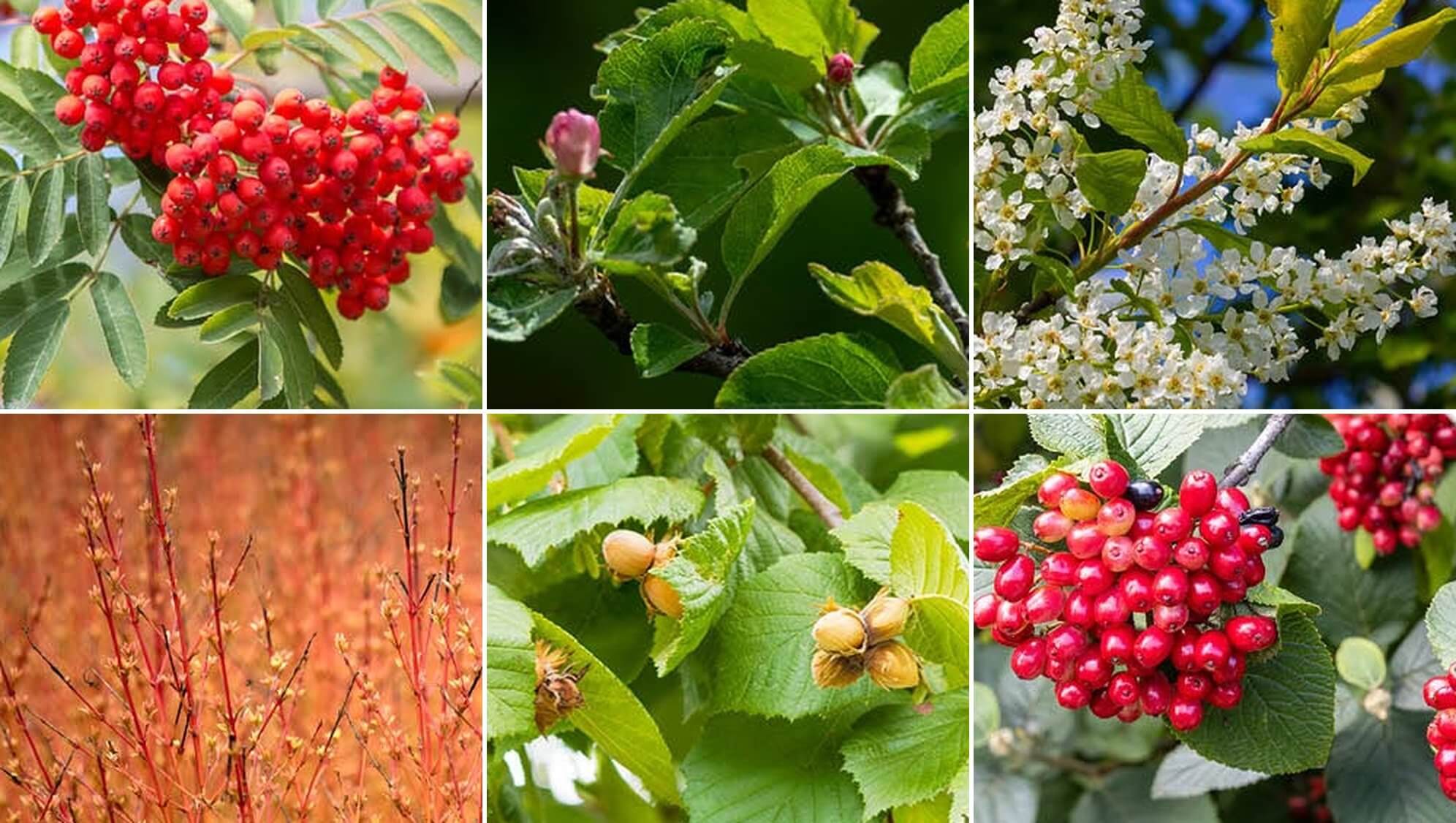
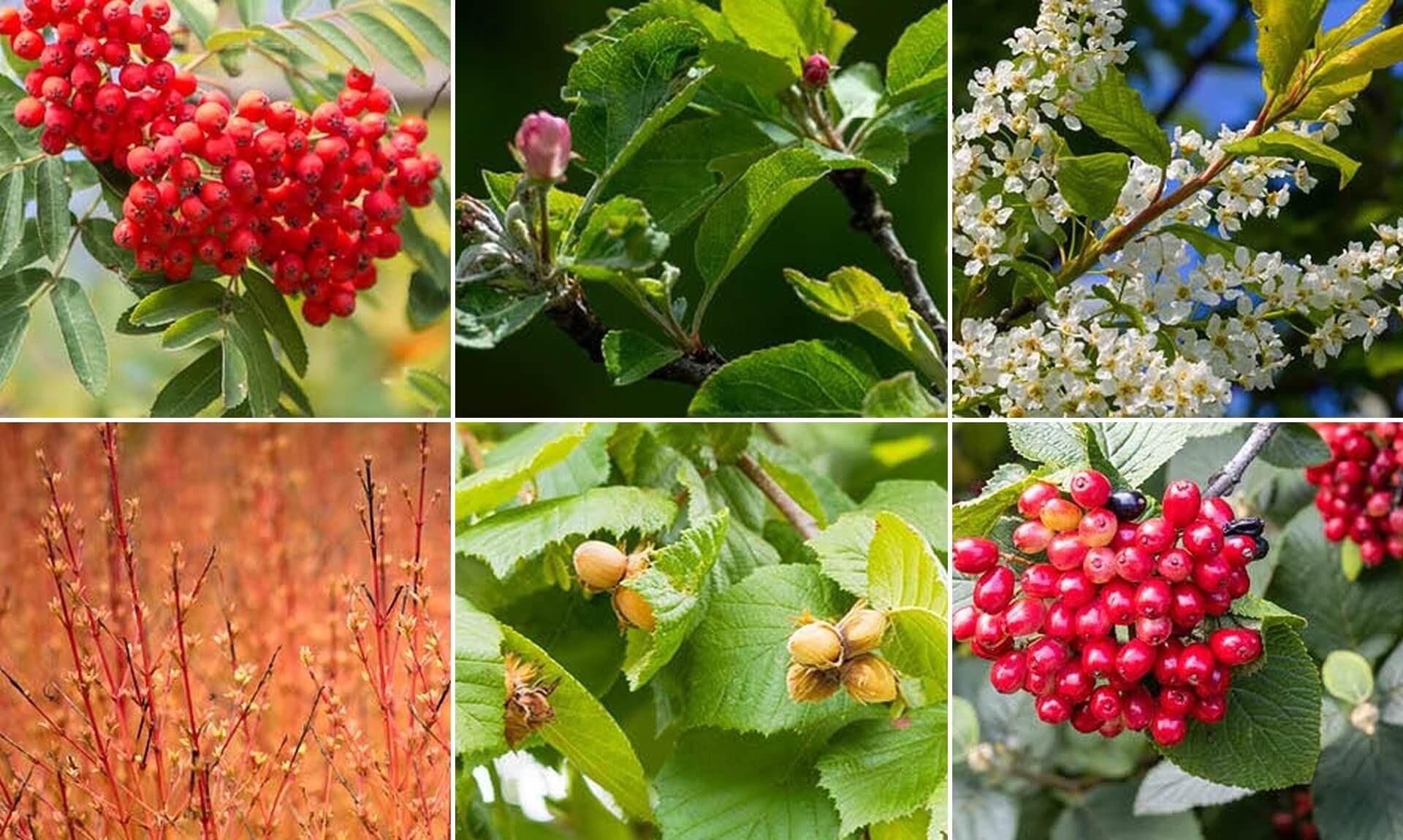
There are six native species to choose from: crab apple, bird cherry, rowan, hazel, dogwood and wayfaring tree. Each sapling comes with care information. The team (Koos rag Kernow in Cornish) will be at the giveaways to help people pick the right tree and the right spot to give it the best start.
Where to pick one up
The giveaways run from now until the end of February:
- St Agnes: Saturday 21 November, 10.30am to 12.30pm, St Agnes Library, Trelawny Road, TR5 0TP
- Bude: Saturday 28 November, 10.30am to 12.30pm, Bude Library, The Wharf, EX23 8LG
- Penzance: Saturday 16 January, 10.30am to 12.30pm, St John’s Hall, TR18 2QW
- Falmouth: Saturday 23 January, 10.30am to 12.30pm, The Princess Pavilion, TR11 4AR
- Helston: Saturday 6 February, 10.30am to 12.30pm, The Old Cattle Market, TR13 0SR
- Redruth: Saturday 13 February, 10.30am to 12.30pm, Market Way and Redruth Library, TR15 2AU
- St Dennis: Thursday 18 February, 2pm to 4pm, ClayTAWC, Fore Street, PL26 8AF
- St Austell: Saturday 20 February, 10.30am to 12.30pm, St Austell Library, Carlyon Road, PL25 4LD
- Truro: Saturday 27 February, 10.30am to 12.30pm, Truro Library, TR1 1EP
Bring a bag to carry your sapling home in.
The smaller options
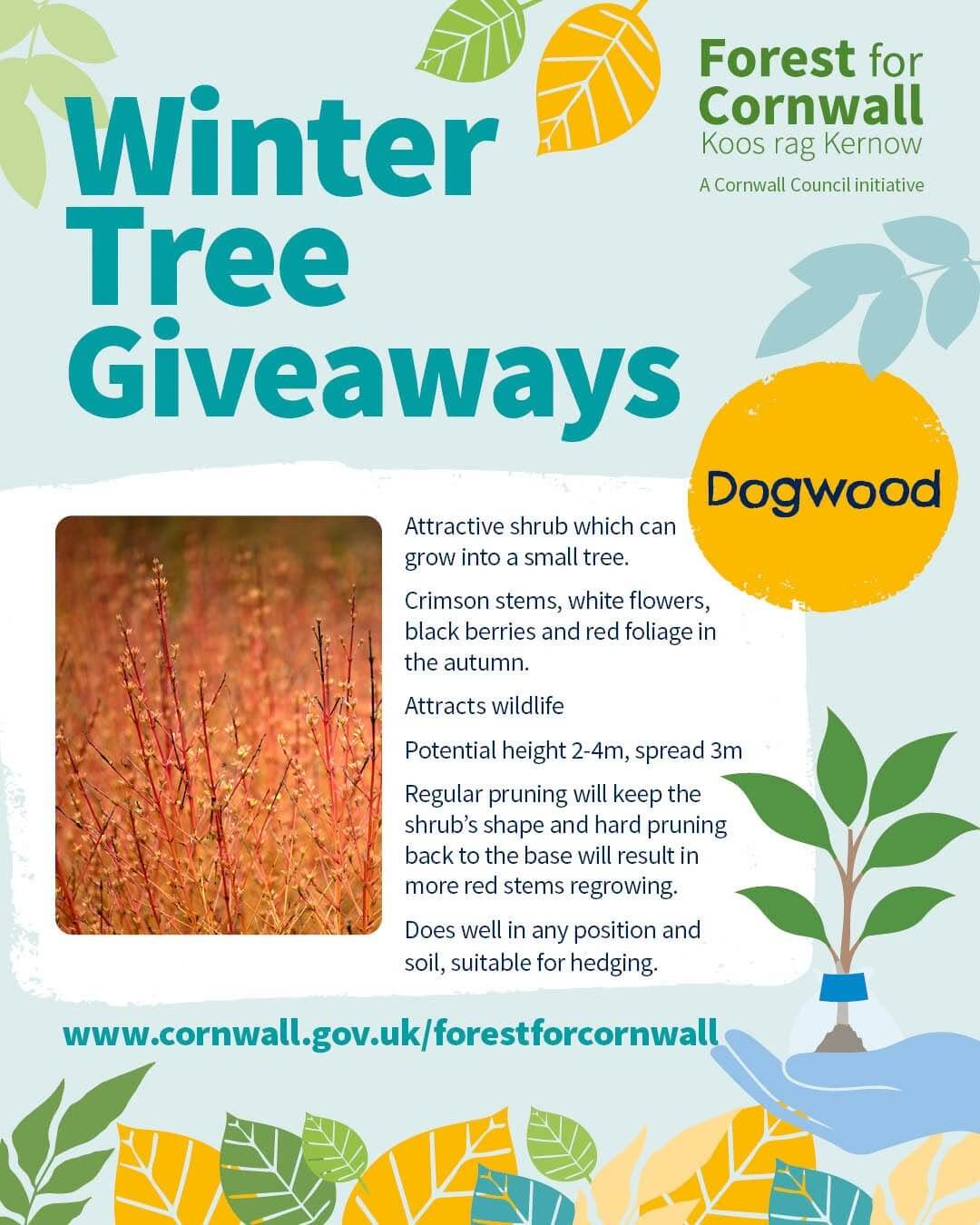
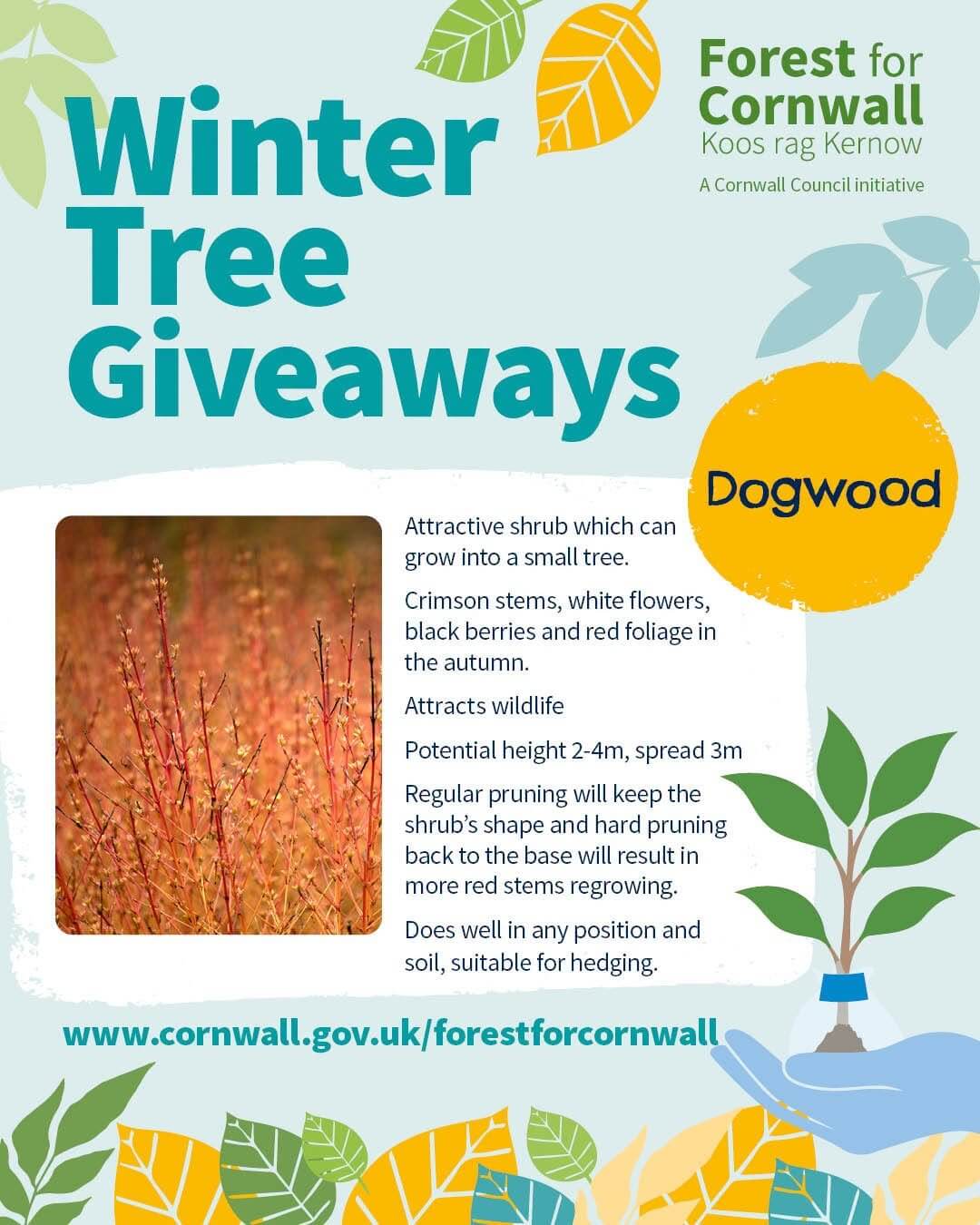
Dogwood
An attractive shrub that can grow into a small tree, dogwood has crimson stems, white flowers, black berries and red foliage in autumn. It attracts wildlife and can grow 2 to 4 metres tall, with a 3 metre spread.
Regular pruning keeps its shape. Cut it hard back to the base and more of those red stems grow back. It does well in any position and any soil, and suits hedging.
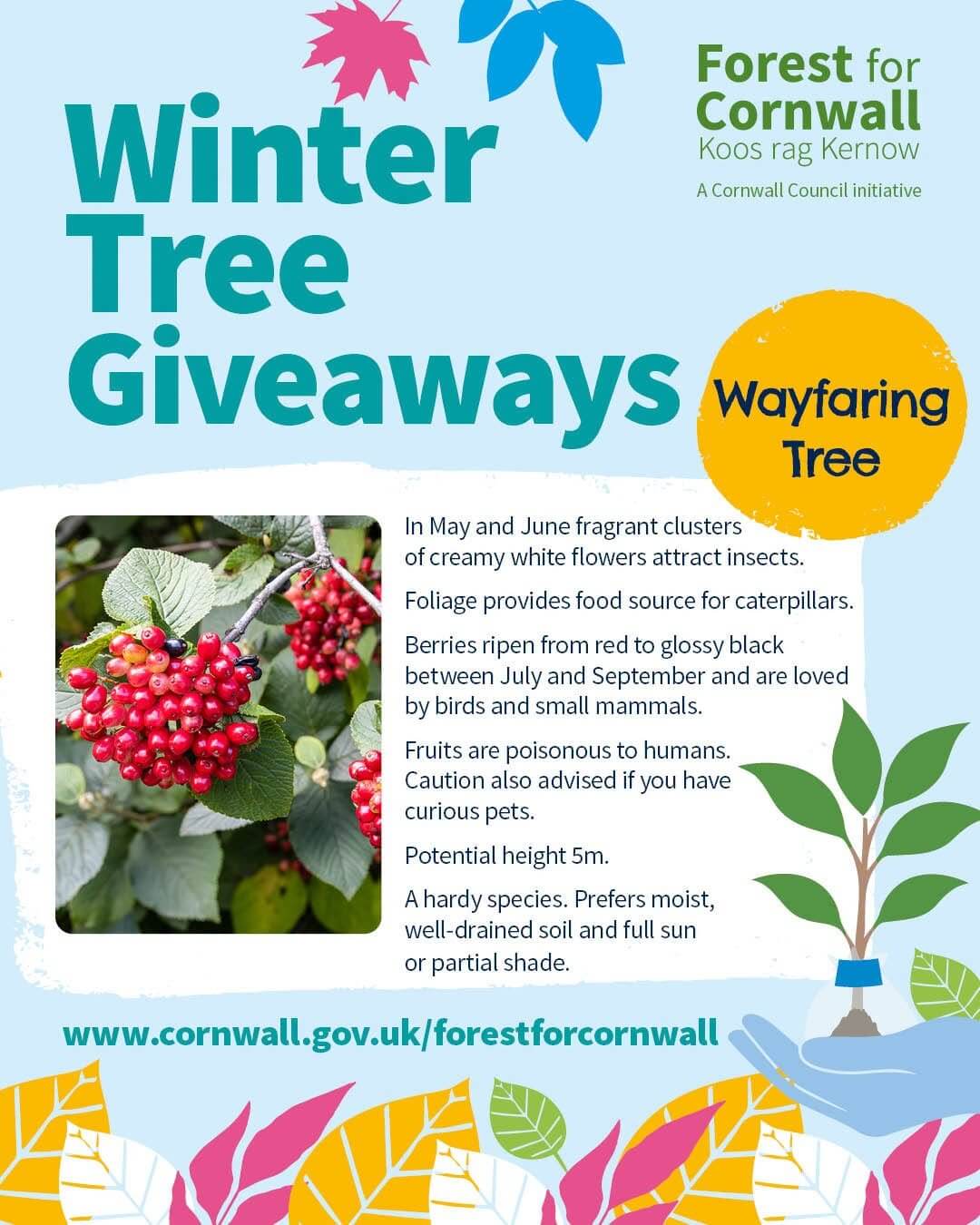
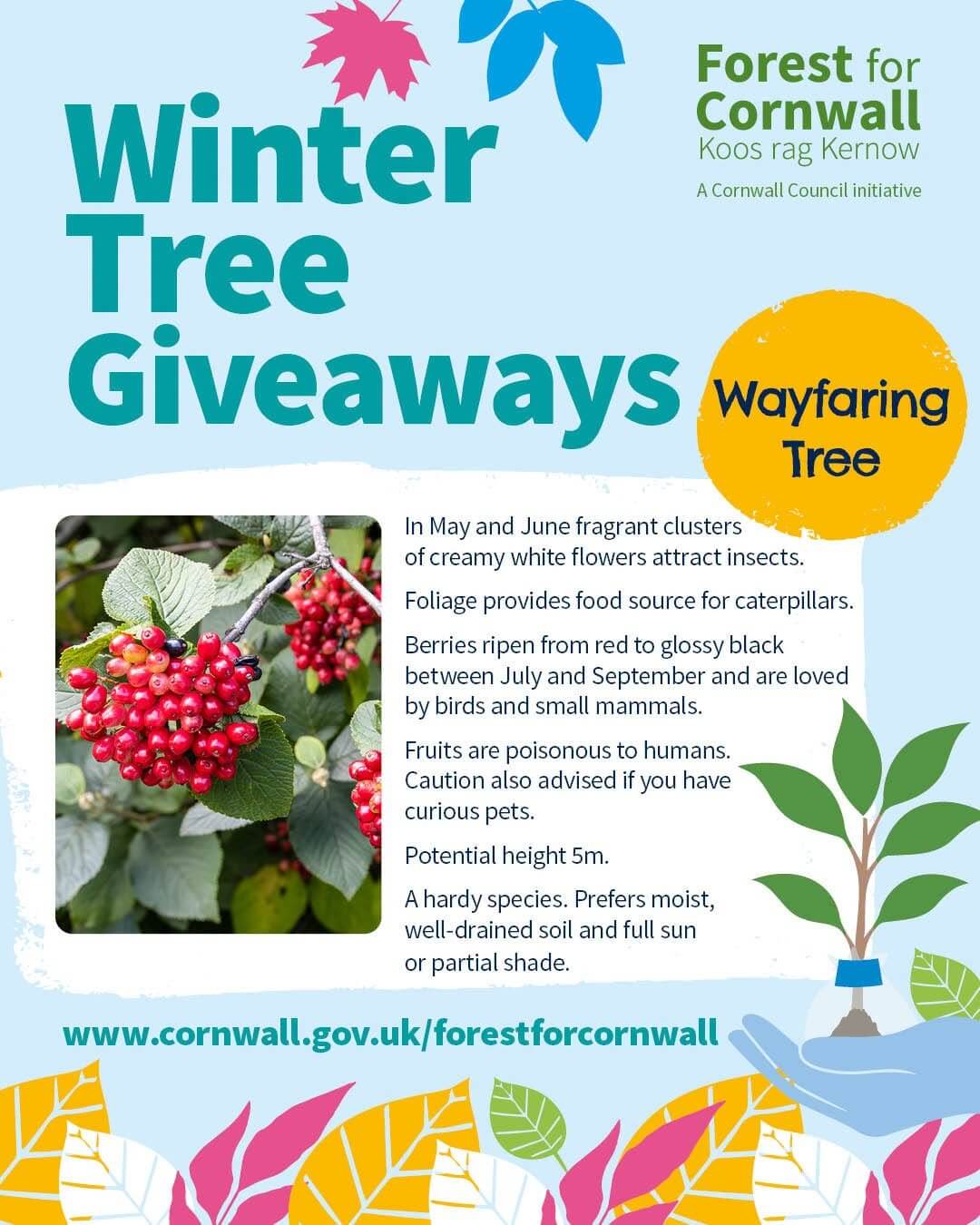
Wayfaring tree
Fragrant clusters of creamy white flowers appear in May and June and attract insects, while the foliage feeds caterpillars. Between July and September the berries ripen from red to glossy black, and birds and small mammals love them.
People should leave them alone. The fruits are poisonous to humans, and caution is also advised for anyone with curious pets.
It can reach 5 metres. A hardy species, it prefers moist, well-drained soil in full sun or partial shade.
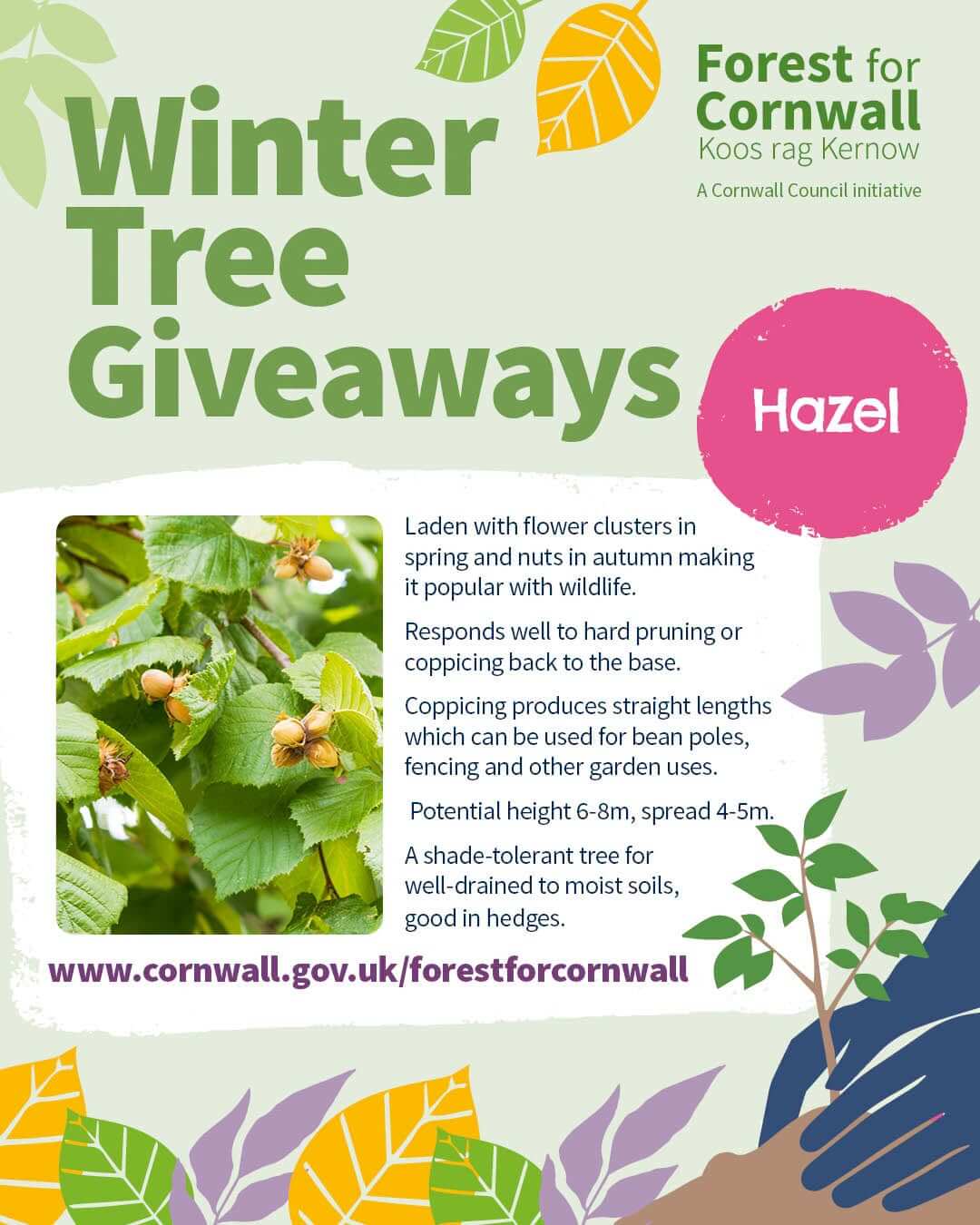
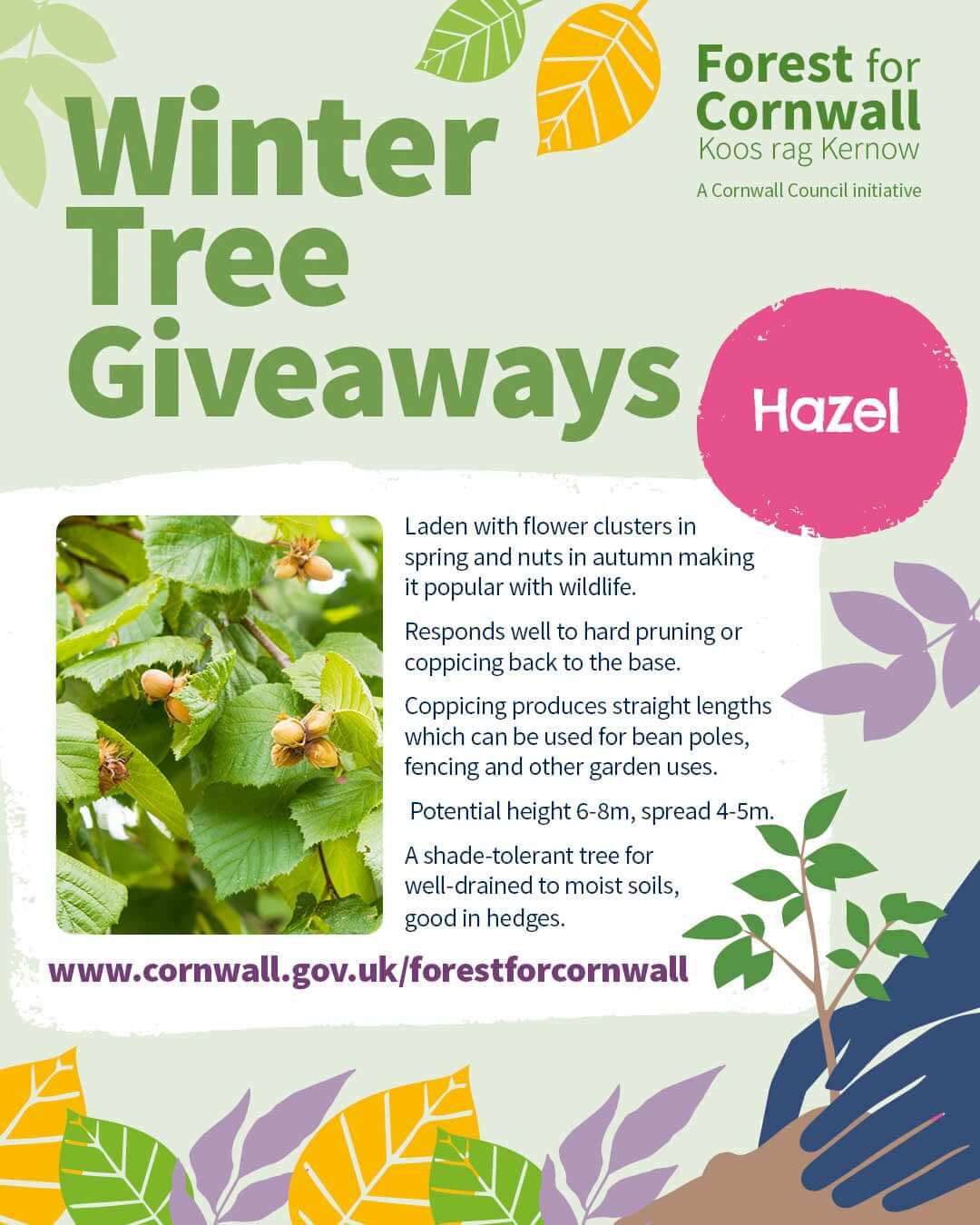
Hazel
Hazel is laden with flower clusters in spring and nuts in autumn, which makes it popular with wildlife. It responds well to hard pruning or coppicing back to the base. Coppicing produces straight lengths that can be used for bean poles, fencing and other jobs around the garden.
It can grow 6 to 8 metres tall, with a spread of 4 to 5 metres. It tolerates shade, grows in well-drained to moist soils and is good in hedges.
The taller trees
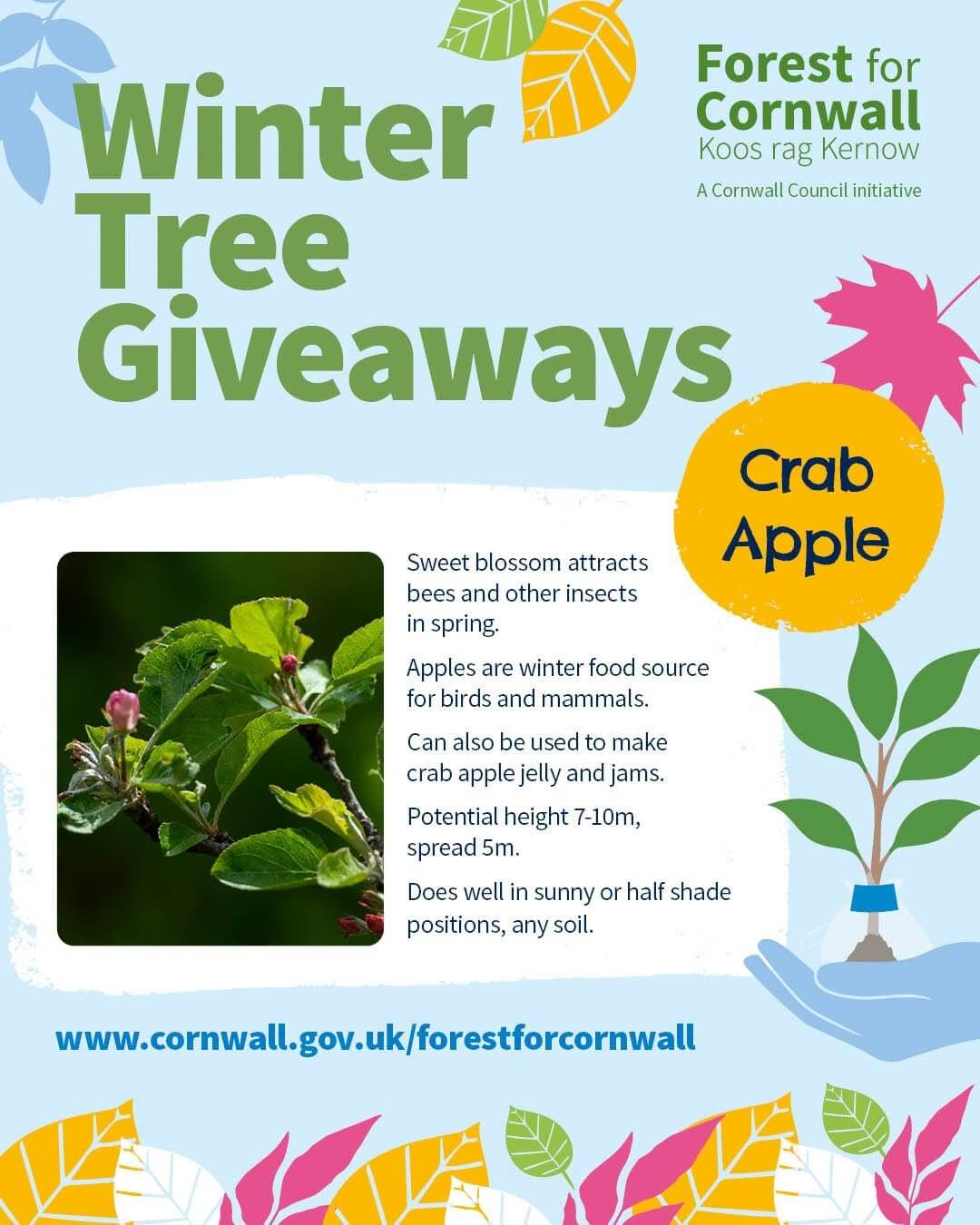
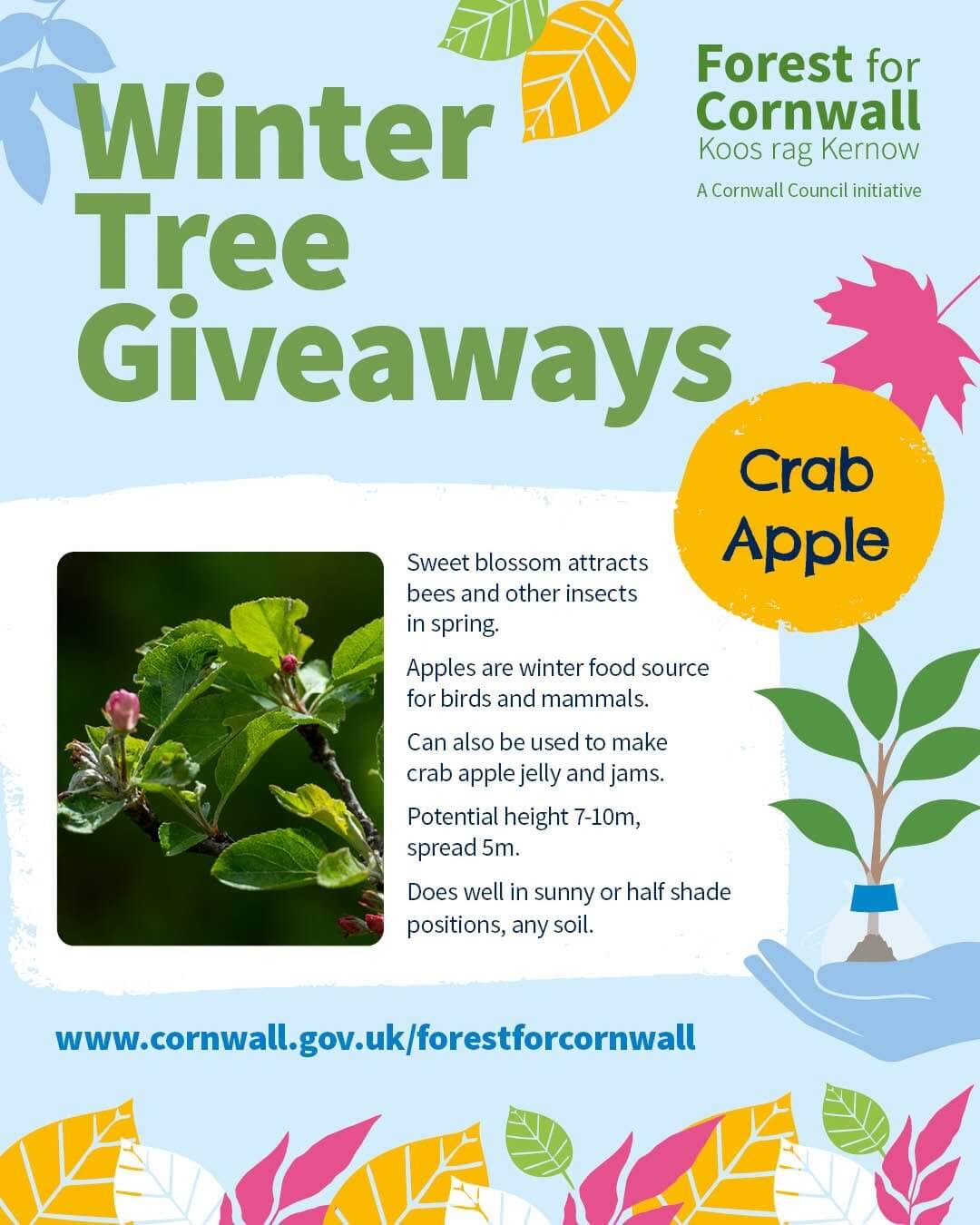
Crab apple
Sweet blossom brings in bees and other insects in spring, and the apples become a winter food source for birds and mammals. They can also be turned into crab apple jelly and jams.
Crab apple can grow 7 to 10 metres tall with a 5 metre spread. It does well in sunny or half shade positions, in any soil.
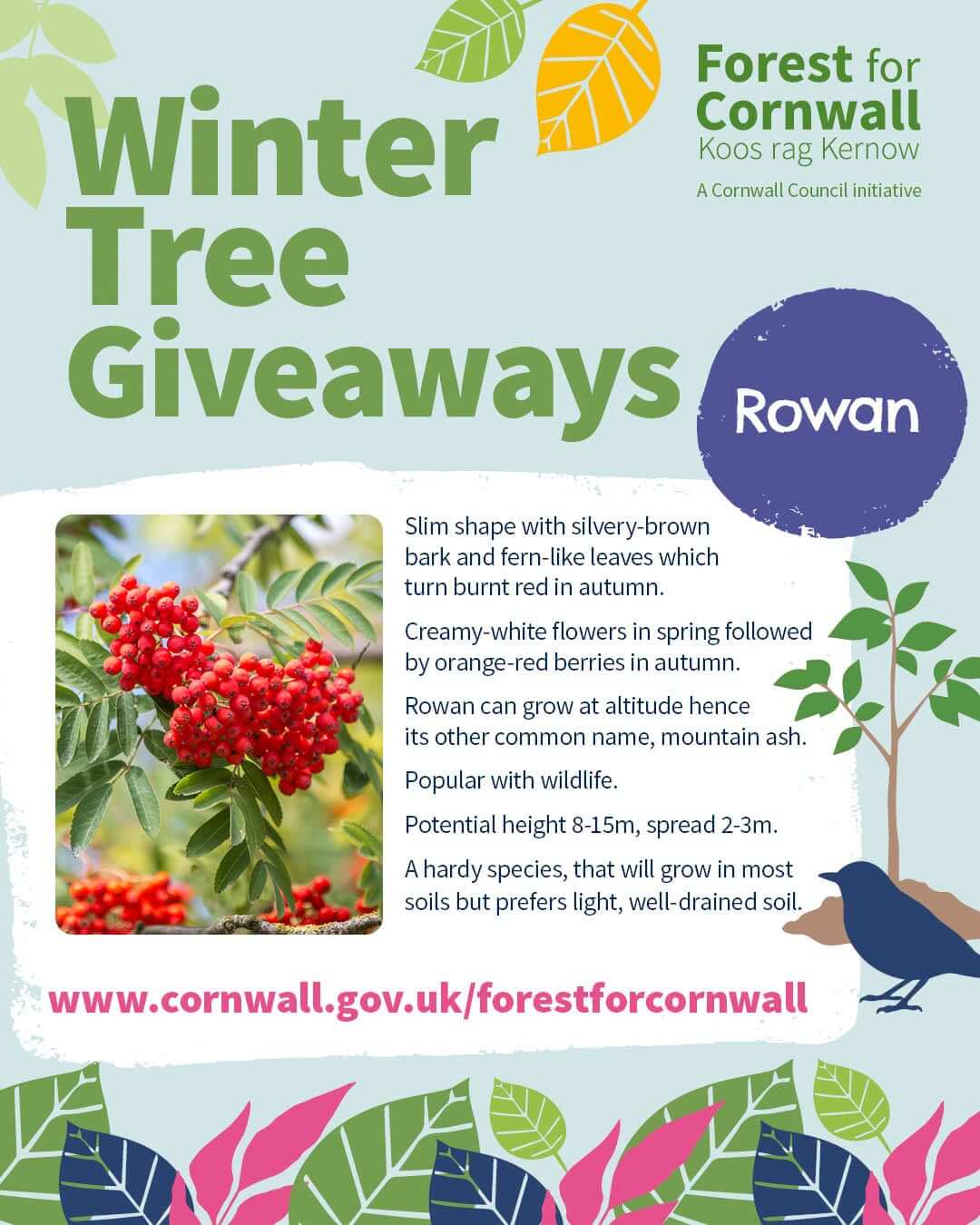
Rowan
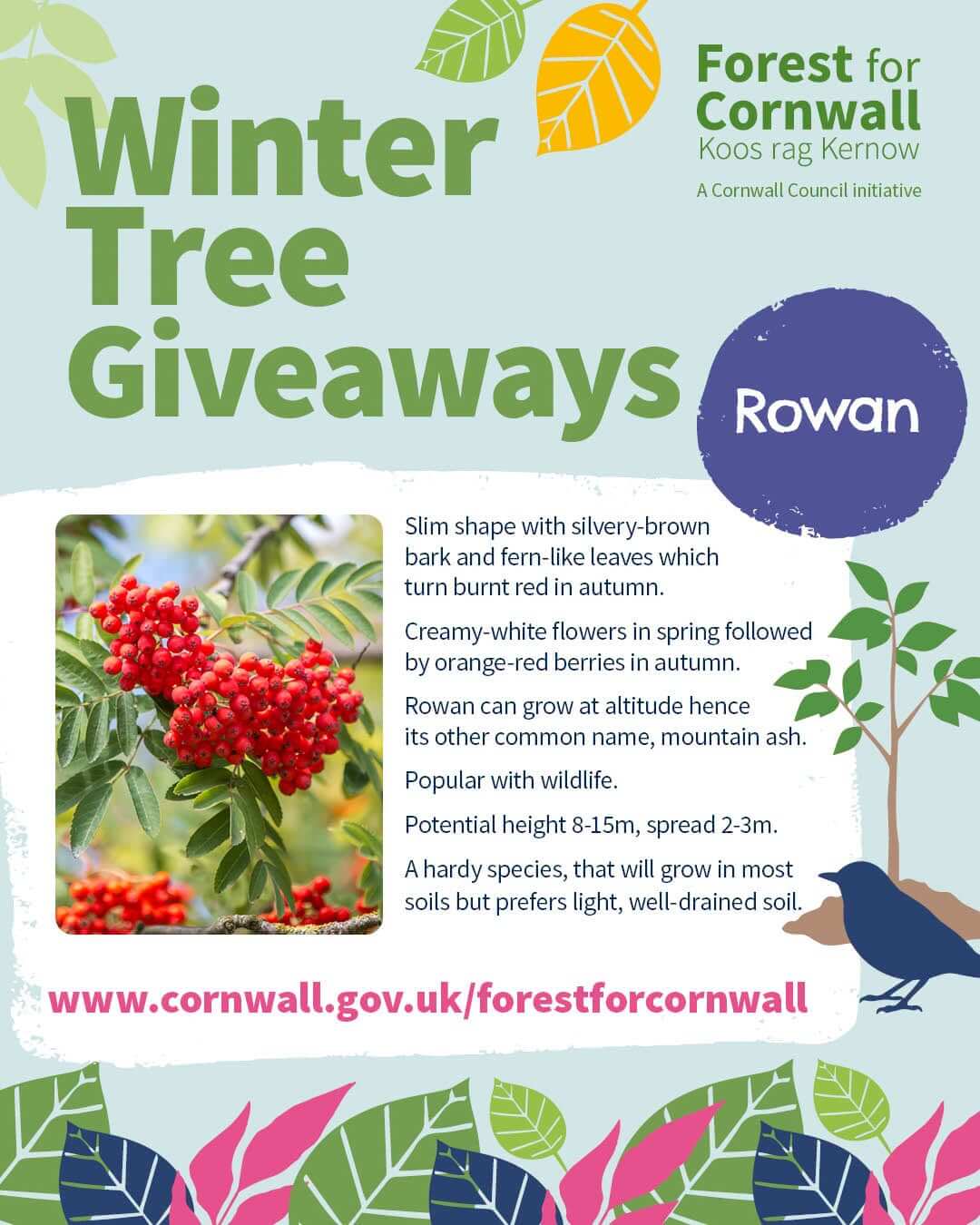
Rowan has a slim shape, silvery-brown bark and fern-like leaves that turn burnt red in autumn. Creamy-white spring flowers are followed by orange-red berries, and it is popular with wildlife.
It can grow at altitude, which is where its other common name, mountain ash, comes from. It can grow 8 to 15 metres tall but spreads only 2 to 3 metres. It’s hardy and will grow in most soils, but prefers light, well-drained ground.
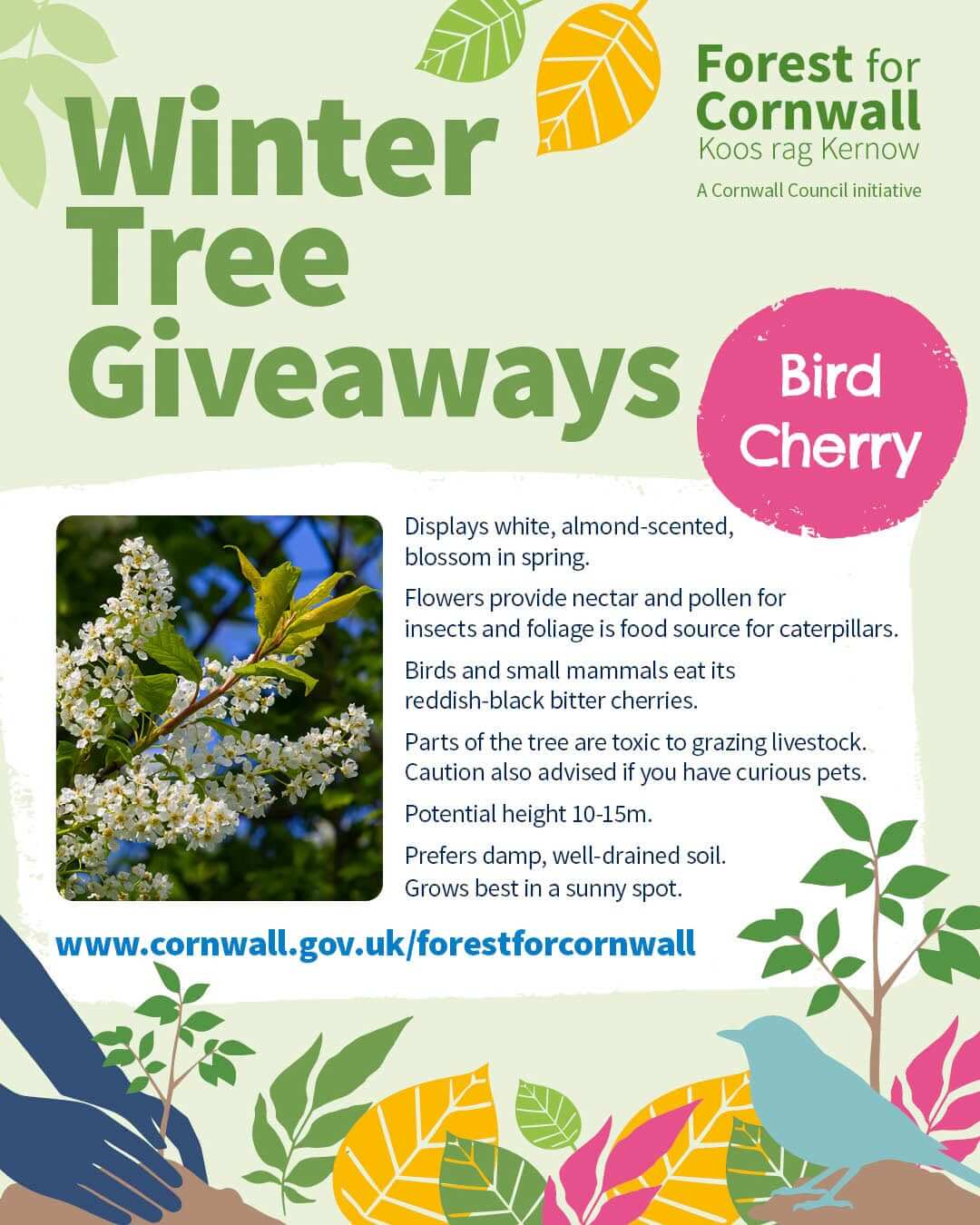
Bird cherry
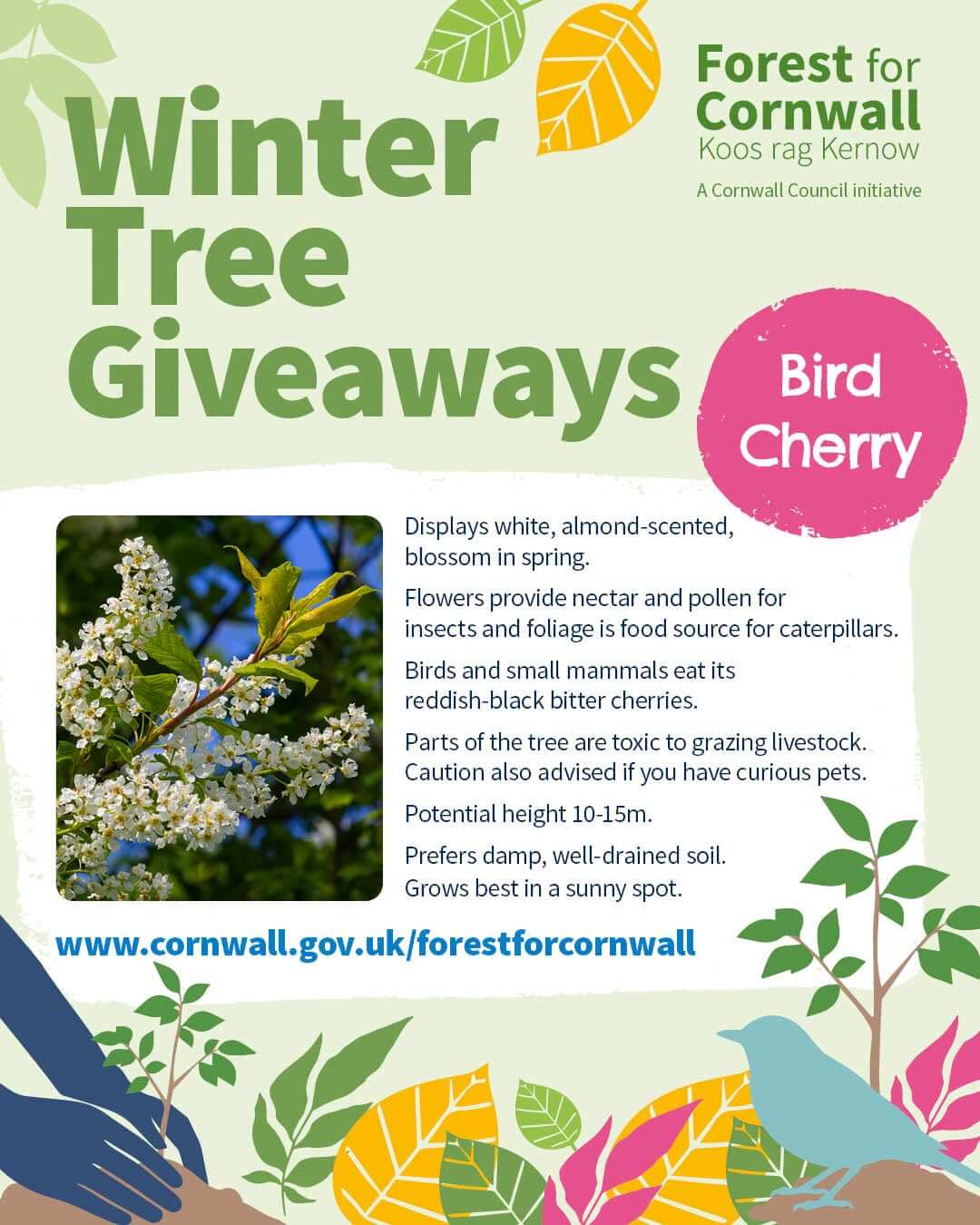
White, almond-scented blossom arrives in spring. The flowers provide nectar and pollen for insects, the foliage feeds caterpillars, and birds and small mammals eat its reddish-black bitter cherries.
Parts of the tree are toxic to grazing livestock, and caution is advised for anyone with curious pets. It can grow 10 to 15 metres tall, prefers damp, well-drained soil and grows best in a sunny spot.
Which one fits?
For a small plot, dogwood tops out at around 4 metres. Bird cherry and rowan can both reach 15.
Read Next
- FalmouthTwenty years after it began, one of Falmouth's favourite Christmas traditions has outgrown a single building.
Share This Story, Choose Your Platform!
To keep up with the latest cornish news follow us below
Follow CornishStuff on Facebook - Like our Facebook page to get the latest news in your feed and join in the discussions in the comments. Click here to give us a like!
Follow us on Twitter - For the latest breaking news in Cornwall and the latest stories, click here to follow CornishStuff on X.
Follow us on Instagram - We also put the latest news in our Instagram Stories. Click here to follow CornishStuff on Instagram.
- 1
- 2
- 3
- 4
- 5
- 6