Are old car tyres being used to fix Cornwall’s roads?
That patch of fresh black surface on your street might have started life on somebody’s car.
Cornwall Council has released a short video asking a question plenty of drivers have probably never thought to ask. Are old car tyres being used to fix the county’s roads? The answer, it turns out, is yes.
Potholes need water to form
The video starts with a simple point. Potholes don’t just happen. They need water.
Water damages roads by seeping into cracks and weakening the surface. A fact sheet from Cormac, which looks after the highways on the council’s behalf, explains that as a road surface ages it becomes more porous, letting rain in through cracks. In wet weather, passing tyres force that water further down, and in winter it freezes, expands and loosens the surface material. Then traffic does the rest.
The council’s crews say they are now trying to break that cycle before it starts.
What is going into the repairs
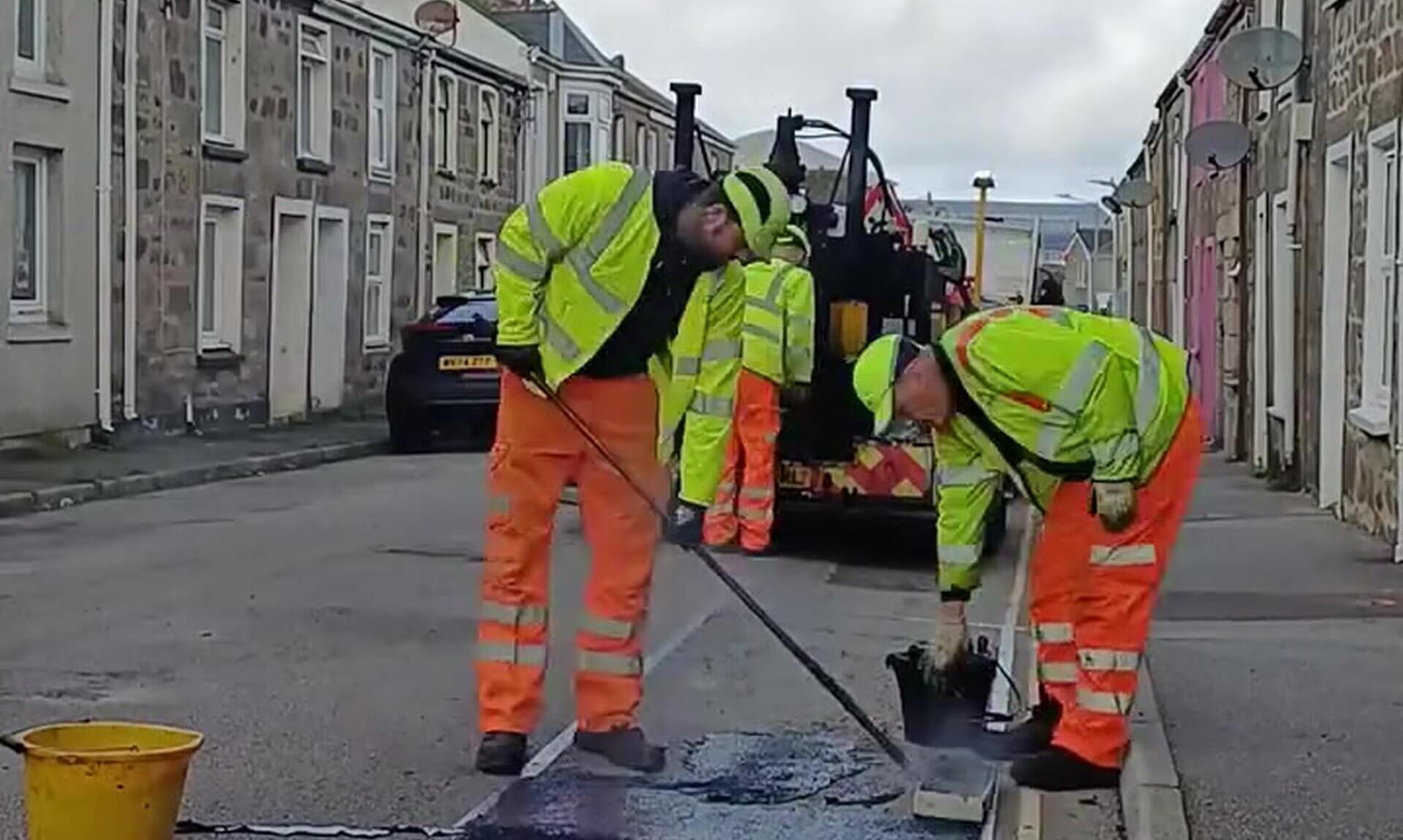
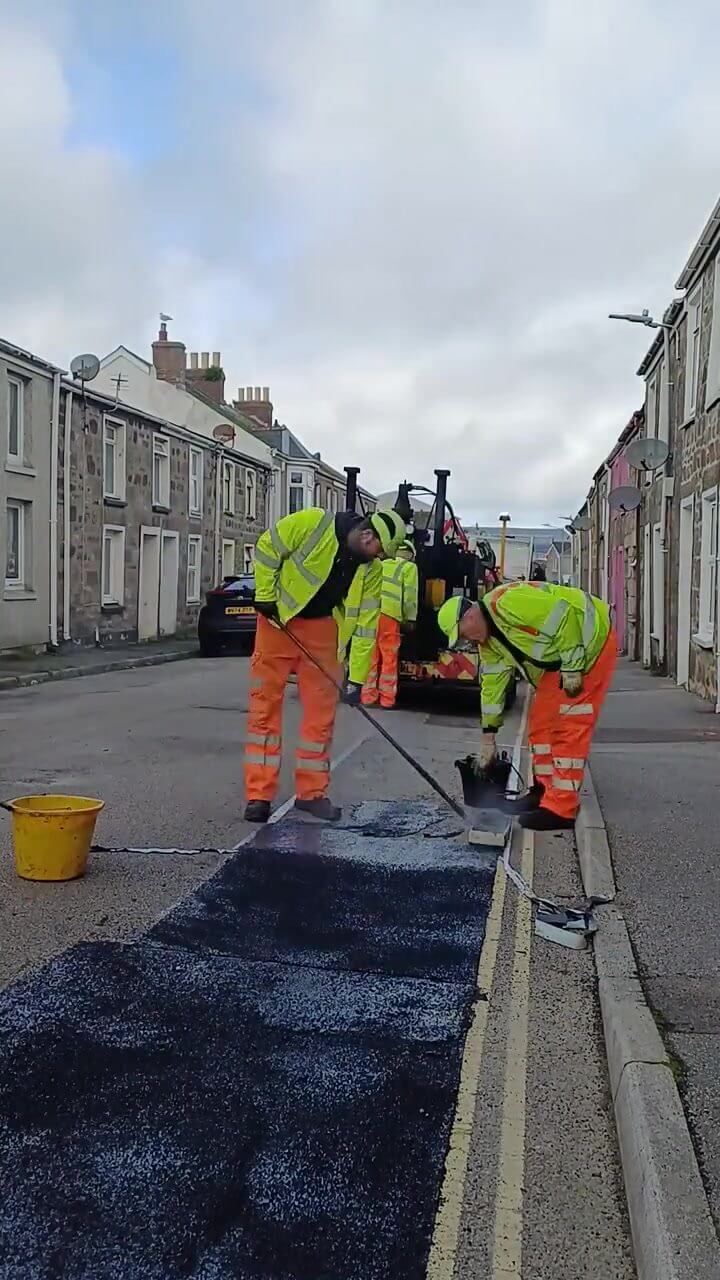
Road crews have been repairing patches of worn road across Cornwall, focusing on the sections most likely to develop potholes this winter.
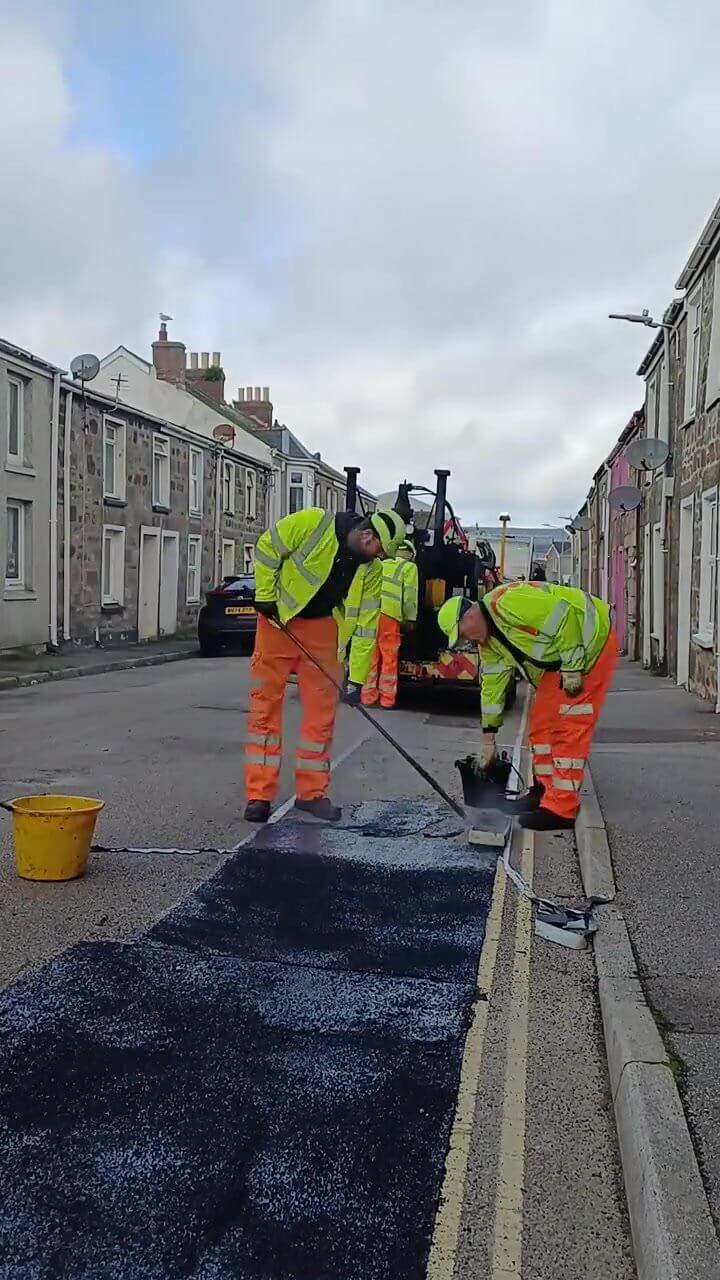
The material they are using is made from recycled old car tyres and bitumen. In the footage, it is heated on site, poured into buckets and spread across worn patches of road with a flat screed box, where it bonds to the existing road surface.
The council calls it a weapon in the war against potholes. The idea is to keep water out, slow down wear and tear, and make the roads stronger for longer.
Why rubber?
Cornwall is not the only place turning old tyres into road repairs. Councils including Derbyshire, Essex and Buckinghamshire have trialled repair materials made partly from recycled lorry tyres, which are more elastic than traditional asphalt. The City of York Council notes that around 40 million waste tyres are generated in the UK each year, and that rubber in a road surface can help stop water getting in, reducing the freeze damage that leads to potholes.
A big network and a hard winter behind it
Cornwall Highways manages around 7,300km of road on the council’s behalf. The A30 and A38 are looked after separately by National Highways.
Last winter was a tough one. Pothole reports rose sharply after storms and prolonged heavy rain, as we reported earlier this year, with the backlog of reported defects peaking at around 5,700 in February 2026. By early May it had fallen to just over 2,000. The council repaired 33,730 potholes during 2025, at an average cost of £85 each.
Its latest highways transparency report says the council is now using stronger, longer-lasting materials and new repair methods designed to reduce repeat work. It describes fixing roads early as often better and cheaper than waiting until they are badly damaged.
How to report a pothole
Potholes can still appear between inspections, sometimes overnight. You can report one on the council’s pothole reporting page. For urgent problems or emergencies outside normal office hours, call 0300 1234 222.
You can find more updates from Cornwall Council on CornishStuff.
As the council puts it at the end of the video, it isn’t saying Cornwall won’t see any potholes this winter. But it is doing its best to keep them at bay.
Read Next
- Cornwall CouncilHow much more will your council tax bill be next year?
Share This Story, Choose Your Platform!
To keep up with the latest cornish news follow us below
Follow CornishStuff on Facebook - Like our Facebook page to get the latest news in your feed and join in the discussions in the comments. Click here to give us a like!
Follow us on Twitter - For the latest breaking news in Cornwall and the latest stories, click here to follow CornishStuff on X.
Follow us on Instagram - We also put the latest news in our Instagram Stories. Click here to follow CornishStuff on Instagram.
- 1
- 2
- 3
- 4
- 5
- 6