Cornwall Sees No Gynaecology Compensation Despite NHS Payouts Elsewhere

Women treated in Cornwall have received no compensation at all for gynaecology related claims over the past five years, despite multiple cases being brought against the county’s main NHS trust, newly released figures show.
Freedom of Information data obtained by Medical Negligence Assist reveals that Royal Cornwall Hospitals NHS Trust faced 16 gynaecology related claims between 2020/21 and 2024/25. No damages were recorded as having been paid during that period.
The claims were made across several financial years, but none resulted in a disclosed compensation payout. This places Royal Cornwall among a small number of NHS trusts nationwide that did not settle or pay damages in any gynaecology related cases over the five year timeframe.
Your daily dose of Cornwall
News, events and goings on across the Duchy
A stark contrast with neighbouring areas
The situation in Cornwall contrasts sharply with neighbouring parts of the South West.
In Devon, Royal Devon University Healthcare NHS Foundation Trust paid out £1,329,563 over the same period. The trust faced 29 claims, with 22 settled, resulting in an average payout of around £60,400 per successful claimant.
Across the Tamar in Plymouth, payouts were significantly higher. University Hospitals Plymouth NHS Trust compensated patients £2,896,016 between 2020/21 and 2024/25. Of the 33 claims recorded, 14 were settled, giving an average payout of roughly £207,000, more than three times the Devon average.
Millions paid out nationally
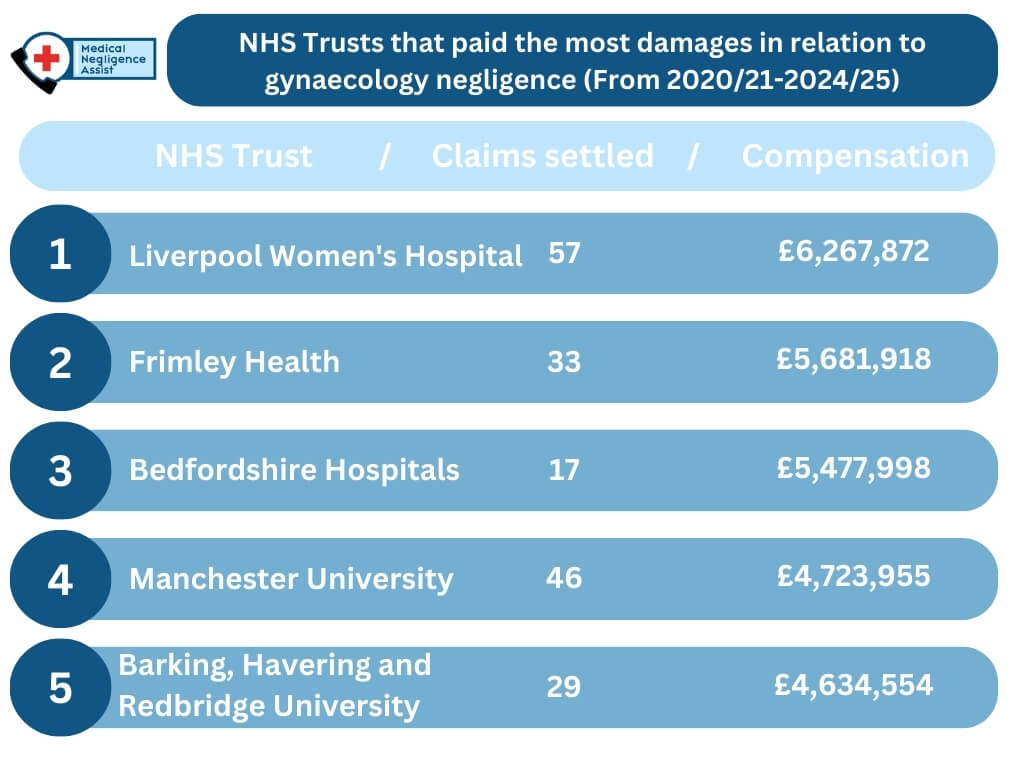
The regional figures form part of a wider national picture. Across England, 94 NHS trusts paid a total of £91,817,142 in gynaecology related compensation over the past five years.
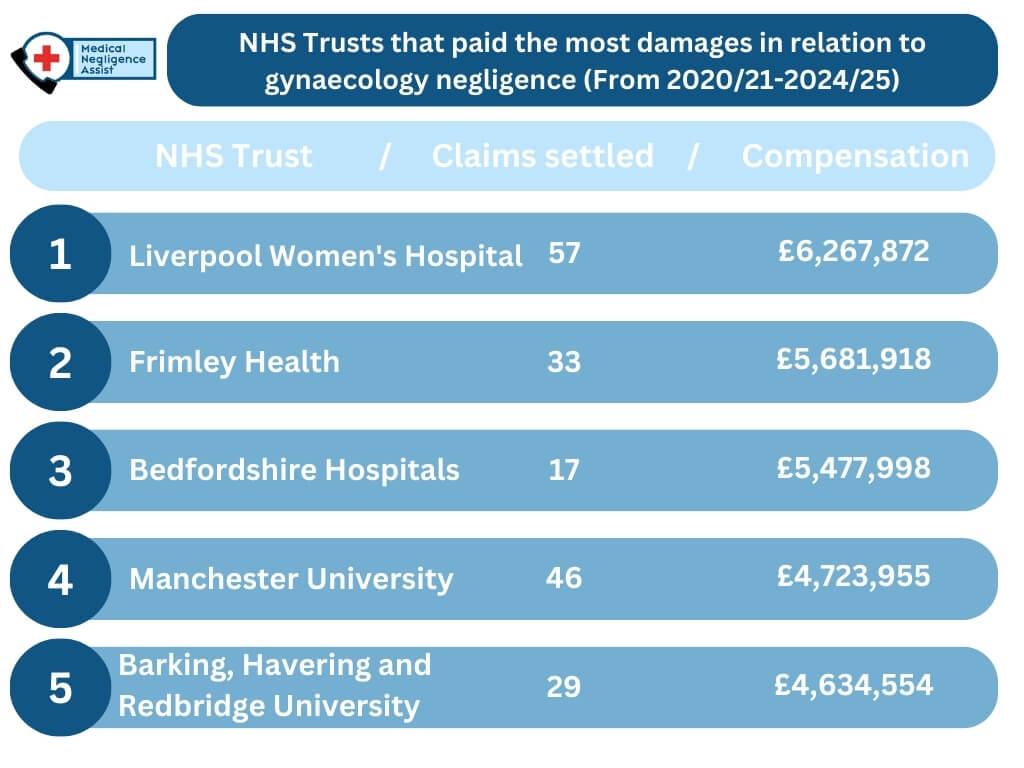
The highest compensator was Liverpool Women’s Hospital NHS Foundation Trust, which paid £6,267,872, accounting for 6.8% of all damages nationally.
Meanwhile, Northern Care Alliance NHS Foundation Trust settled the highest proportion of gynaecology related claims of any major trust. It paid £4,468,246 to patients, with 51 of its 68 claims resulting in compensation.
At the other end of the scale, Chelsea & Westminster Hospital NHS Foundation Trust did not pay any compensation despite facing 44 claims, the highest number of rejected claimants in England. County Durham and Darlington NHS Foundation Trust followed closely behind, denying compensation in 34 cases.
The sharpest rise in payouts was recorded by Barking, Havering and Redbridge University Hospitals NHS Trust, where compensation increased from £278,455 in 2020/21 to £2,466,521 in 2024/25.
Calls for government action
Following the release of the figures, solicitor Gareth LLoyd, head of medical negligence at JF Law, urged the Labour government to intervene.
He said:
“The figures paint a distressing time for women. As the data shows, negligence in gynaecological care can lead to serious injuries such as infertility, bladder and bowel problems, which can throw people’s lives upside down.
“With the Labour government promising to tackle problems within the NHS, this £100 million compensation bill should prompt them to take a hard look at gynaecology and to put an effective plan in place to tackle the issues and raise the standard of care.
“More needs to be done to protect women in the UK, and for those women who suffered due to medical negligence, they deserve to be compensated.”
Your daily dose of Cornwall
News, events and goings on across the Duchy
What the claims show
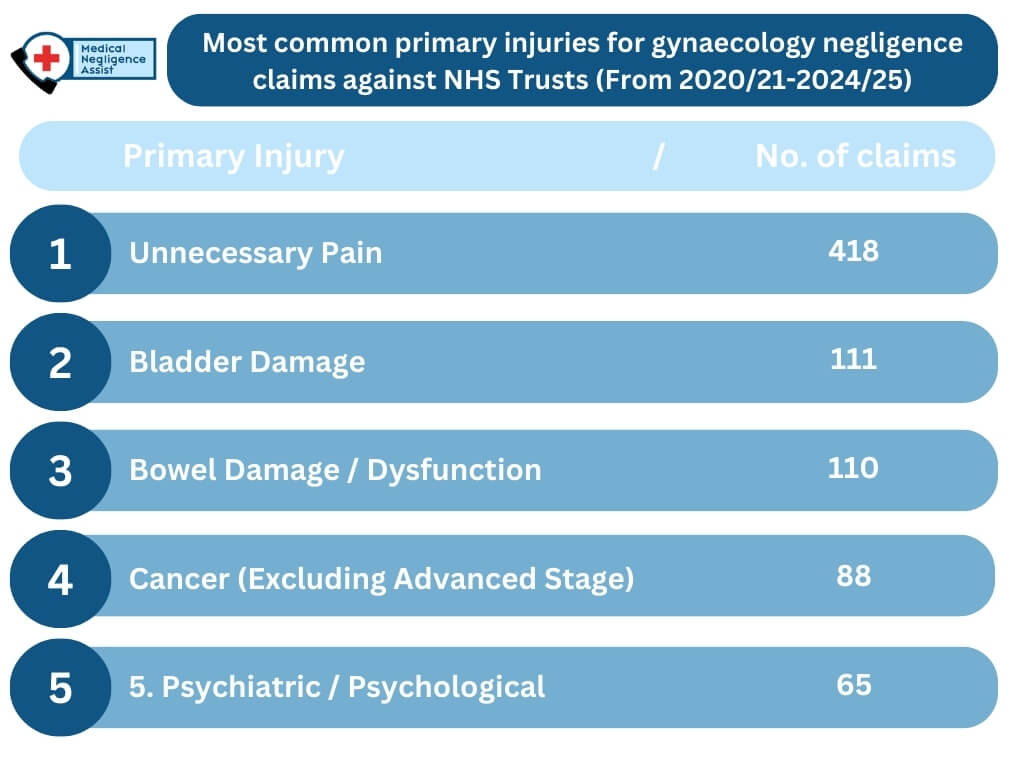
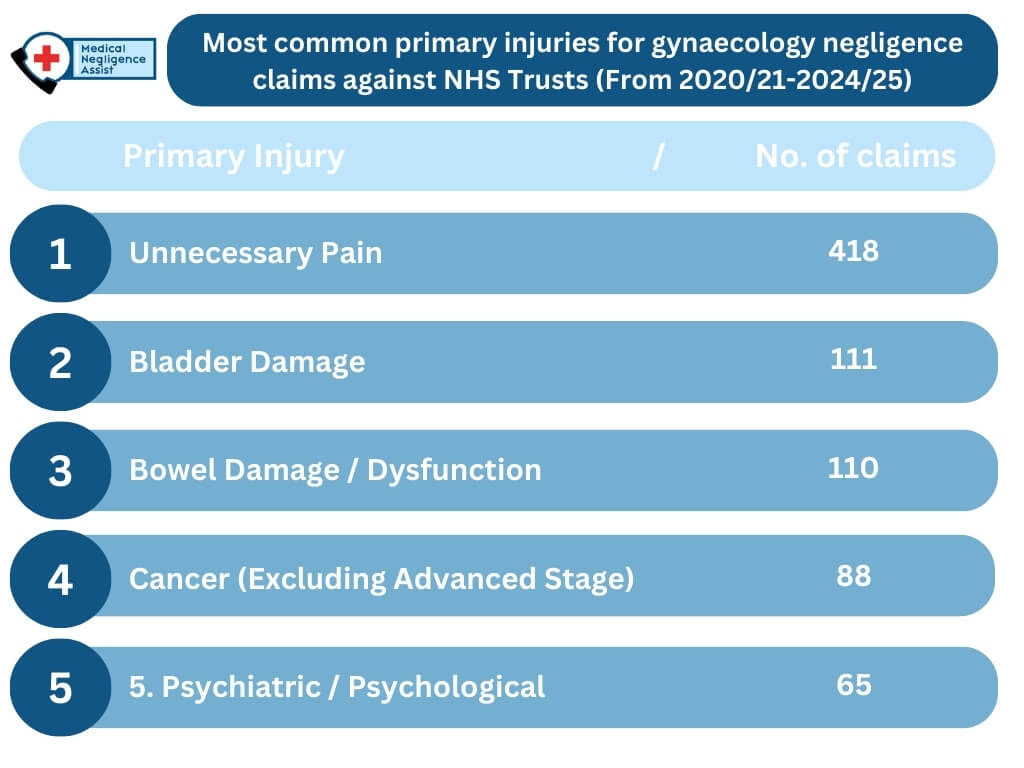
Nationally, the most common primary injury claim was for unnecessary pain, with 418 cases recorded over the past five years. There were also 62 claims related to infertility.
While total damages paid in 2024/25 were almost £2 million lower than in 2023/24, this came during a period of widespread strikes across the NHS.
Annual compensation payments stood at £17,782,455 in 2020/21, £18,777,210 in 2021/22, £18,013,131 in 2022/23, £19,565,601 in 2023/24 and £17,678,745 in 2024/25.
The data also shows there were 150 cancer related claims nationwide. Of these, 62 were filed by women who were diagnosed at advanced stages due to negligence by NHS trusts in England.
Burnout concerns among doctors
The figures follow a recent survey by researchers at Imperial College London, which found high levels of burnout among gynaecologists and obstetricians since 2020.
The World Health Organisation recognises burnout as an occupational phenomenon. It can leave workers feeling exhausted and, if left unchecked, may lead to reduced empathy and compassion towards patients.
The 2022 survey found that 72% of the 1,114 doctors who took part met the criteria for burnout.
Medical Negligence Assist says it offers expert legal support and advice to those affected by gynaecology negligence, including access to a free consultation and a 24 hour helpline via its website.

Read Next
- Arts & CultureIt has been to Paris, Cairo, Sarajevo and Mexico City.
Share This Story, Choose Your Platform!
To keep up with the latest cornish news follow us below
Follow CornishStuff on Facebook - Like our Facebook page to get the latest news in your feed and join in the discussions in the comments. Click here to give us a like!
Follow us on Twitter - For the latest breaking news in Cornwall and the latest stories, click here to follow CornishStuff on X.
Follow us on Instagram - We also put the latest news in our Instagram Stories. Click here to follow CornishStuff on Instagram.
- 1
- 2
- 3
- 4
- 5
- 6