Study Finds Bone Density Does Not Affect Ability to Float
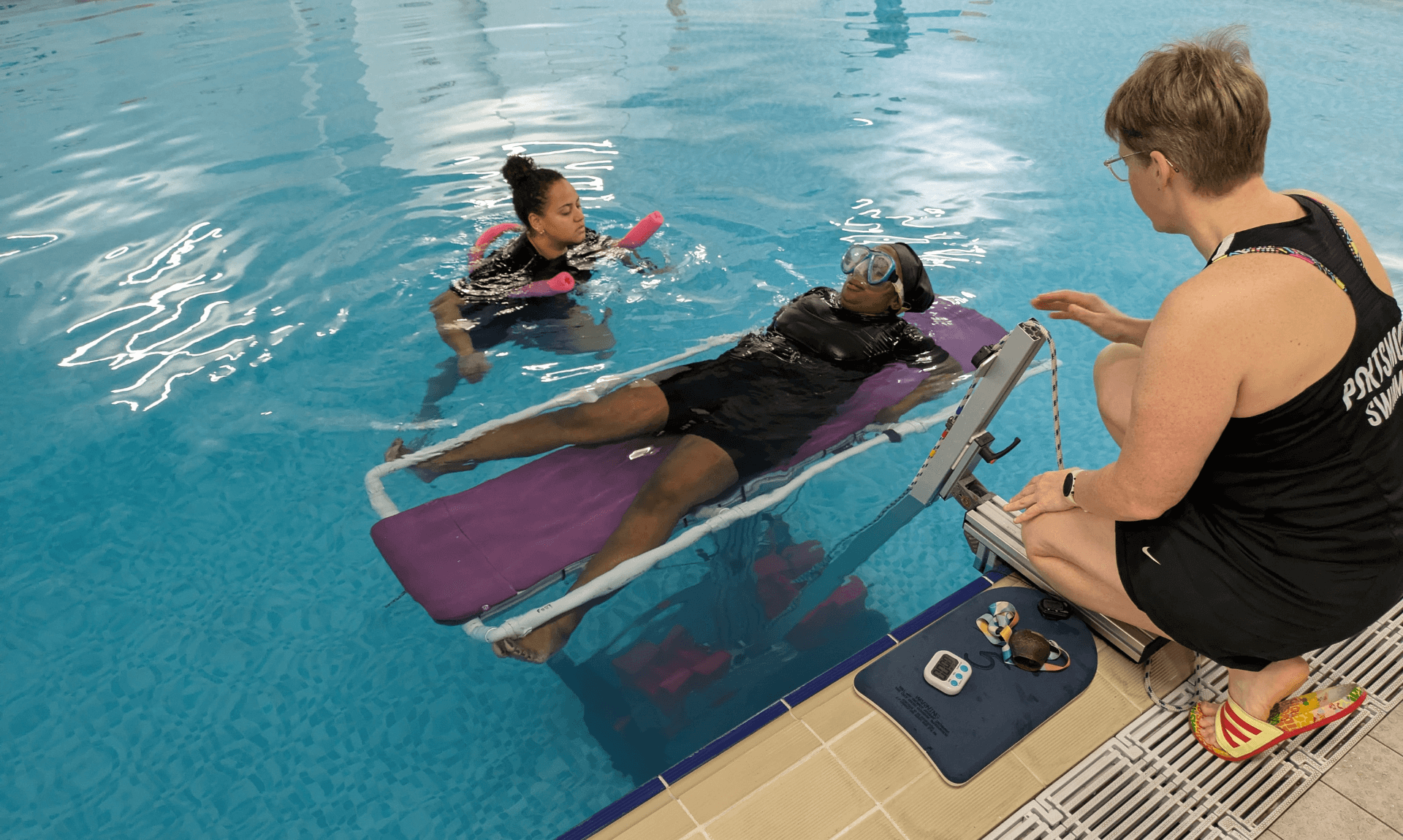
A major new study has challenged a long held belief about floating and swimming, finding that people of African, Caribbean and Asian heritage can float just as effectively as anyone else when given proper instruction.
The research, led by the Black Swimming Association and carried out by the University of Portsmouth in partnership with the RNLI, found that bone density has no impact on a person’s ability to float.
93% Floated Successfully
The study involved 96 participants of African, Caribbean, Asian or mixed heritage who attempted an unassisted two minute float. Of those, 89 were successful, giving a success rate of 93%.
Researchers measured body composition using advanced imaging, including DXA scans, alongside buoyancy levels and floating technique. The results showed no link between higher bone mineral density and the ability to float.
Floating Is Not One Size Fits All
The research highlighted that floating does not look the same for everyone. While some people can float passively with little effort, others require gentle movement and technique to stay afloat.
Body fat percentage was found to influence buoyancy, but it was not the deciding factor. Participants with lower body fat were still able to float competently once they found a technique that worked for their body.
Dr Heather Massey, Lead Researcher from the University of Portsmouth’s Extreme Environments Laboratory, said:
“When most people think about floating, they picture lying perfectly still with the whole of their body resting at the water’s surface. In reality, that is possible for some people, but doesn’t work for everyone.
“For many, staying afloat and keeping the nose and mouth clear of the water takes effort and a bit of technique, but it’s absolutely possible and needs to be practiced so that every person can find a floating position that requires the least amount of effort for themselves.”
Researchers also found that maintaining a flat, horizontal position was not necessary. What mattered most was helping individuals “find their float” in a way that felt natural for them.
Tackling a Harmful Myth
The study was commissioned to address the persistent belief that people of Black heritage have “heavy bones” and are therefore less buoyant. This misconception has discouraged generations from taking part in water based activities and learning vital water safety skills.
Danielle Obe, Chair and cofounder of the Black Swimming Association, said:
“The Float research marks a generational turning point. For the first time, we have rigorous scientific evidence confirming that there is no physiological reason why people from our communities cannot float. Our slogan stands true: Every Body Floats.
“The barrier was not only belief; it was also the long-held assumption that there is just one way to float in the starfish position. Our work evidences that everybody floats differently, and we must teach floating differently.
“Float transforms fear into knowledge, and knowledge into safety. Now that we understand how everybody floats, we can finally reach the people who were never reached, and save the lives that were always saveable.”
Water Safety and Drowning Risk
The findings come against a backdrop of concerning statistics. According to the National Child Mortality Database, in the year ending 31st March 2024, Black children in England were at three times higher risk of drowning than white children.
Sport England data also shows that 96% of Black adults and 95% of Asian adults in England do not swim regularly. Around 75% of participants in this study reported little to no recent water experience before taking part.
Earlier this year, the RNLI and the National Water Safety Forum encouraged the public to “Find Your Float” on World Drowning Prevention Day.
Gareth Morrison, Head of Water Safety at the RNLI, said:
“We know that everyone floats differently and it’s important that this message reaches communities across the UK and Ireland as we also know that using the Float to Live technique can save your life if you get into difficulty in any body of water. We would advise everyone to practise floating in a safe, lifeguarded place to ensure they know what to do if they get into trouble in the water.”
Personal Experience in the Water
Elizabeth Adan-Peart, 59, took part in the study and described how the experience changed her relationship with water.
She said:
“I was very nervous on the day but I had a great time and I learnt a lot about my float style. My float experience before this involved nearly drowning as a child so I stayed out of the water after that.
“By the end of the session I could float. I’ve mentioned my experience to others and since found out there are lots of people who are not confident in water. Learning how to stay afloat definitely builds water confidence.”
Documentary Release on BBC iPlayer
A 60 minute feature documentary will accompany the research findings, airing on 11th December on S4C and BBC iPlayer.
The Welsh language programme, titled Seren Jones: Yn Fyw yn y Dŵr (Alive in Water) and available with English subtitles, follows journalist and Black Swimming Association cofounder Seren Jones as she explores the origins of the heavy bones myth and the wider impact of water safety education across Wales and the UK.
Seren Jones said:
“While the findings reveal that a lot of people haven’t been taught how to find their float, the documentary reveals that a lot of people have never been taught basic water safety education.
“On average, around 400 people accidentally drown every year in the UK, yet conversations around water safety are not prioritised in our schools nor our homes. We need to ensure that members of the public, especially those considered high risk, know how to be safe in and around water so we can prevent drownings across the country.”
What Happens Next
The Black Swimming Association, University of Portsmouth and the RNLI believe the findings provide strong evidence to support water safety messaging and could encourage wider participation in aquatic activities.
While the findings are currently classed as preliminary, the research paper is expected to be submitted to an academic journal in 2026.
The study was funded by the RNLI, approved by the NHS Research Ethics Committee, and included detailed measurements such as lung volume testing and underwater weighing to determine buoyancy.
Share This Story, Choose Your Platform!
To keep up with the latest cornish news follow us below
Follow CornishStuff on Facebook - Like our Facebook page to get the latest news in your feed and join in the discussions in the comments. Click here to give us a like!
Follow us on Twitter - For the latest breaking news in Cornwall and the latest stories, click here to follow CornishStuff on X.
Follow us on Instagram - We also put the latest news in our Instagram Stories. Click here to follow CornishStuff on Instagram.
You Might Also Be Interested In






Don’t Miss What’s Happening in Cornwall
Join others in Cornwall by receiving the latest daily news in Cornwall, sent direct to your inbox.