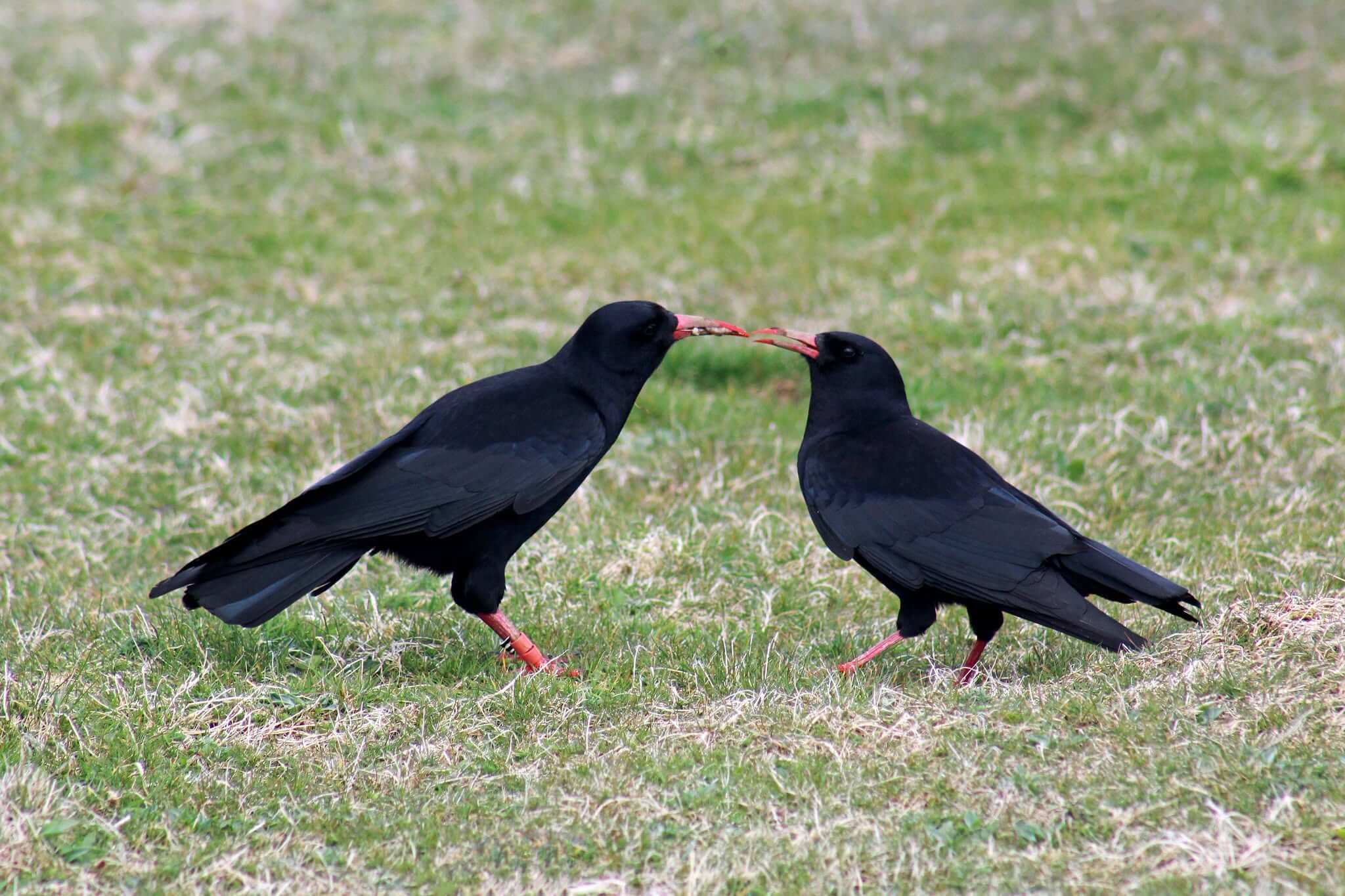
Lizard leads as Cornwall’s Choughs fledge record 161 chicks
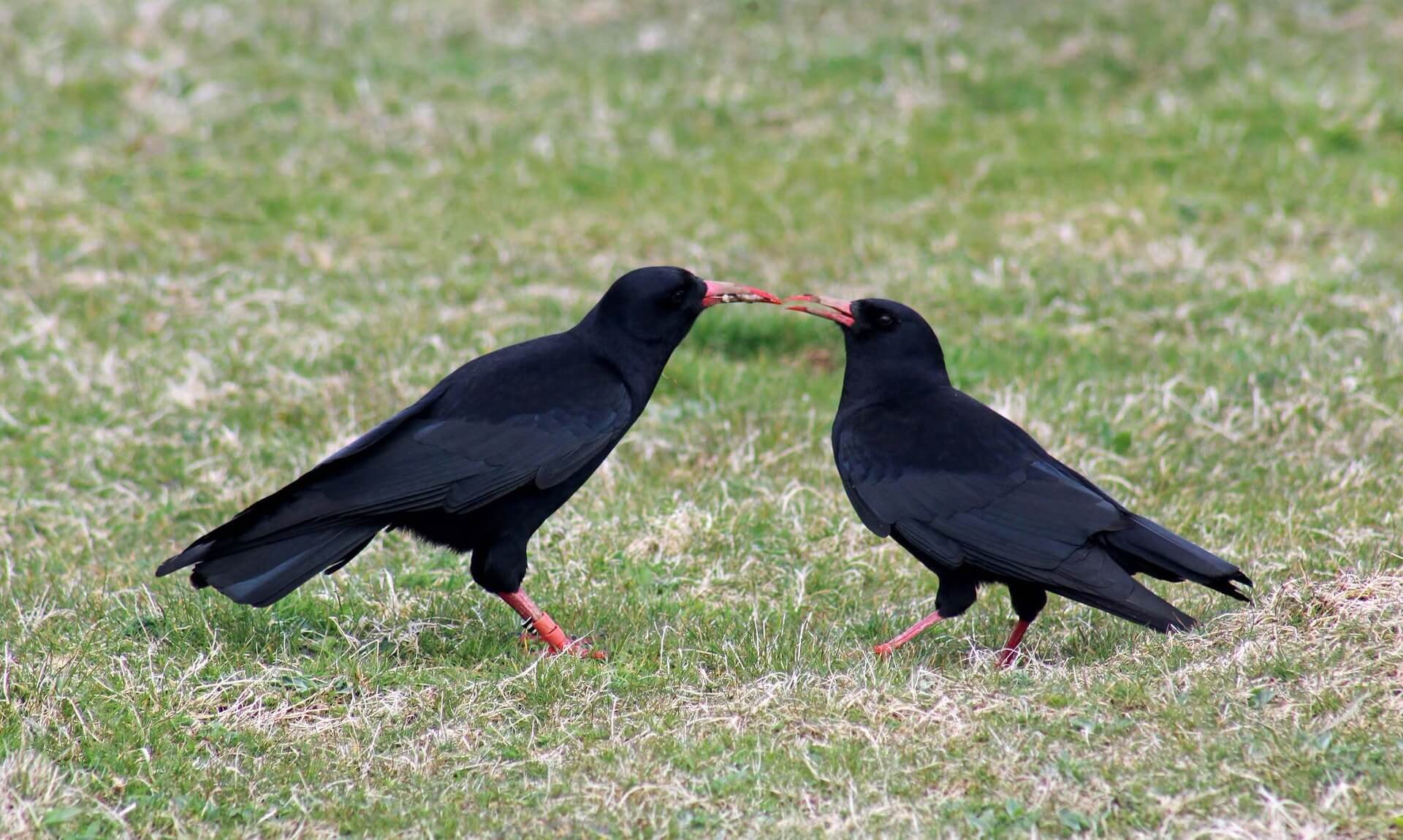
Twenty-five years ago there were three of them. This summer, Cornwall’s clifftops rang out with a record 161 young Choughs, proof that one of the county’s great wildlife comebacks is still gathering pace.
Your daily dose of Cornwall
News, events and goings on across the Duchy
A record-breaking summer
The figure, confirmed by Cornwall Birds (CBWPS), beats the previous best of 129 chicks, set only last year, by 32. Fifty-six successful pairs raised this year’s young, working out at almost three fledglings for every nest, a sign the population is in strong health.
And the Lizard peninsula remains the county’s leading stronghold, producing 26 chicks from eight nests this year, 11 more than in 2025.
Peter Hall, a National Trust Chough monitoring volunteer on the Lizard, has watched the change unfold season by season. “This is the 11th consecutive season that I have monitored Chough nest sites here on the Lizard,” he said. “Never did I foresee a time when I would be monitoring five nest sites in my patch, and certainly not having 16 Choughlets fledge from those sites.
“The past two winters we have been blessed with chatterings in excess of 20 Chough around the Lizard. A far cry from the solitary single pair we had when I started as part of the then nest protection team in 2016. Long may the successful return of this iconic Cornish bird delight myself and others for many years to come.”
From three birds to a chattering
Choughs, with their glossy black feathers and curved red bill and legs, died out in Cornwall in the 1970s. Their distinctive “chee-ow” call went unheard for decades until 2001, when three birds thought to have come from Ireland landed at Lizard Point. Two of them became the pioneering pair from which every bird flying over Cornwall today is descended.
Habitat loss had driven the original Cornish Choughs to extinction. Conservationists, farmers and landowners worked together to reverse it, restoring grazing on clifftops and coastal fields to produce the short, cropped turf that gives Choughs easy access to the insects and larvae that make up their diet.
Lydia Allt, Community, Participation and Volunteering Coordinator for the National Trust on the Lizard and in Mid Cornwall, said this year has been exceptional. “When Choughs returned to the Lizard 25 years ago there were just three birds. Today, thanks to a quarter of a century of conservation work, partnership working and the support of local farmers and land managers, we are seeing record numbers of Chough across the area.
“The Chough is an iconic species and a powerful symbol of Cornwall’s natural heritage. Their remarkable recovery shows what can be achieved when habitats are restored and protected, giving wildlife the space it needs to thrive. To see so many Choughs successfully breeding and feeding across the Lizard is incredibly encouraging and highlights the importance of continuing to care for this special landscape for future generations.”
Twenty-five years of numbers
Chough breeding success has climbed steadily. Just ten years ago, only 23 fledglings were recorded across the whole county. This is now the fourth year running that more than 100 Choughlets have fledged in Cornwall.
- 2023: 39 successful pairs, 112 young
- 2024: 42 successful pairs, 114 young
- 2025: 48 successful pairs, 129 young
- 2026: 56 successful pairs, 161 young
Cornwall Birds (CBWPS) puts the total Cornish Chough population at around 400 birds, with more than 80 pairs on territory this year. Hilary Mitchell and Steve Ashby, of Cornwall Birds, say the scale of the turnaround only becomes clear when set against the county’s past.
Papers recently found by Steve at Trerice, a National Trust property, include notes from the celebrated Cornish birder Lt Col B H Ryves, writing in 1943: “Years ago the Tintagel area was its greatest stronghold but this is no longer so. There is, however, some evidence that a pair may have bred lately near Bude. In the main it can be asserted that its range is now limited to the coast between the Gannel and a few miles northward of Port Isaac.
“I would not venture to say that there are more than three or four breeding pairs in Cornwall, and even these do not all breed every year. Besides them there are probably a dozen or so non-breeding birds.”
“We know that the Cornish Choughs clung on near Newquay until the last bird disappeared in 1973,” Hilary and Steve said. “The arrival of three Choughs from Ireland in 2001 on Lizard began the incredibly successful recolonisation that we see today. 2026 has been a fantastic year for Choughs on Lizard in particular, and testament to all the hard work done by volunteers, farmers and landowners across Cornwall that chatterings of Cornish Choughs are now found on much of the Cornish coast.”
Your daily dose of Cornwall
News, events and goings on across the Duchy
Spreading beyond the Lizard
Penwith now forms part of a thriving stronghold for Choughs in West Cornwall, where the birds benefit from a rich variety of interconnected habitats across the wider landscape. Choughs are also breeding on the Roseland, and in increasing numbers in mid and north Cornwall, a trend conservationists hope will eventually see the species recolonise other parts of the country.
None of it happens without people watching the nests. Volunteers have been central to the Chough story from the beginning, from round-the-clock nest protection in the early years to monitoring more than 70 breeding attempts this year.
Andrew Jones, Chough Conservation Officer for the RSPB in Cornwall, said: “There has been a huge volunteer effort over the past 25 years to protect and monitor Cornwall’s iconic Choughs and we’re grateful to everyone who has played their part in this conservation success story. This year, the RSPB and National Trust have had a team of around 50 dedicated volunteer Chough watchers, covering the coastline from the Roseland all the way round to Bude, monitoring the breeding efforts and reporting back so we could collate these fantastic, record-breaking numbers.”
How you can help
The Cornish Chough Conservation Network brings together the RSPB, the National Trust, Natural England and Cornwall Birds (CBWPS). Anyone who spots a Chough in Cornwall is asked to email their sighting to [email protected]. Cornwall Birds is keen to hear every record, including from anyone lucky enough to see Choughs turning up in their own garden, and what they were feeding on when they did.
Read Next
- EventsFancy having a go at a sport your ancestors might have wrestled in a field for, five hundred years ago?
Share This Story, Choose Your Platform!
To keep up with the latest cornish news follow us below
Follow CornishStuff on Facebook - Like our Facebook page to get the latest news in your feed and join in the discussions in the comments. Click here to give us a like!
Follow us on Twitter - For the latest breaking news in Cornwall and the latest stories, click here to follow CornishStuff on X.
Follow us on Instagram - We also put the latest news in our Instagram Stories. Click here to follow CornishStuff on Instagram.
- 1
- 2
- 3
- 4
- 5
- 6