Cornwall swimmers: the colour that could save your life
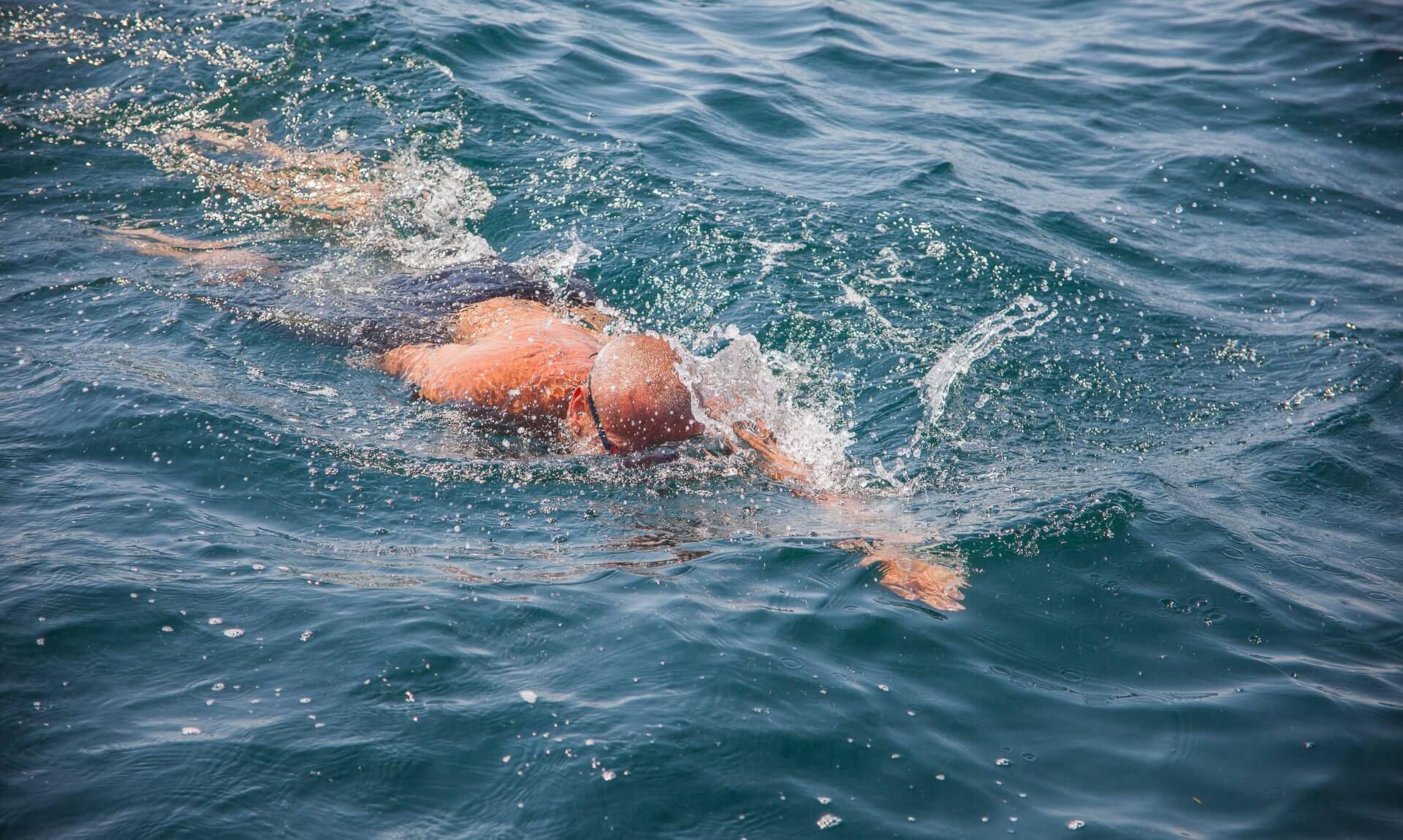
You’re bobbing along past the buoy line, wetsuit dark against the swell, and from the beach you’re just another ripple on the water. That’s the ordinary reality for most sea swimmers. HM Coastguard’s parent body, the Maritime and Coastguard Agency wants to change it with a simple message: be bright, be seen.
Your daily dose of Cornwall
News, events and goings on across the Duchy
The comparison that makes the point
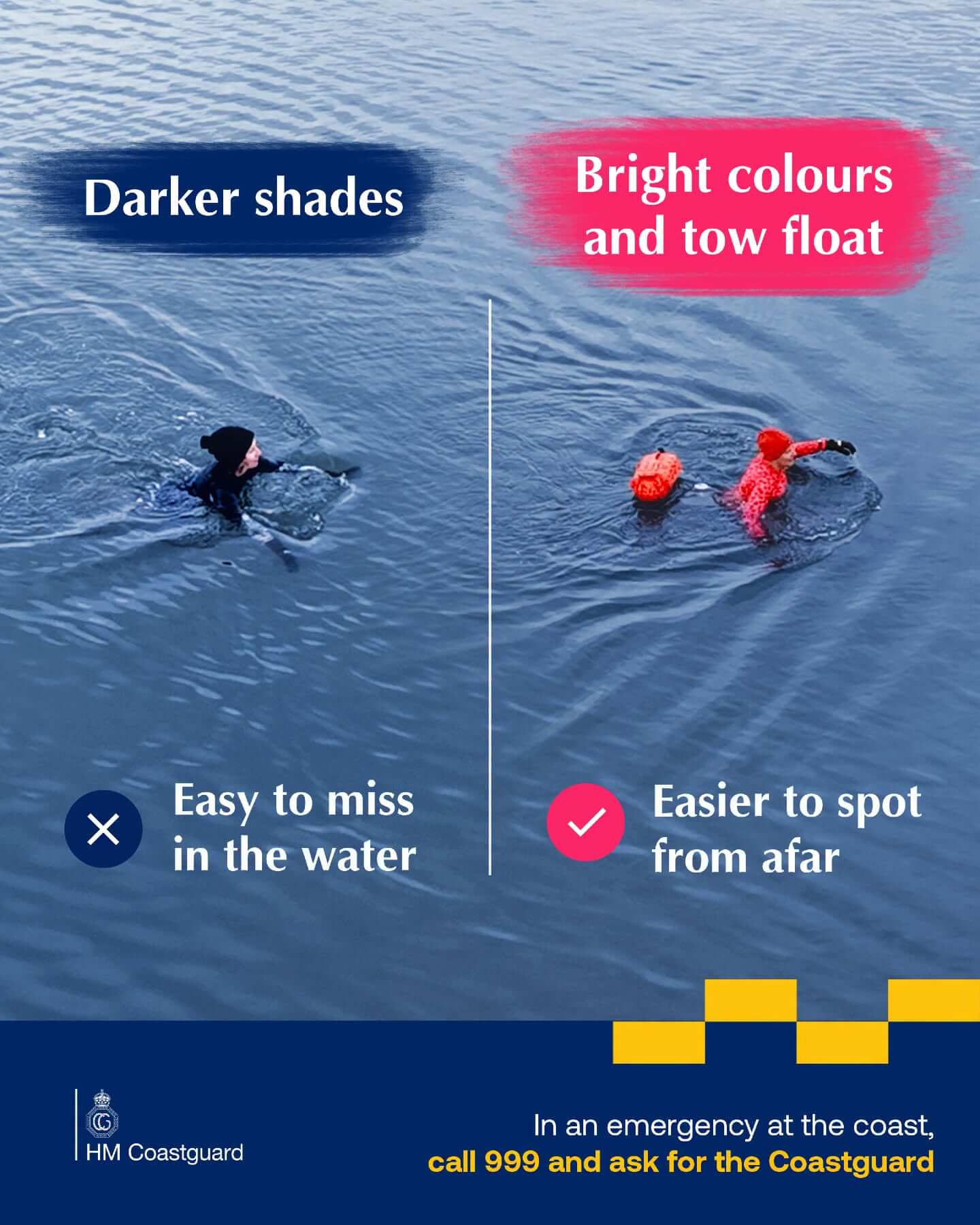
The Coastguard’s own side-by-side photo does the explaining better than words. On one side, a swimmer in dark shades all but vanishes into grey-blue water, only a small ripple giving them away. On the other, the same scene with a swimmer in bright red and an orange tow float bobbing beside them, visible from a distance even against choppy water. The caption underneath is blunt: darker shades are “easy to miss in the water”, bright colours and a tow float are “easier to spot from afar.”
It sounds obvious once you see it, but it’s the kind of thing that’s easy to overlook when you’re getting dressed for a dip. Neon yellow, green, orange and pink are the colours the Coastguard is asking people to reach for, whether that’s a swim hat, a wetsuit, or the tow float itself.
Why the colour of your kit actually matters
This isn’t just a slogan. Testing carried out for the safety equipment maker Mustang Survival, examining how visible different colours are to the human eye against open water, found fluorescent green stood out furthest in normal daylight, with orange, red and plain yellow trailing behind it in that order. Peripheral vision, which is often what actually catches a swimmer in trouble at a distance, responded best to red and green. Plain black or navy, the colours most wetsuits come in by default, barely register against a grey or blue sea at all.
A tow float adds a second layer of visibility on top of clothing colour. It sits on the surface, catches the light, and gives anyone watching from the shore, a boat, or a lifeboat a fixed point to track, which matters if a swimmer’s head keeps dipping below the swell. Most tow floats already come in fluorescent orange, yellow or pink for exactly this reason.
It isn’t just about being rescued
Standing out in the water helps in two different emergencies. The obvious one is a swimmer getting into difficulty and needing the Coastguard, the RNLI or a lifeguard to find them fast. The other is simply being seen by other water users in the first place, kayakers, paddleboarders, jet skis and small boats, so nobody swims into a hazard, or a hazard swims into them, without realising anyone’s there.
HM Coastguard has shared real examples of both playing out. In one incident it publicised, a group of open water swimmers off the north-west coast got caught in a current far stronger than expected. One of the group used her own brightly coloured tow float to keep hold of a struggling swimmer while the others raised the alarm, and the float stayed visible to the rescue helicopter crew as they searched. It’s the kind of detail that only matters in the moment it’s needed, which is exactly why the advice is to have it on before you go in, not to think about it once things have already gone wrong.
Your daily dose of Cornwall
News, events and goings on across the Duchy
What to actually do before you get in
- Wear the brightest kit you own. Neon yellow, green, orange or pink beats black, navy or grey every time.
- Use a tow float, ideally one with a dry bag if you’re swimming any distance from shore.
- Swim with someone else where you can, and agree beforehand what you’ll do if either of you gets into trouble.
- Tell someone on land where you’re going and roughly how long you’ll be.
- Check the tide times and conditions before you get in, not after.
None of it takes the risk to zero. But in the gap between someone noticing you’re struggling and someone reaching you, the colour on your back can be the difference that counts.
In an emergency at the coast, call 999 and ask for the Coastguard.
Read Next
- LooeJoining a conservation group in Looe does not have to mean sitting in meetings.
Share This Story, Choose Your Platform!
To keep up with the latest cornish news follow us below
Follow CornishStuff on Facebook - Like our Facebook page to get the latest news in your feed and join in the discussions in the comments. Click here to give us a like!
Follow us on Twitter - For the latest breaking news in Cornwall and the latest stories, click here to follow CornishStuff on X.
Follow us on Instagram - We also put the latest news in our Instagram Stories. Click here to follow CornishStuff on Instagram.
- 1
- 2
- 3
- 4
- 5
- 6