Falmouth Harbour among three UK ports trialling new battery and shore-power technology
What if the boats in Falmouth could plug in and charge up like an electric car, without the harbour needing a costly grid overhaul to make it happen? That question sits at the heart of a project that has just wrapped up, with Falmouth Harbour as one of its three test sites.
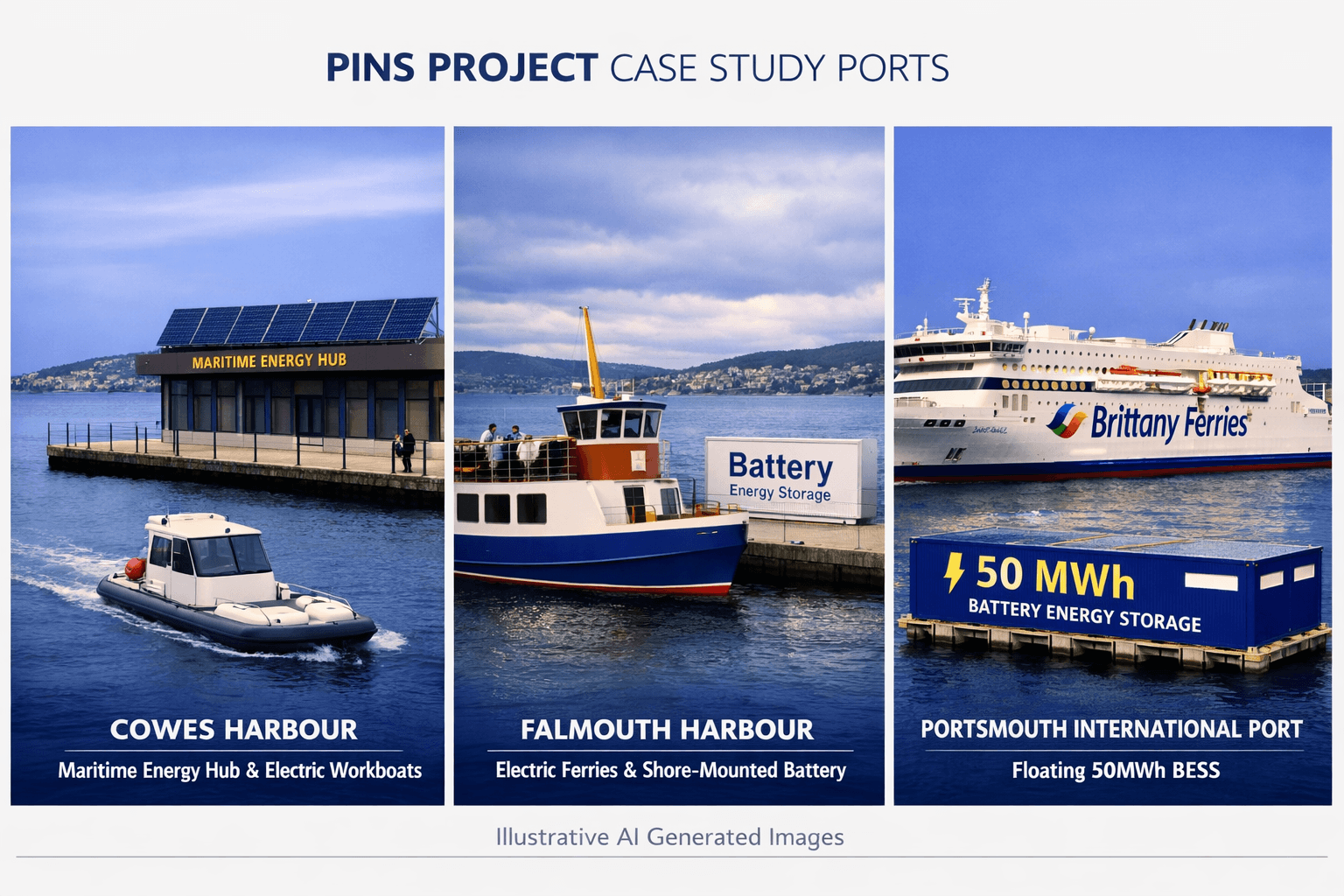
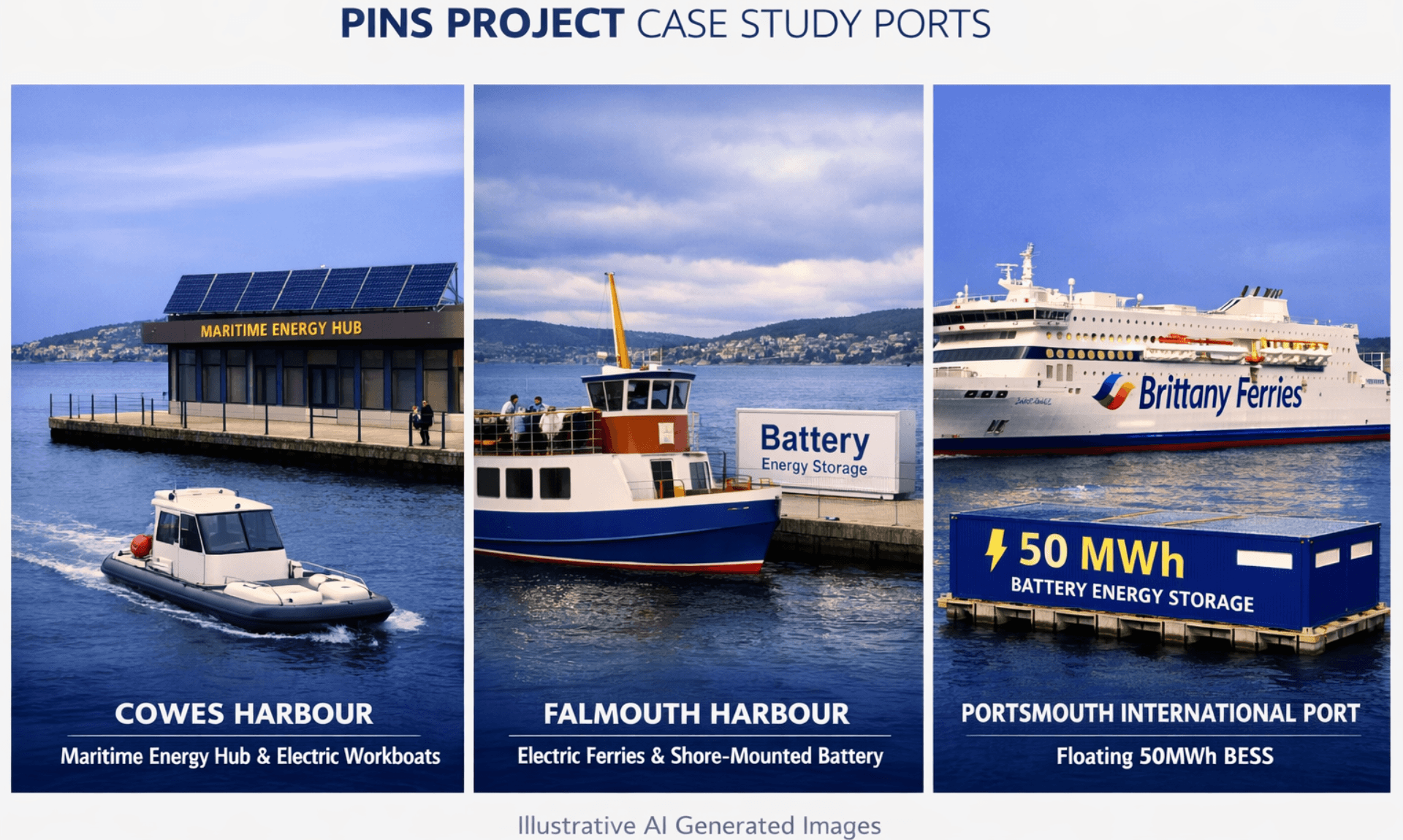
Falmouth Harbour was among three UK ports chosen to pilot a UK Government-backed scheme designed to rethink battery and shore-power infrastructure at British ports. The Port Infrastructure using Novel Energy Storage (PINS) project looked at how ports and harbours can get past grid limitations and the high cost of connections, both of which stand in the way of electrifying vessels.
Your daily dose of Cornwall
News, events and goings on across the Duchy
What the project set out to do
Working across pilot sites in Falmouth, Cowes and Portsmouth, the study took on the different operational needs and infrastructure challenges of each location. The conclusion was that battery energy storage, paired with smart energy management, makes shore power and vessel charging more feasible, scalable and affordable.
The project was funded by the UK Government through the UK Shipping Office for Reducing Emissions (UK SHORE) in the Department for Transport. It was coordinated by MSE International alongside nine partners drawn from industry and academia, bringing together knowledge of maritime operations, energy storage and systems engineering.
Testing the technology
The team assessed both present and future vessel charging requirements, modelled duty cycles and reviewed four battery types: lithium-iron phosphate (LFP), second-life lithium-ion, sodium-ion (NIB) and soluble lead-flow batteries (SLFB).
They judged each option on cost, performance, safety and how well it suited different port environments. The work showed that both established and newer battery technologies can support port electrification, and that some of the newer innovations offer real supply chain potential within the UK.
Advanced modelling showed that battery-supported systems can cut peak grid demand, allow higher-power charging even where the grid connection is limited, and make better use of onsite solar generation.
The project also examined charging infrastructure options, from CCS-based DC charging for smaller vessels to high-power shore connection systems for ferries and cruise ships. It looked into newer ideas too, including wireless charging and DC microgrids.
What it could mean
The findings suggest that integrated energy storage reduces the need for expensive grid upgrades, improves operational flexibility and helps the UK maritime sector move towards cleaner operations. The project identified significant potential for emissions reductions by speeding up the take-up of electrification among vessel operators, with large-scale deployment of battery-enabled shore power capable of delivering major CO₂ reductions, particularly in harbours held back by grid constraints.
There are economic benefits too. The project pointed to possible job creation in battery integration, electrical contracting, vessel charging infrastructure and port energy system management, along with opportunities for UK supply chains in sodium-ion and soluble lead-flow batteries, and in smart charging and microgrid control.
Dr Jonathan Williams, CEO of MSE International, said: “Historic maritime energy transitions have depended critically on the infrastructure that makes energy resources available in ports at a competitive price. This is also true today – and PINS has shown how ports and harbours can create the electrification infrastructure that their customers will increasingly demand.”
Your daily dose of Cornwall
News, events and goings on across the Duchy
What happens next
The next phase hopes to see a real-world demonstration at one of the pilot sites, testing technical performance, operational processes and commercial models to build the evidence for wider use across UK ports and harbours.
Project partner CENEX has produced a ‘Marine Electrification Insights’ piece assessing the electric vessel charging infrastructure sector and setting out the findings from PINS. The free report is available to download here. You can watch a case study film about the PINS project below.
Read Next
- CharitiesIf you have ever donated to a charity online, bought a ticket to a fundraiser or signed up for a membership, your details are sitting in a database somewhere.
Share This Story, Choose Your Platform!
To keep up with the latest cornish news follow us below
Follow CornishStuff on Facebook - Like our Facebook page to get the latest news in your feed and join in the discussions in the comments. Click here to give us a like!
Follow us on Twitter - For the latest breaking news in Cornwall and the latest stories, click here to follow CornishStuff on X.
Follow us on Instagram - We also put the latest news in our Instagram Stories. Click here to follow CornishStuff on Instagram.
- 1
- 2
- 3
- 4
- 5
- 6