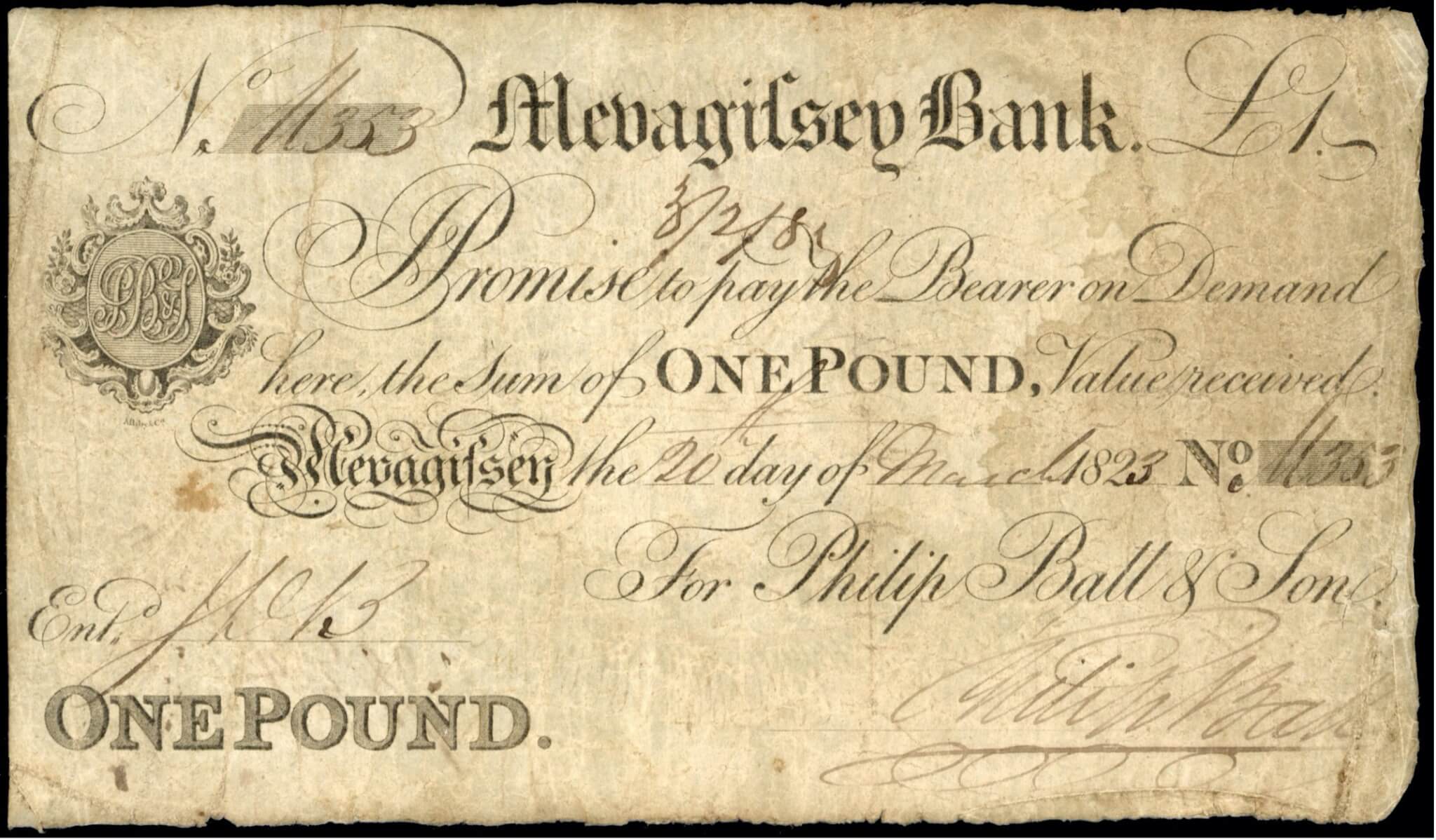
Mevagissey Bank £1 Note From 1823 Set for January Auction
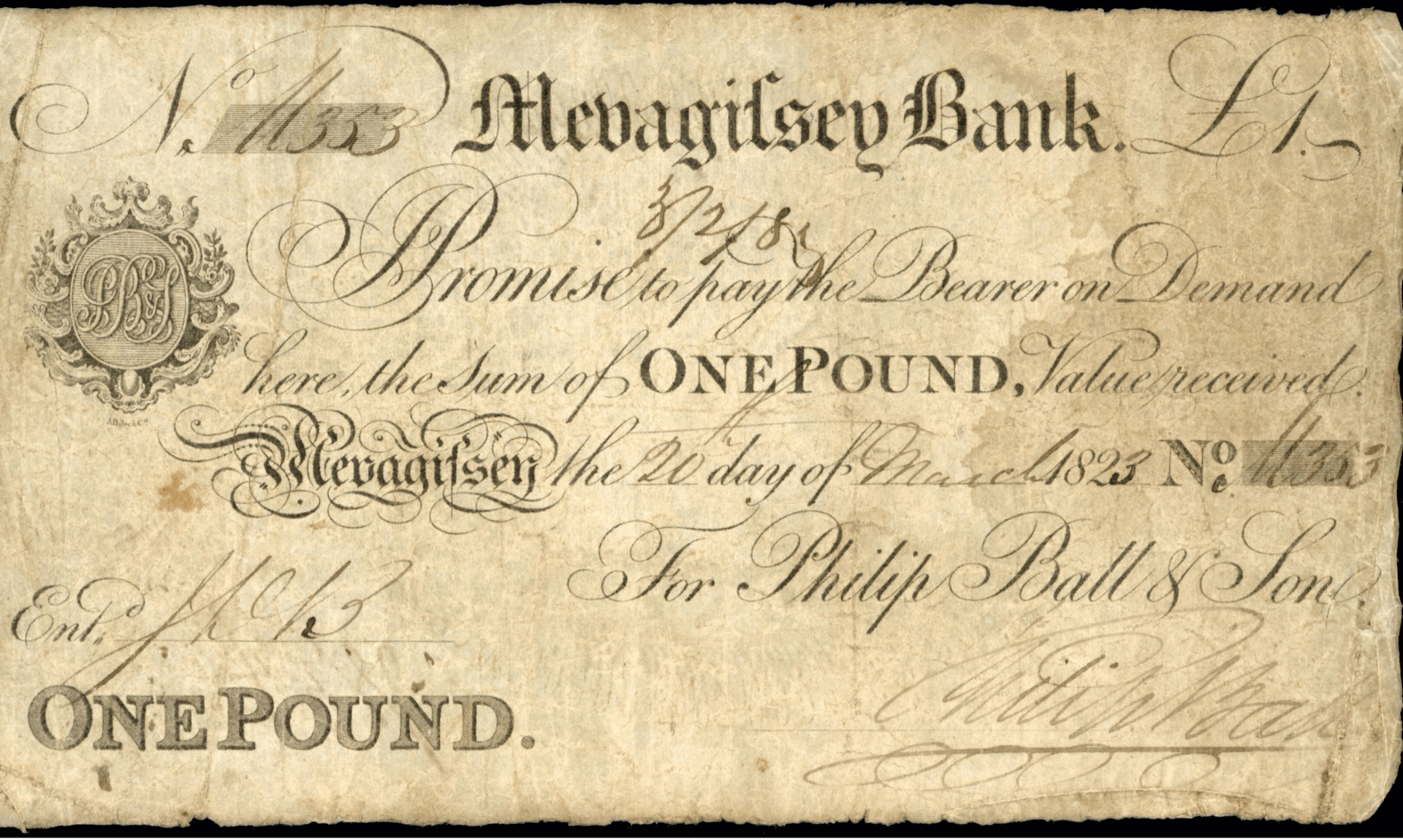
A rare piece of Cornish financial history is set to go under the hammer later this month, with a Mevagissey banknote from 1823 included in a major London auction.
The £1 note, issued by Mevagissey Bank, will be offered as Lot 103 in the British and World Banknotes Auction hosted by Stanley Gibbons Baldwins. The sale takes place on Thursday 29th January 2026 at 10.30am at 399 Strand, London, and online.
A Banknote With Deep Cornish Roots
The note was issued by Mevagissey Bank in 1823. The bank was founded in south Cornwall in 1807 by Philip Ball, but collapsed in November 1824, shortly after this note entered circulation.
At the time, Mevagissey relied heavily on the pilchard trade, which was already in decline by the 1820s. When the bank failed, the town was already struggling, and the collapse caused significant hardship. Many fishing boats were sold along the south coast, and as earning a living from fishing became more difficult, smuggling is thought to have become more important to the local economy. The Ball family were a well known local family in the area.
Why Provincial Banknotes Matter
The Mevagissey note forms part of a stronger section of British Provincial banknotes in the auction. These were issued by private banks across England and Wales during the late 18th and 19th centuries.
At that time, the Bank of England largely confined its operations to the City of London and rarely opened branches elsewhere. Provincial banks stepped in to provide banking services to emerging businesses during the Industrial Revolution, although their size was restricted to a maximum of six partners to limit competition.
Each provincial bank could issue its own banknotes. Legislation in 1777 banned notes under £5, although this was temporarily reduced to £1 or one guinea in 1797 due to financial pressures caused by the war with France. After the French were defeated, the minimum denomination returned to £5 in 1825.
By 1844, there were 442 banks operating in England and Wales. That same year, new private banks were banned, leading to gradual consolidation. Over time, many local banks were absorbed into larger institutions, eventually leaving names such as Barclays, Midland, Lloyds and Nat. West.
A Tangible Link to the Past
Provincial banknotes like the Mevagissey £1 note offer a direct connection to the origins of modern banking and the growth of towns and cities across England. Each note often reflects the character of the area where it was issued, making them valuable historical records as well as collectable items.
The Mevagissey Bank £1 note is estimated to sell for between £80 and £120.
Further details about the auction can be found on the sgbaldwins.com website.
Share This Story, Choose Your Platform!
To keep up with the latest cornish news follow us below
Follow CornishStuff on Facebook - Like our Facebook page to get the latest news in your feed and join in the discussions in the comments. Click here to give us a like!
Follow us on Twitter - For the latest breaking news in Cornwall and the latest stories, click here to follow CornishStuff on X.
Follow us on Instagram - We also put the latest news in our Instagram Stories. Click here to follow CornishStuff on Instagram.
You Might Also Be Interested In








Don’t Miss What’s Happening in Cornwall
Join others in Cornwall by receiving the latest daily news in Cornwall, sent direct to your inbox.