Could your Cornwall home cope for three days without power?
If the power went off tonight and took the phone signal and internet with it, how long could your household manage on what’s already in the cupboards?
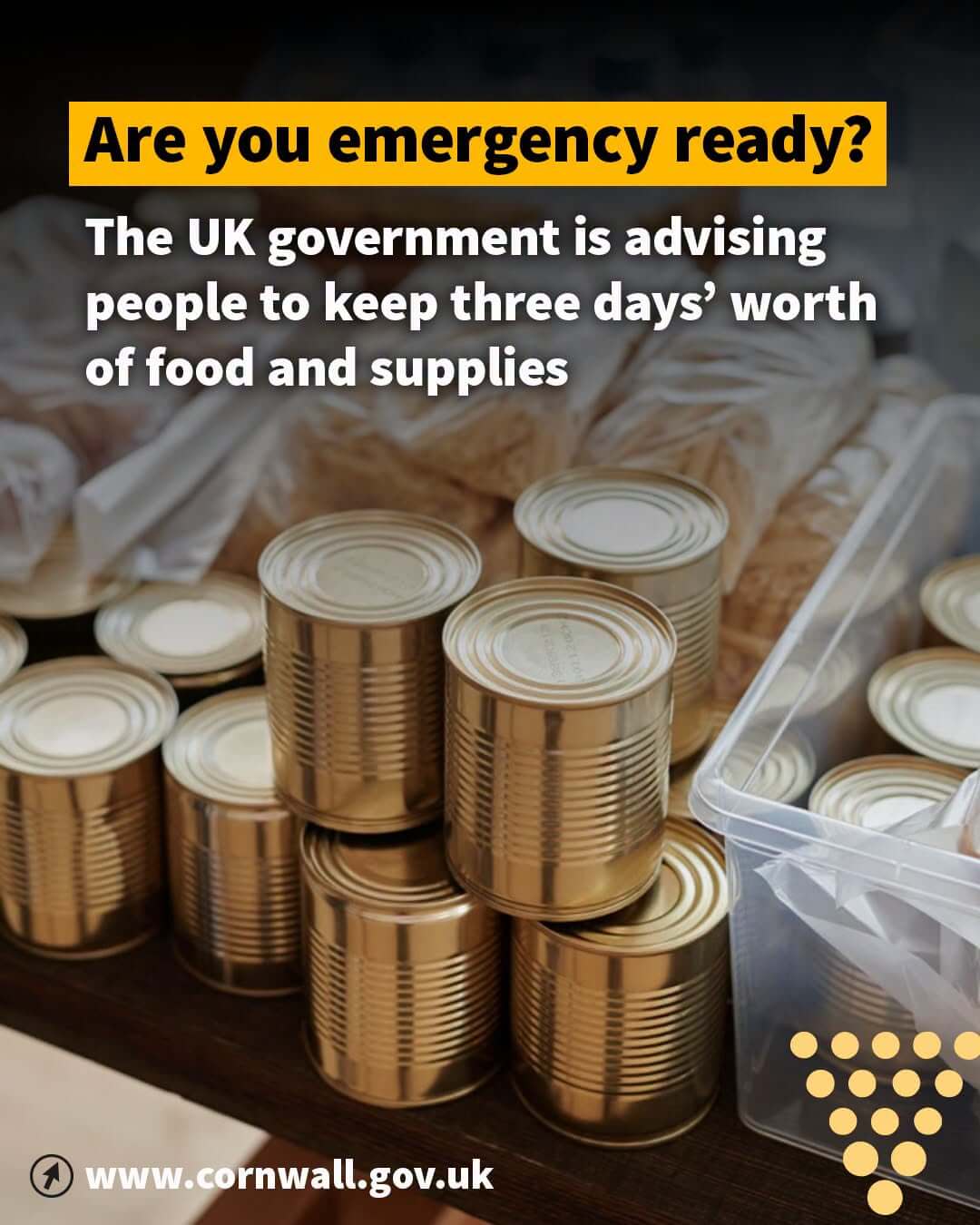
That’s the question behind the UK Government’s Be Ready campaign, and Cornwall Council is now sharing advice and resources to help people across the county feel more prepared.
What the Be Ready campaign is
The campaign asks people to think about how they would cope if everyday services were temporarily disrupted by severe weather, flooding, power cuts, or interruptions to phone and internet services.
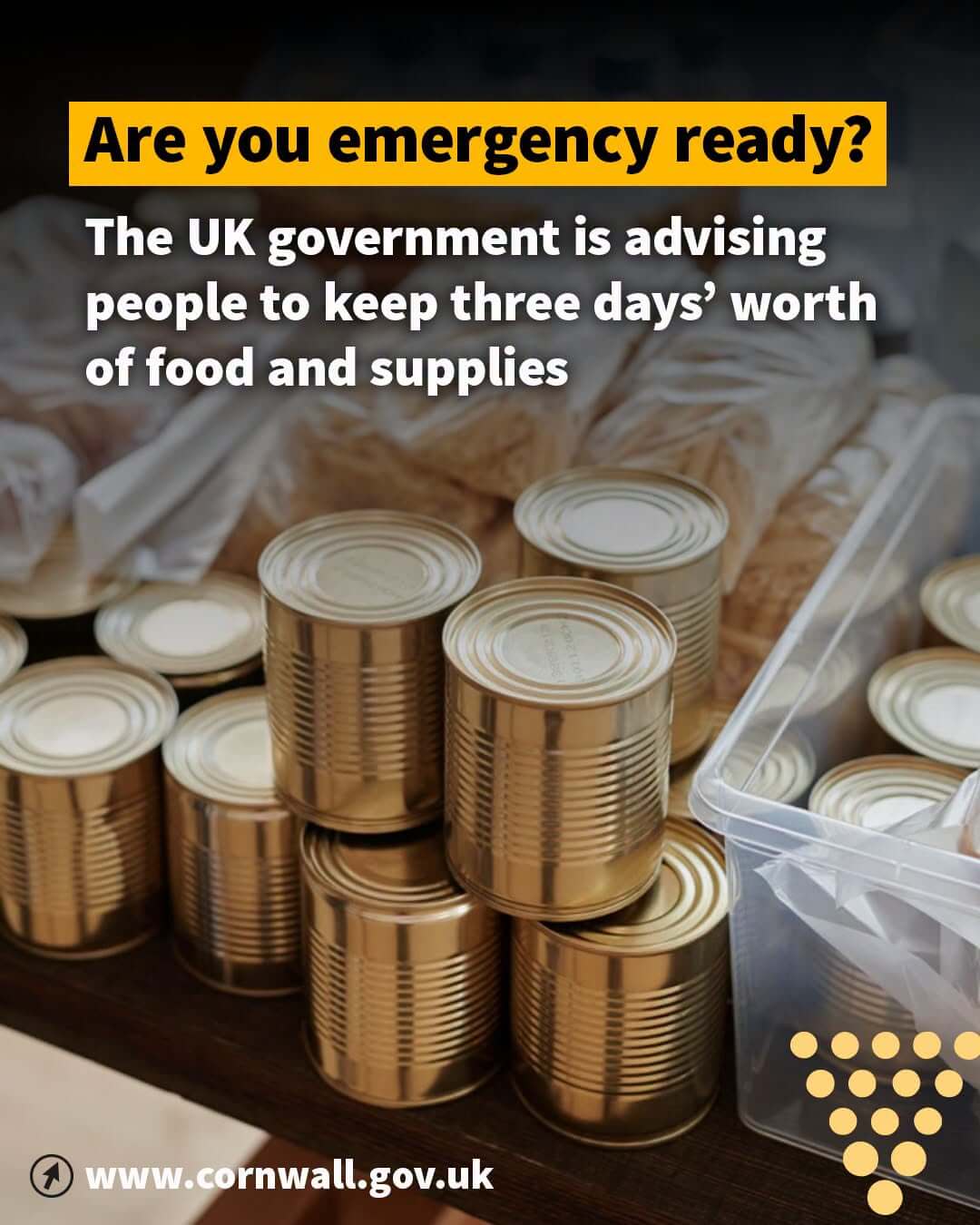
It was launched by the Cabinet Office on 22 October and is the first stage of a three-year campaign. The central advice is to be ready for three days of disruption, the same approach used in France, Ireland and the Netherlands. More than 500 organisations, from charities to businesses, have signed up to share the messaging.
The thinking is simple. If households that are able to prepare do so, emergency services can concentrate on the people who need more help. Security Minister Dan Jarvis put it plainly: “Those who can follow this advice should follow this advice.”
Some of it will sound familiar. The government has published resilience advice for households since May 2024, and the old Prepare website has been given the new Be Ready branding, though much of the advice is unchanged.
No need to do it all at once
Cornwall Council says there’s no need to do everything at once or spend lots of money. Start with what you already have at home and make a plan that works for your household.
The national advice says the same. Check what you already have before buying anything, and add to your kit bit by bit when you’re able. Many of the steps are free or low-cost.
What to keep at home
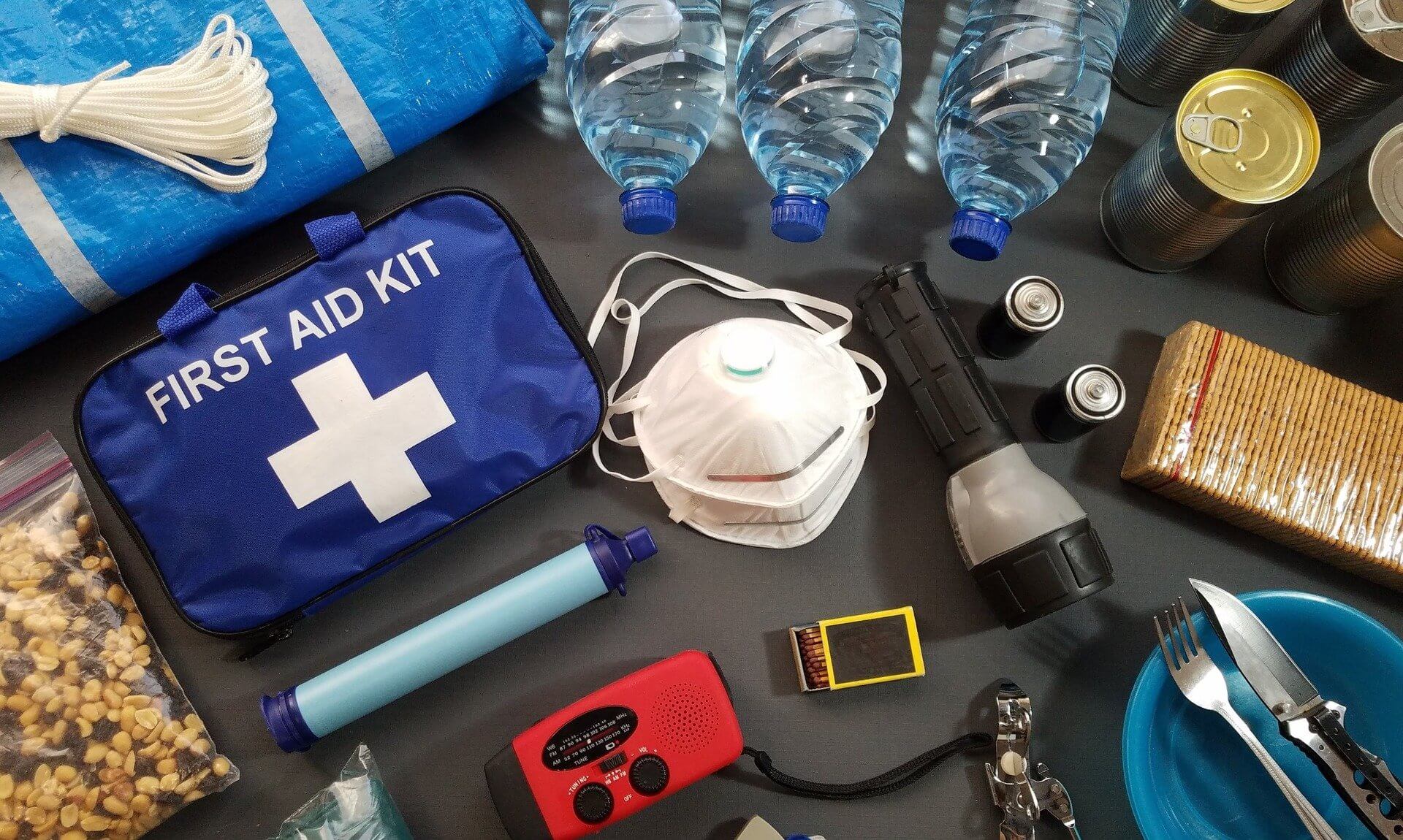
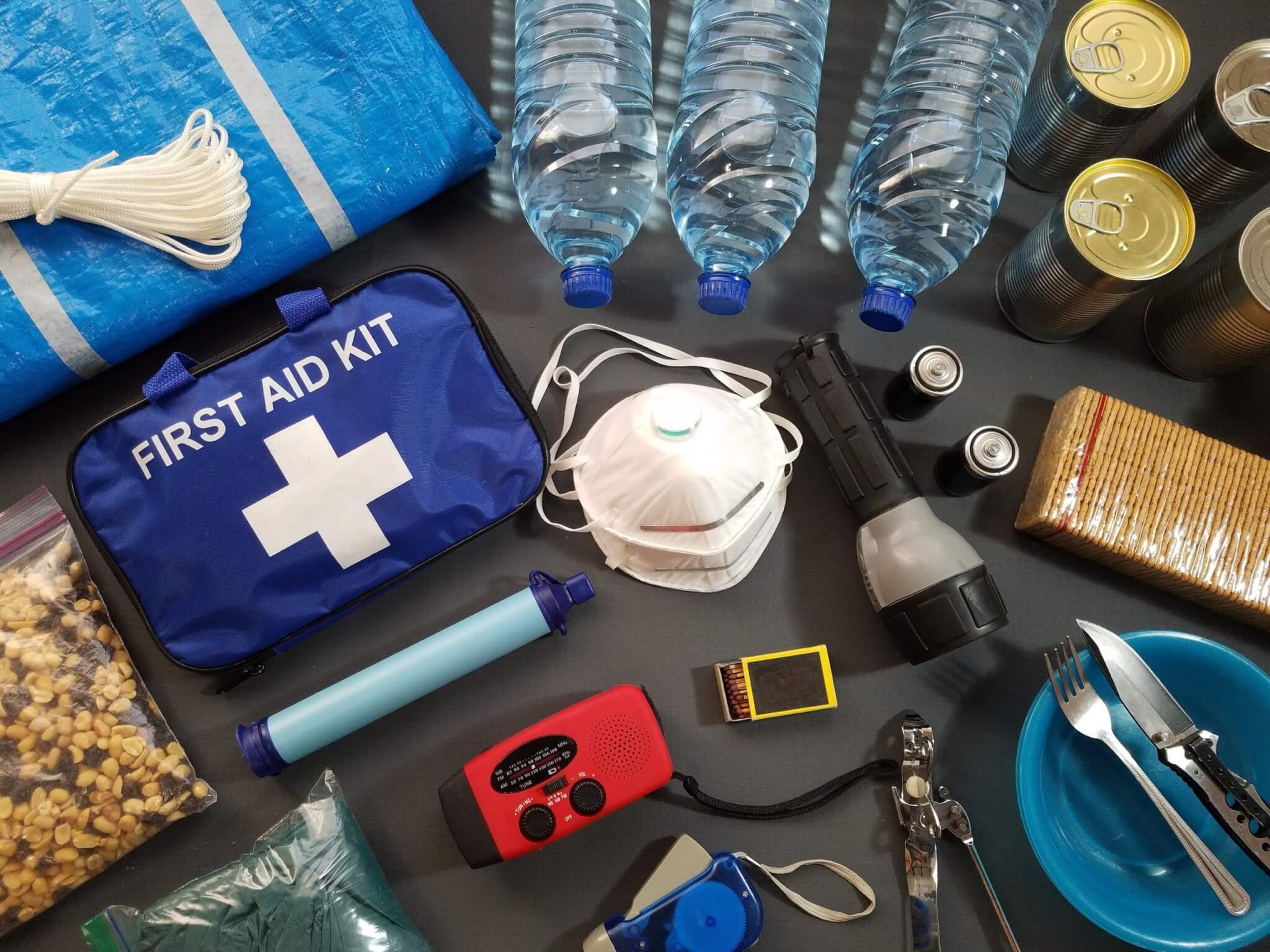
The checklist the council is sharing breaks it down into six areas.
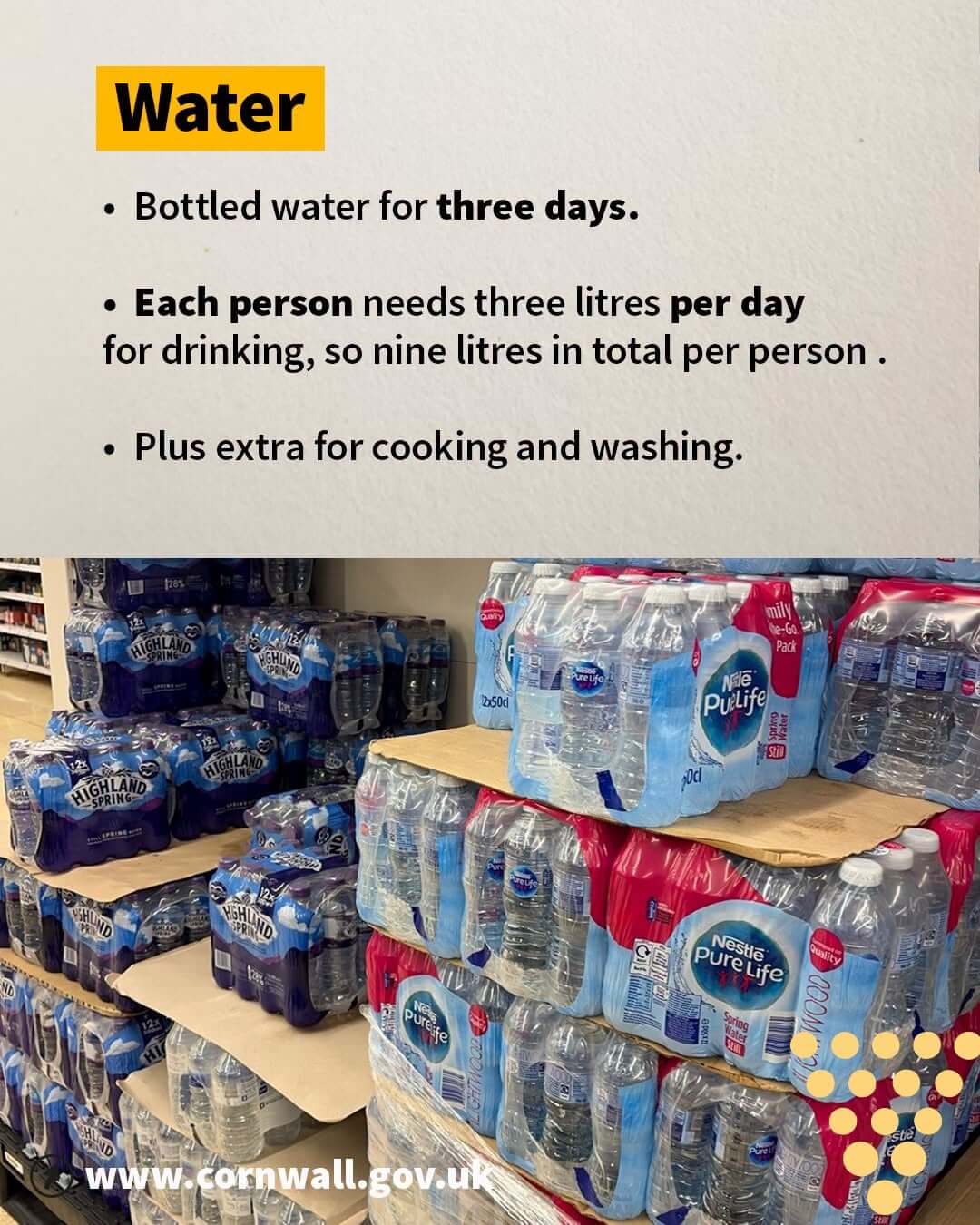
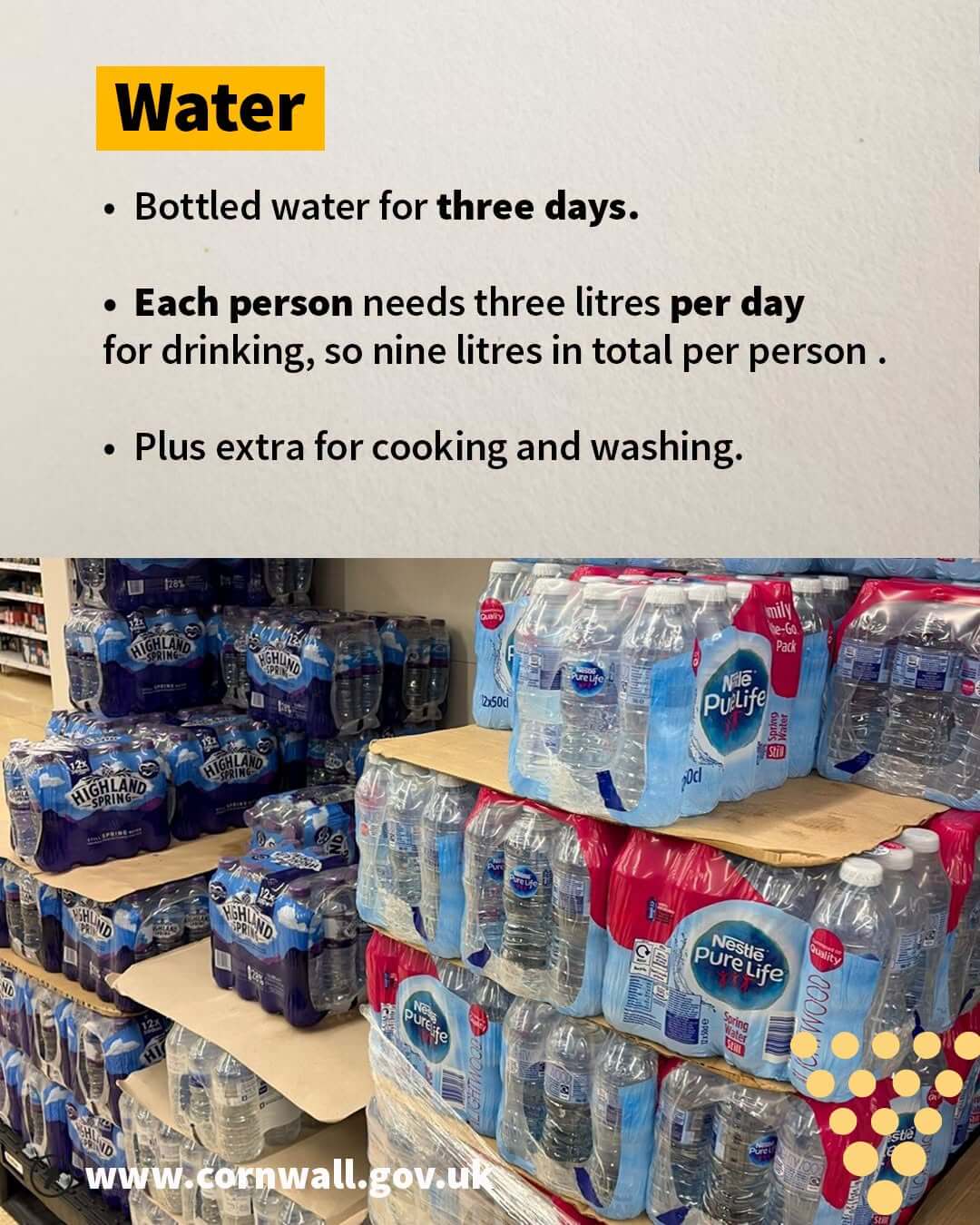
Water
Bottled water for three days. Each person needs three litres a day for drinking, so nine litres per person in total, plus extra for cooking and washing.
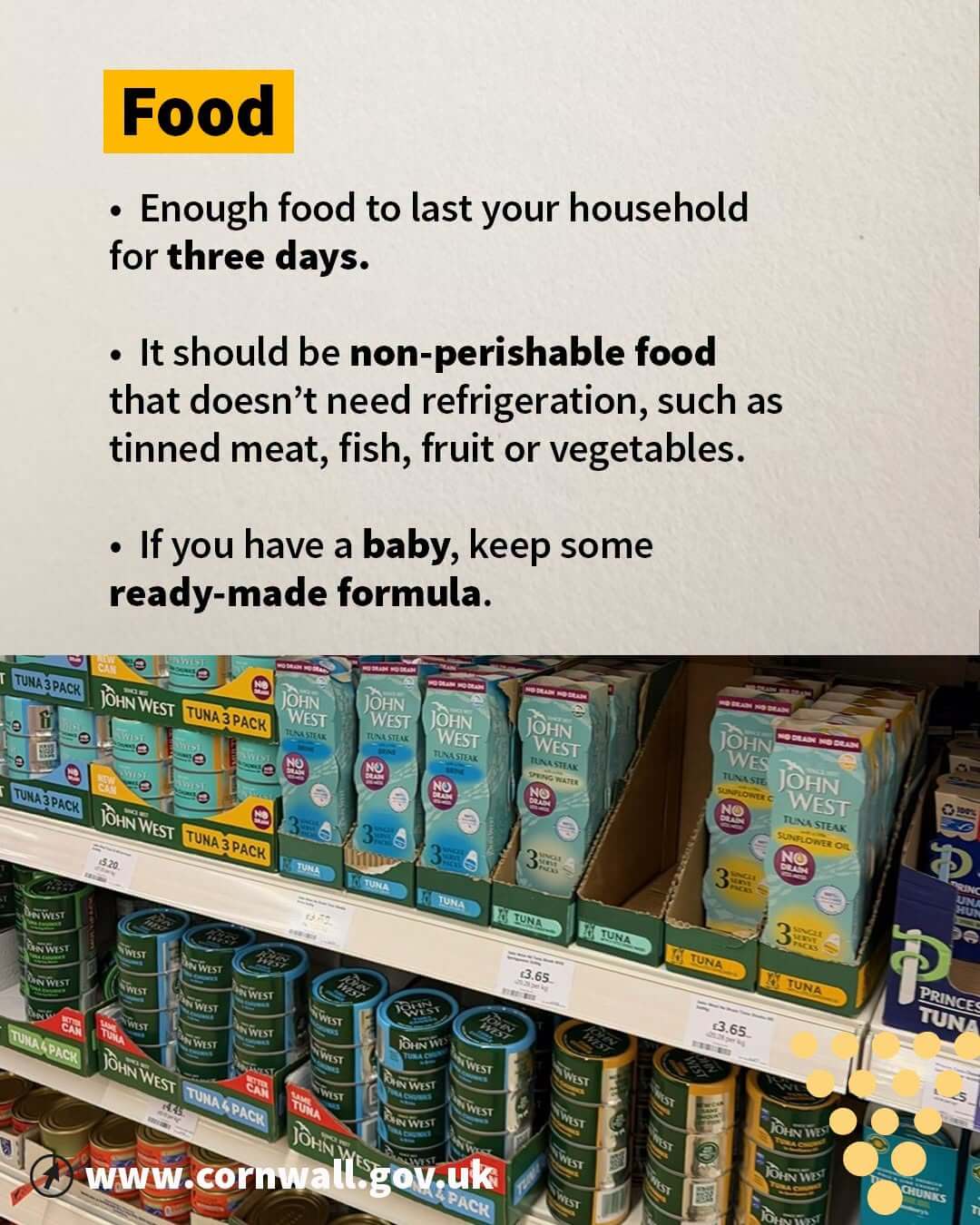
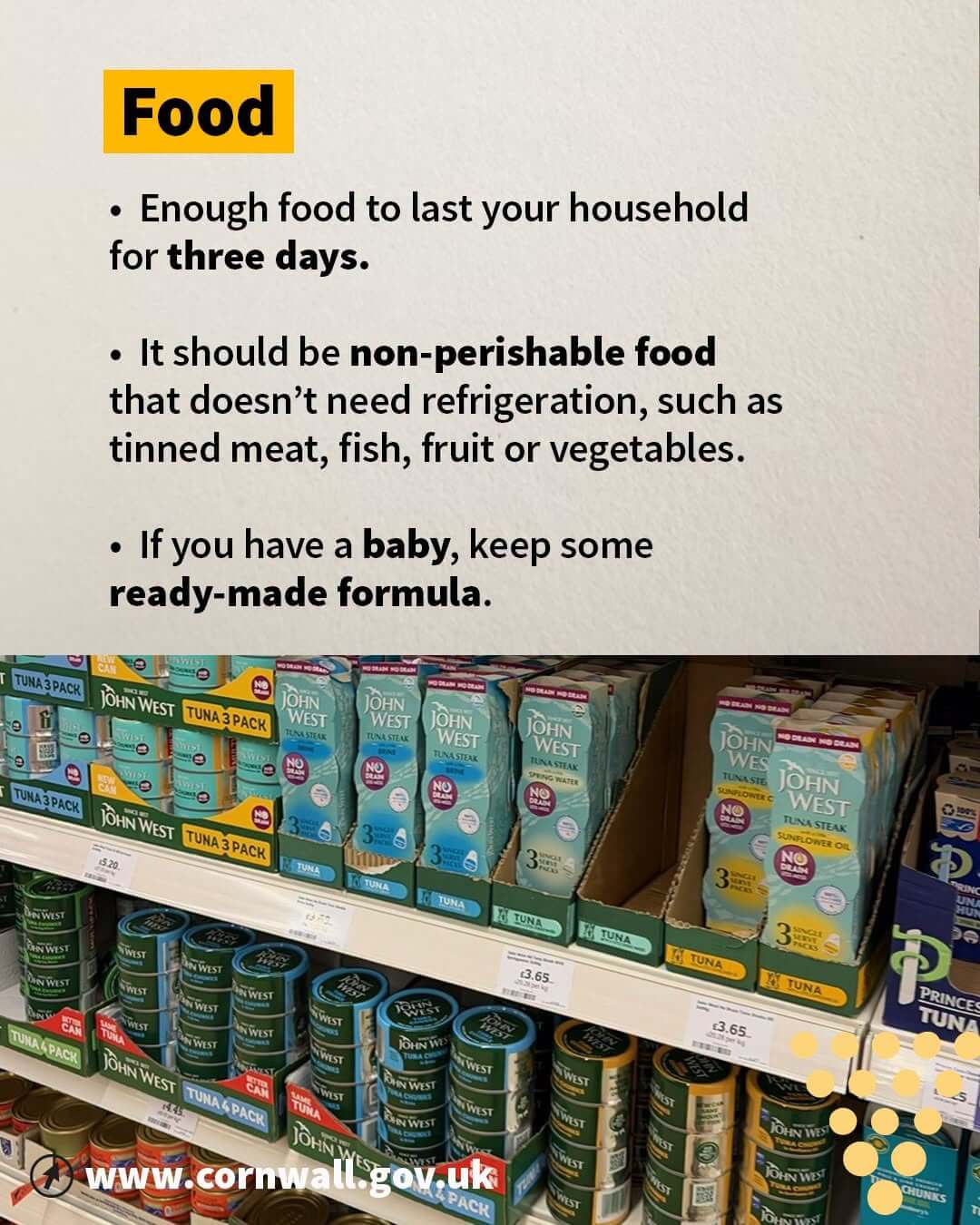
Food
Enough food to last your household three days. It should be non-perishable and not need a fridge, such as tinned meat, fish, fruit or vegetables.
If you have a baby, keep some ready-made formula. The national checklist explains why: you may not be able to boil water to make up powdered formula safely. Nappies and wipes are worth adding too. And if you have pets, put aside pet food and extra bottled water for them.
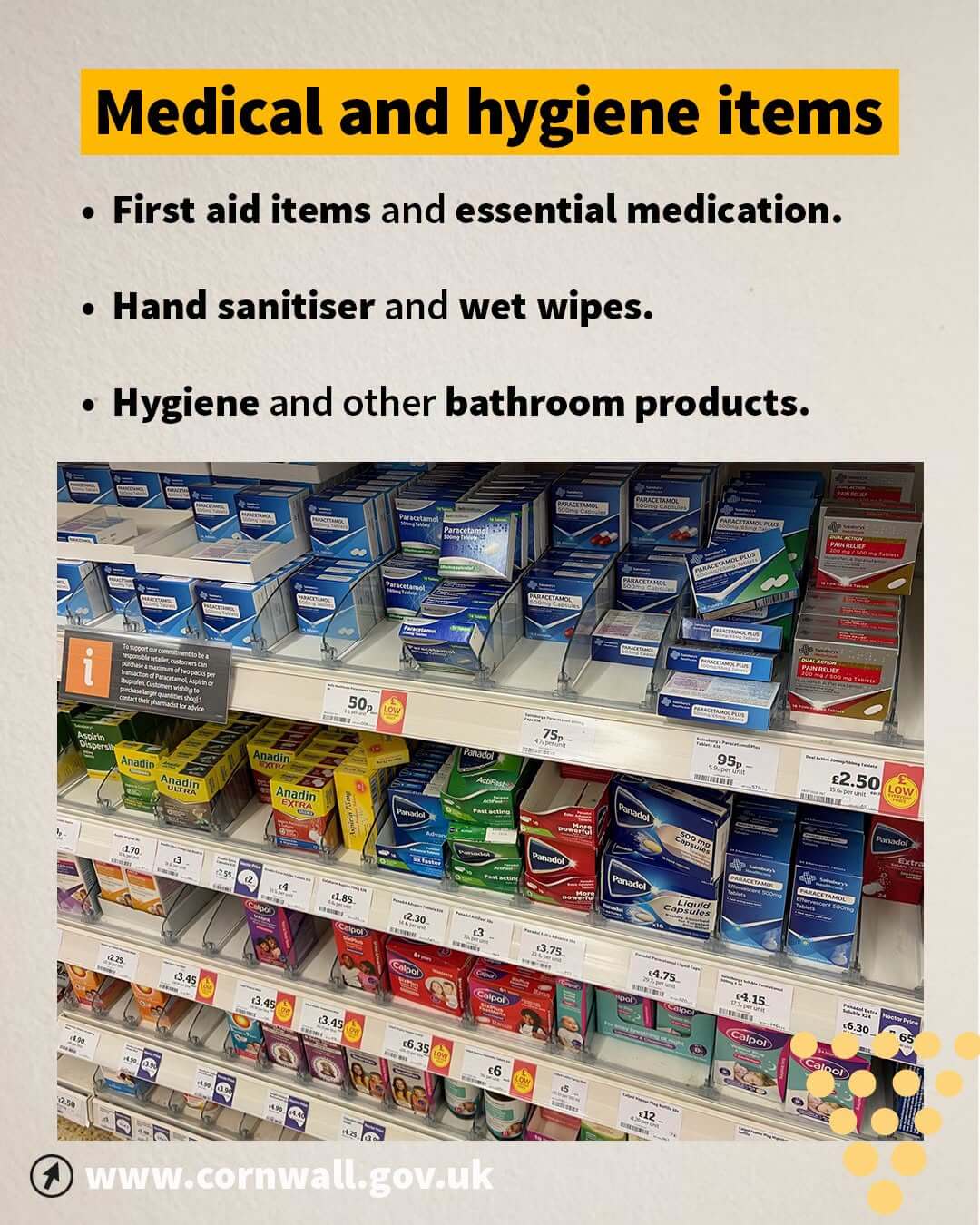
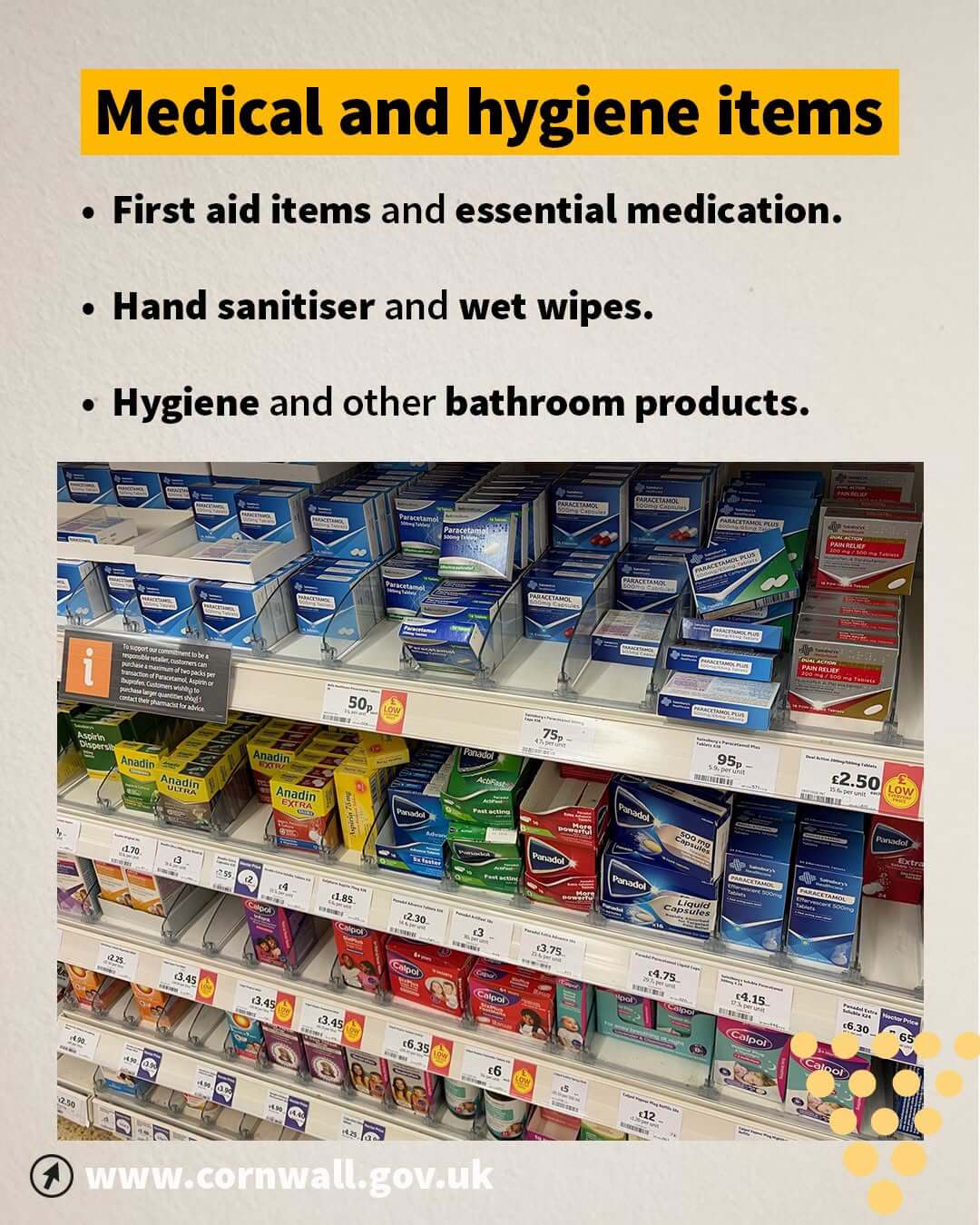
Medical and hygiene items
First aid items and essential medication, hand sanitiser and wet wipes, plus hygiene and other bathroom products.
The Be Ready advice also suggests leaving plenty of time with repeat prescriptions, requesting them up to five working days before you need your medicine, so there’s less chance of running out during a disruption.
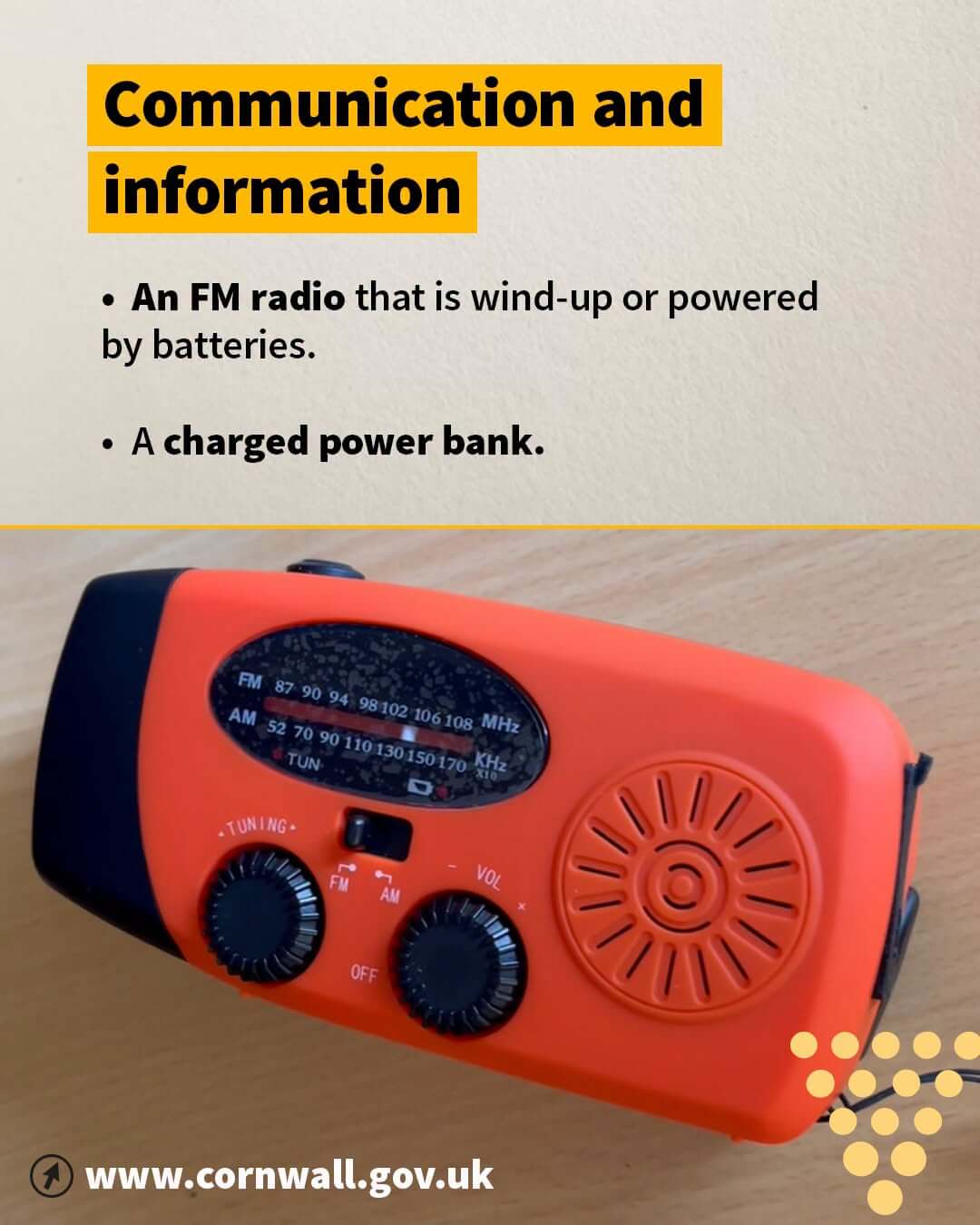
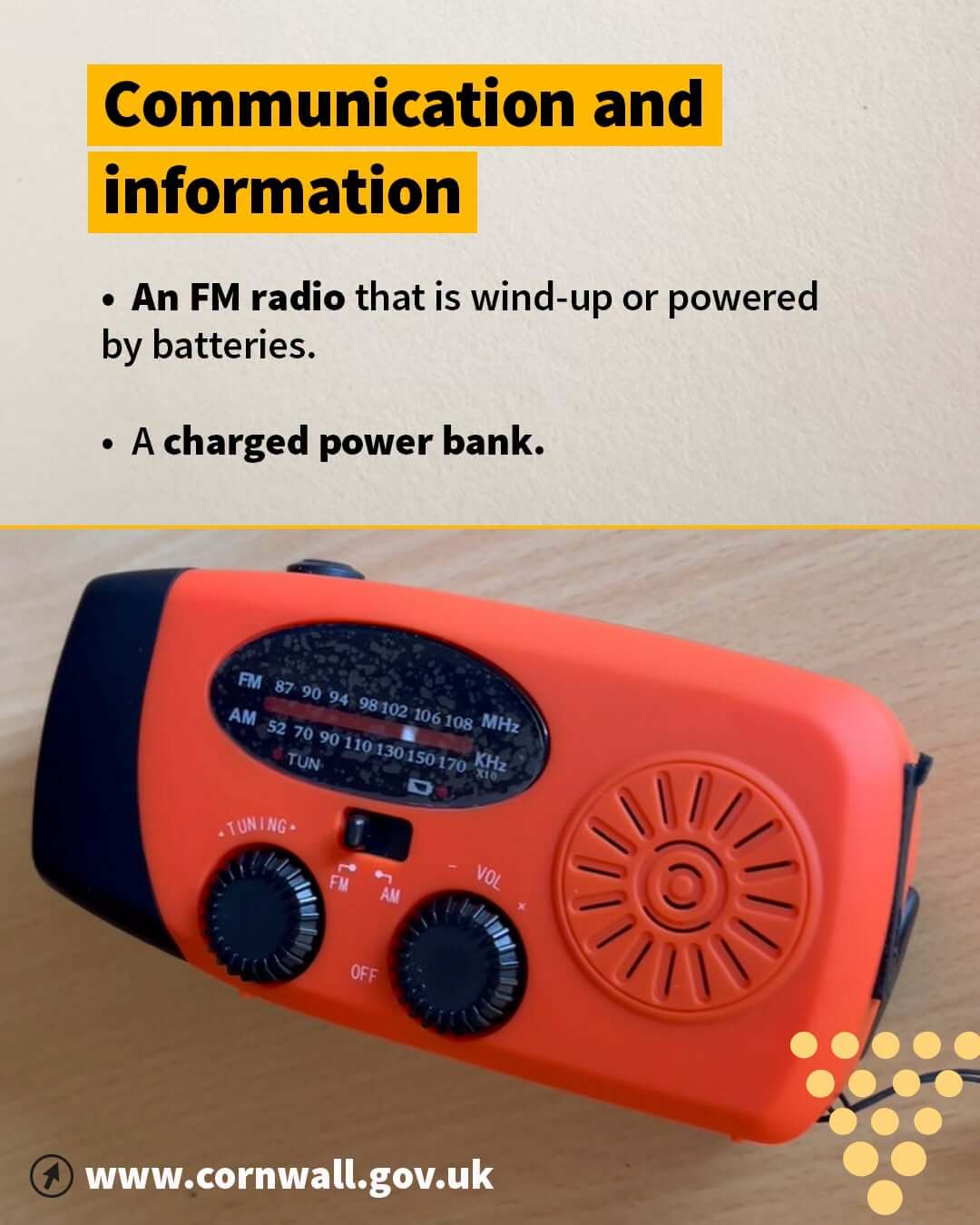
Communication and information
An FM radio that is wind-up or runs on batteries, and a charged power bank.
Money and documents
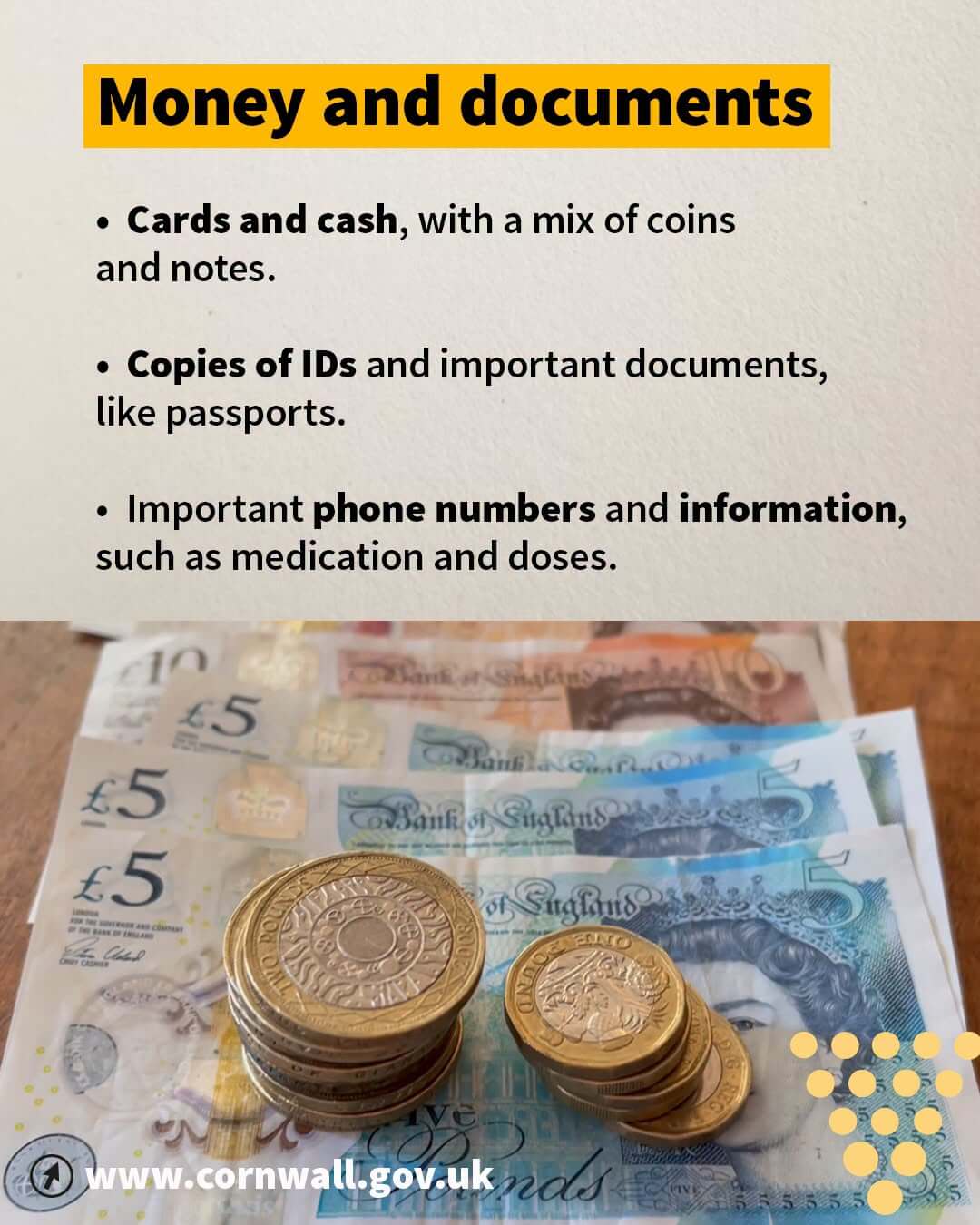
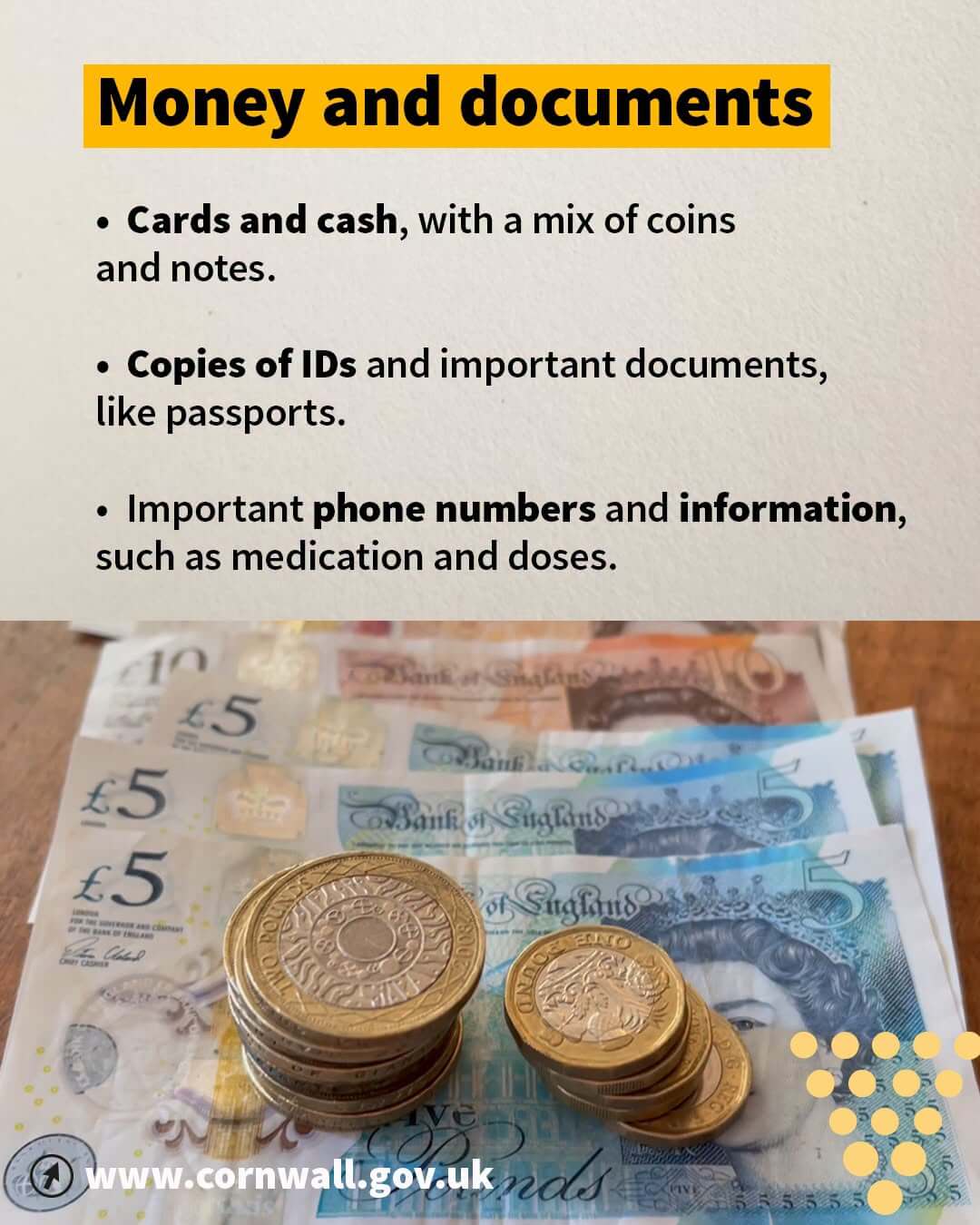
Cards and cash, with a mix of coins and notes. Copies of IDs and important documents, such as passports.
And a list of important phone numbers and information, including any medication and doses. The advice is to write down who you would need to contact in an emergency, including anyone who might need checking in on.
Light and warmth
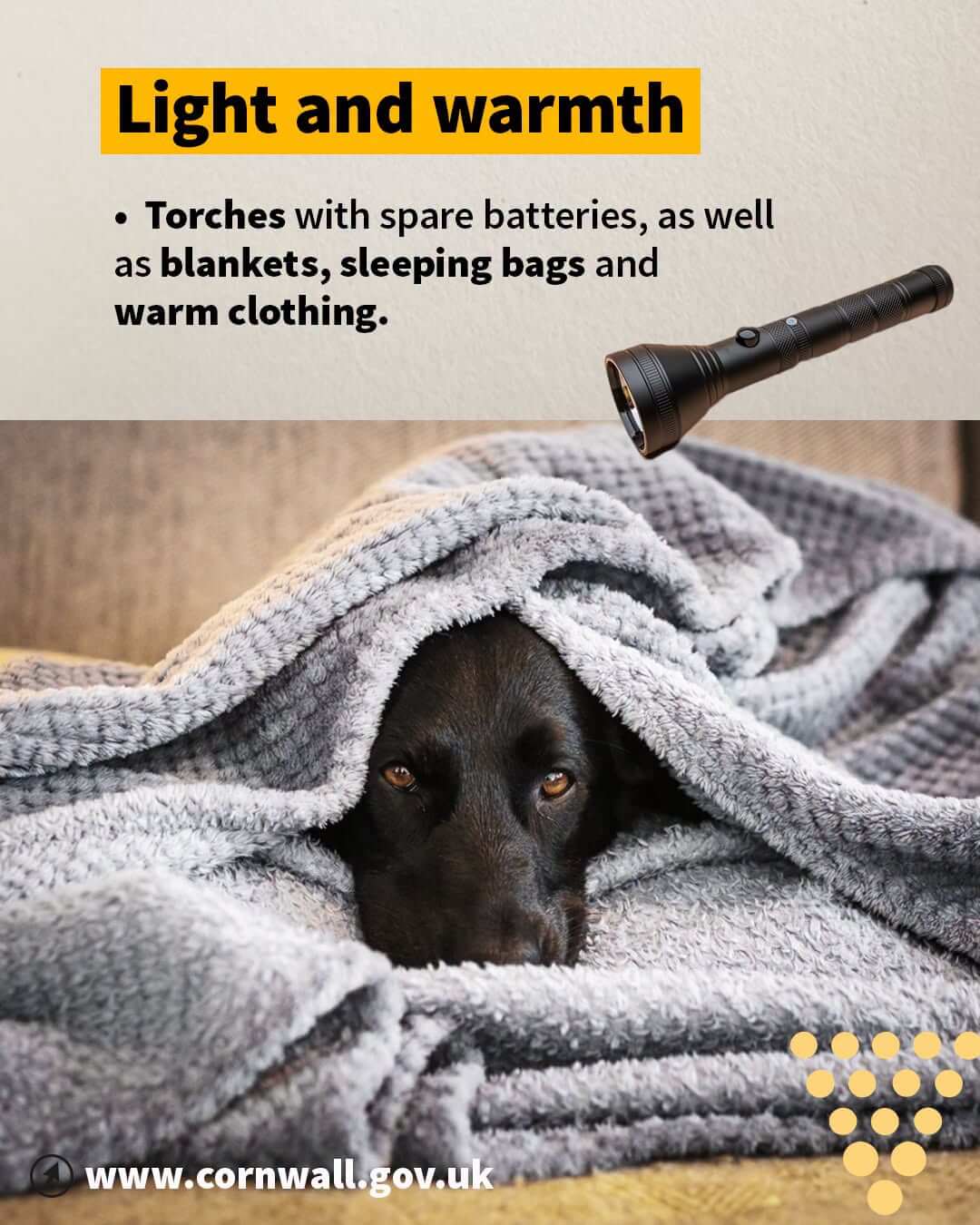
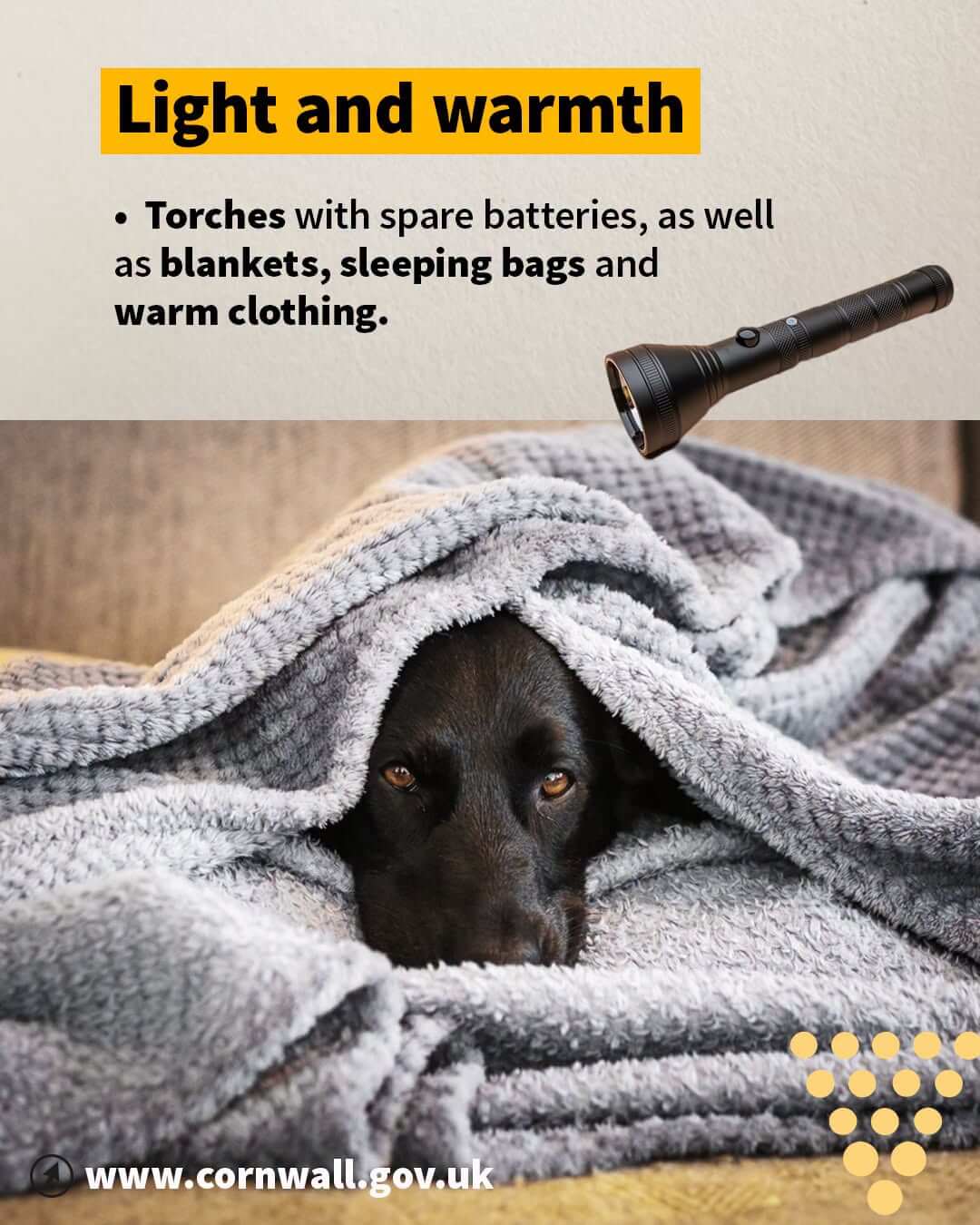
Torches with spare batteries, as well as blankets, sleeping bags and warm clothing.
Extra help for those who need it
One free step the government is urging people to take is signing up to the Priority Services Register. It helps gas, water and electricity companies identify customers who may need extra support in an emergency.
Where to find out more
The full advice and a downloadable Be Ready checklist are on the Be Ready website, which also explains how to volunteer and support your community during an emergency.
For weather warnings, the Met Office website carries the latest information and lets you sign up for email alerts. Community groups wanting to plan at a village or town level can use the council’s Community Emergency Plan Toolkit.
The Be Ready website won’t carry live information during an emergency. If you or someone else is in immediate danger, call 999.
Over the coming months, social media and radio adverts for the campaign will be aimed at families with young children and older people.
Read Next
- RNLIA 10-metre yacht was due at Gweek Boatyard by half past four on Monday afternoon.
Share This Story, Choose Your Platform!
To keep up with the latest cornish news follow us below
Follow CornishStuff on Facebook - Like our Facebook page to get the latest news in your feed and join in the discussions in the comments. Click here to give us a like!
Follow us on Twitter - For the latest breaking news in Cornwall and the latest stories, click here to follow CornishStuff on X.
Follow us on Instagram - We also put the latest news in our Instagram Stories. Click here to follow CornishStuff on Instagram.
- 1
- 2
- 3
- 4
- 5
- 6