St Michael’s Mount: the village the sea cuts off twice a day
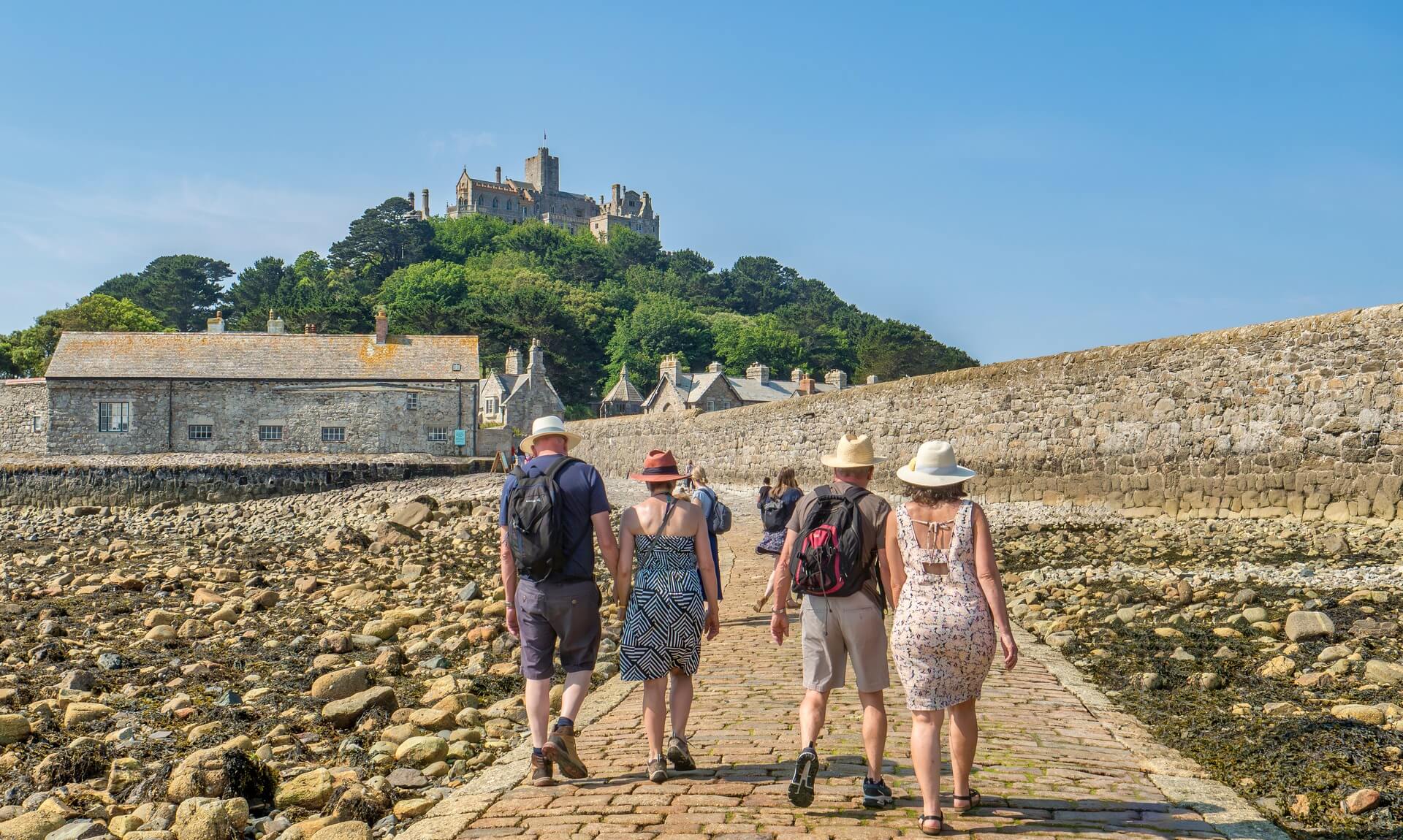
Twice a day the road home vanishes. For the small band of people who live on St Michael’s Mount, the cobbled path that ties their island to the Cornish mainland spends much of its life underwater, swallowed by Mount’s Bay and handed back only when the tide falls away. There is no bridge. There is no road for cars. Getting on and off means reading the water and timing it right.
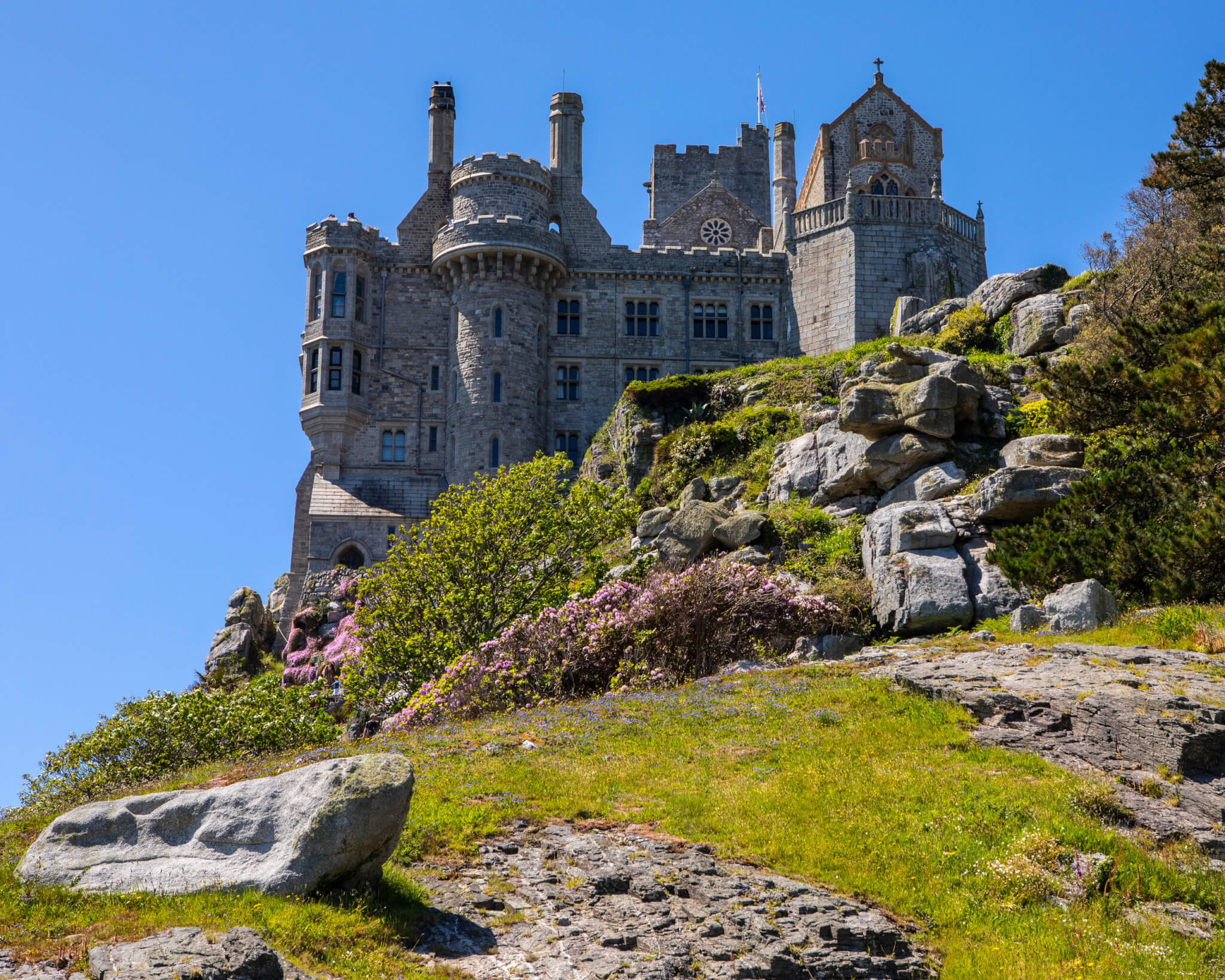
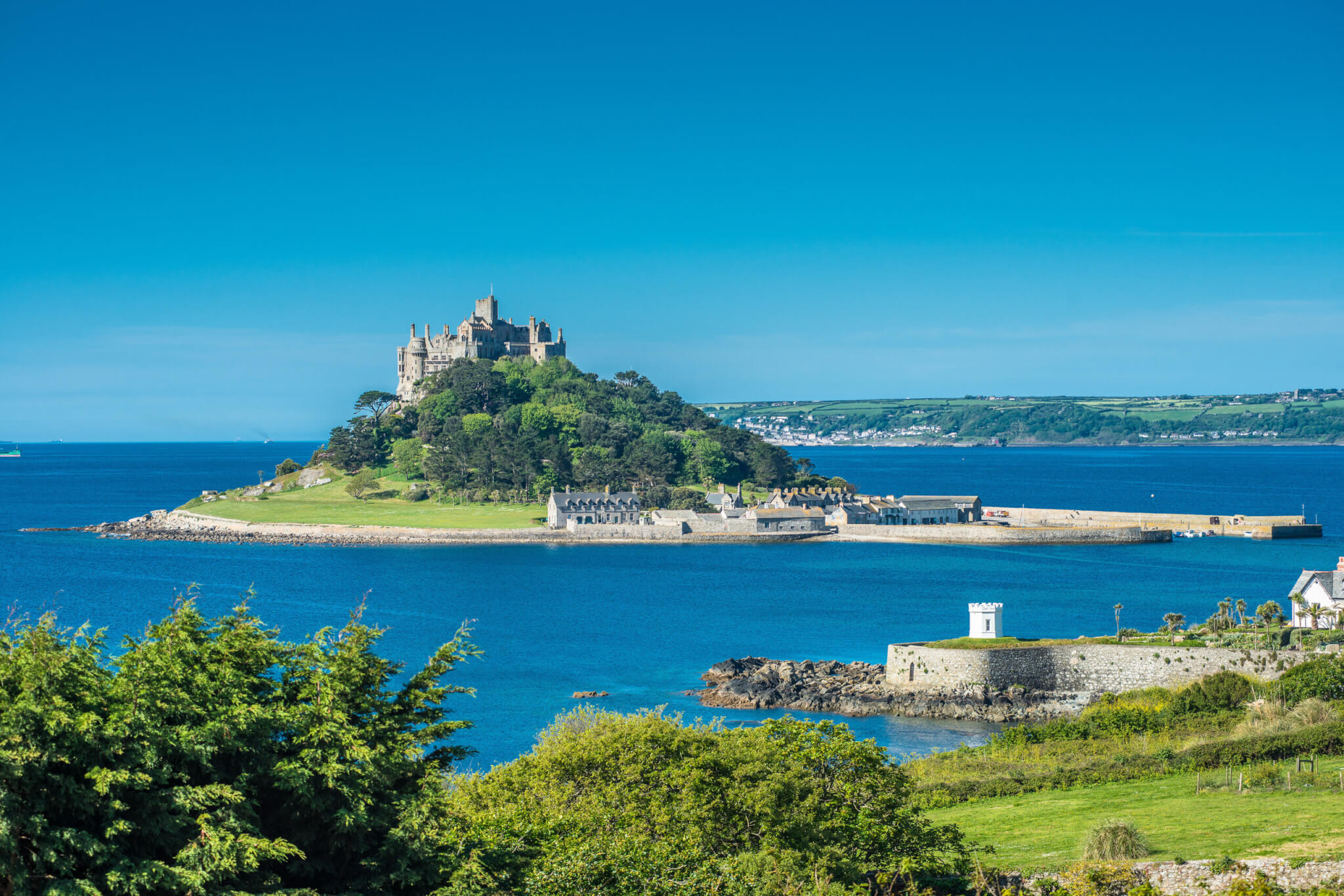
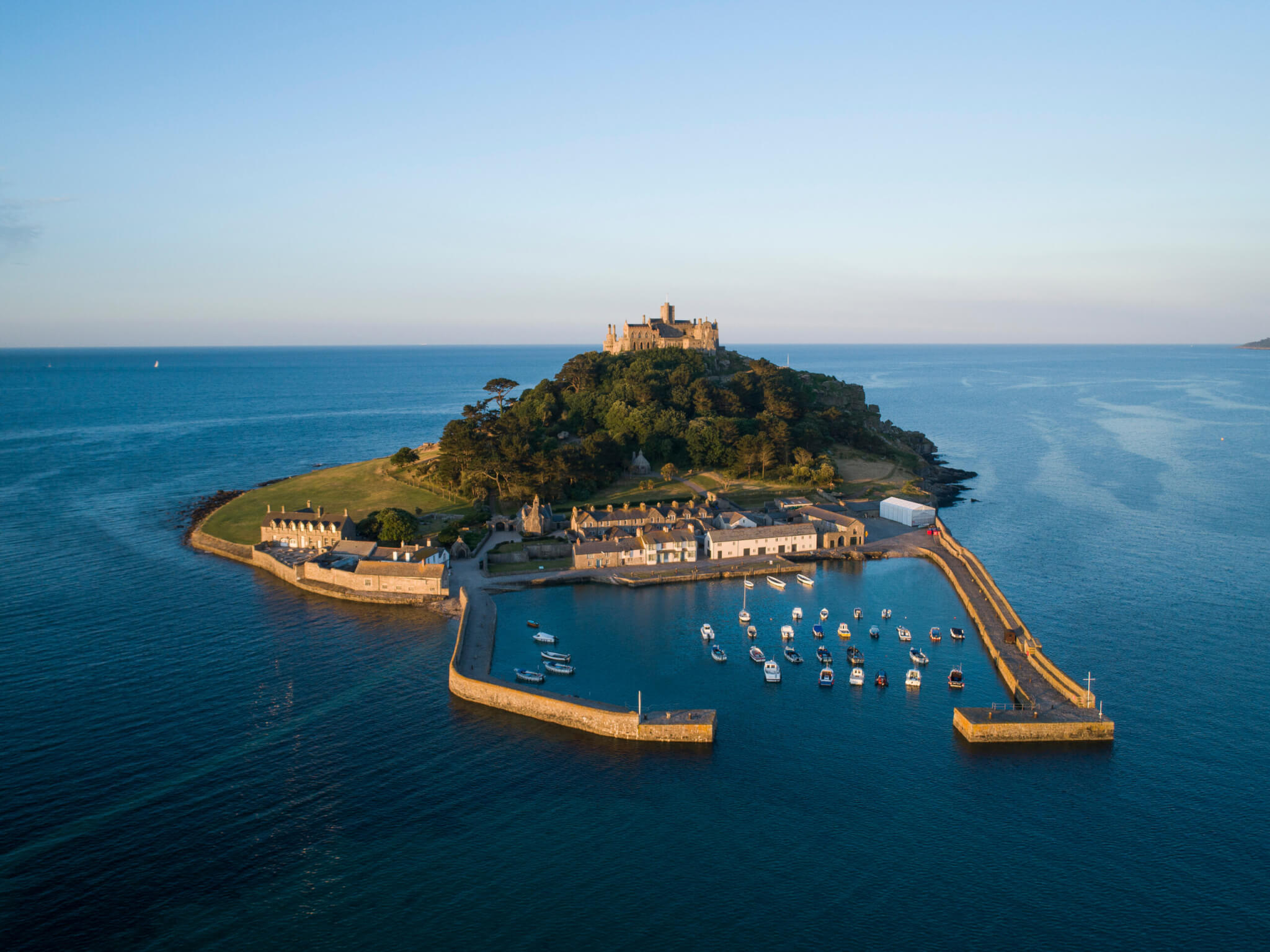
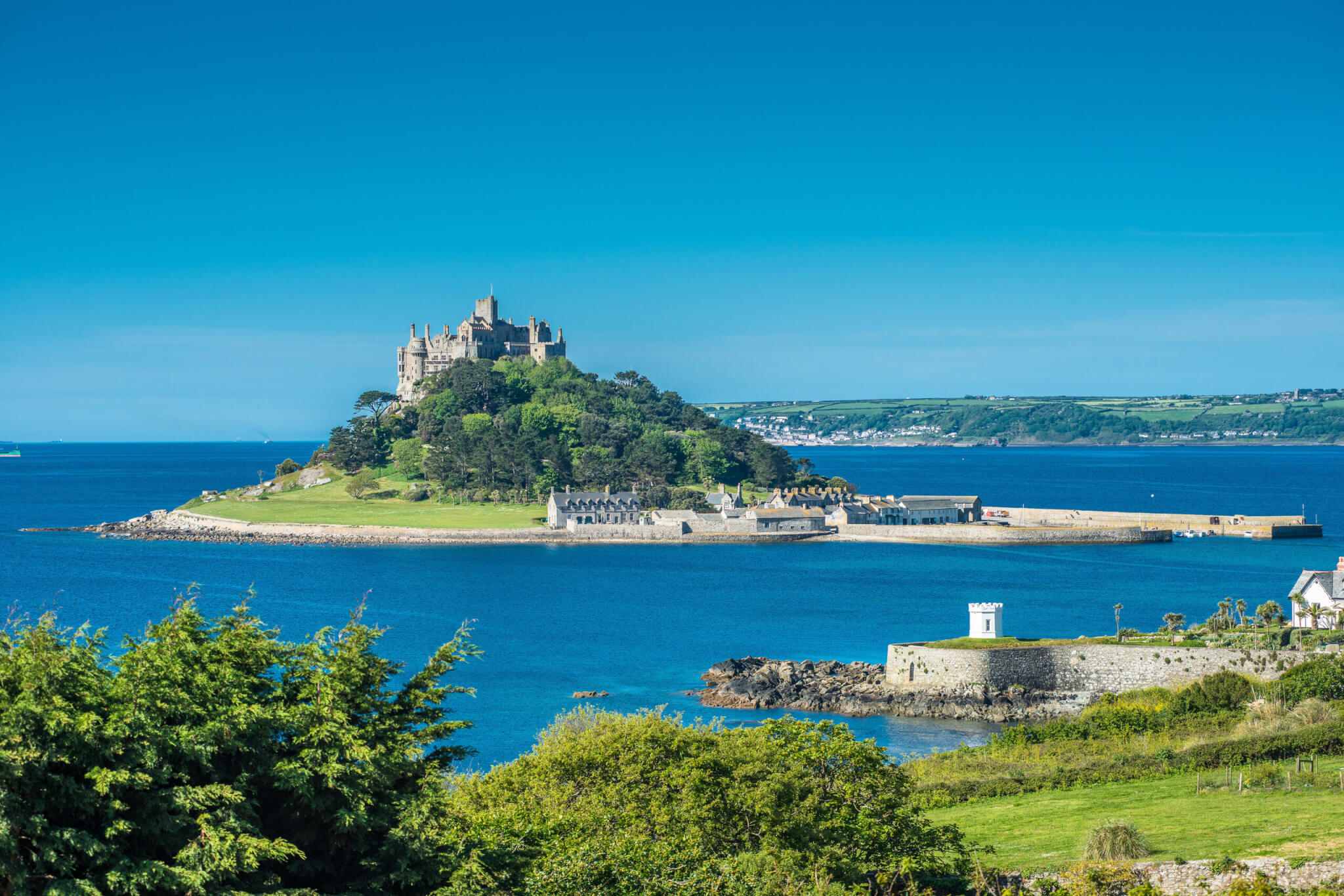
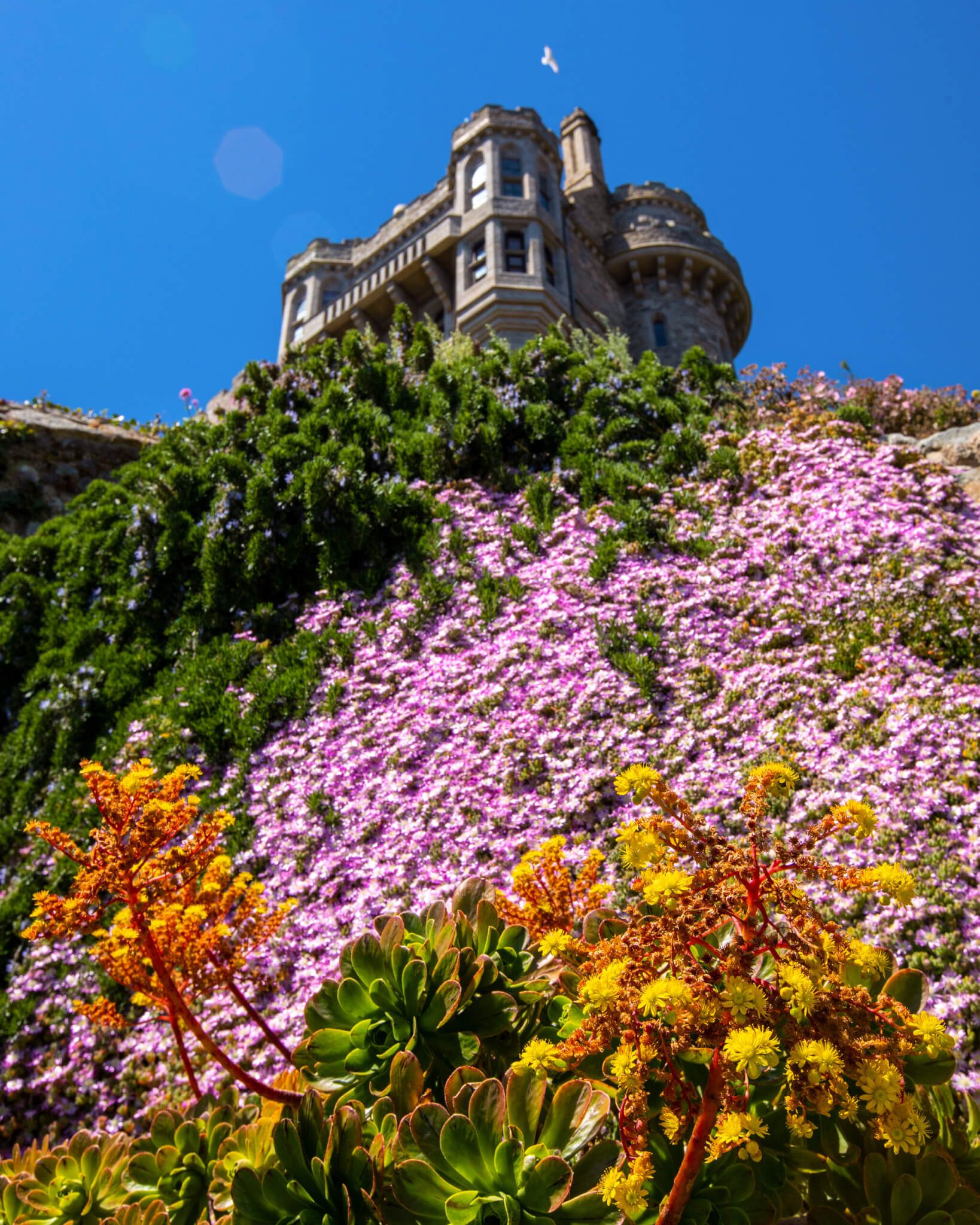
The Mount rises out of the sea about 366 metres off Marazion, near Penzance, a granite crag topped by a medieval castle and church. It is one of Cornwall’s most photographed places, and one of the very few you genuinely cannot drive to.
Your daily dose of Cornwall
News, events and goings on across the Duchy
The grey rock in a wood
In Cornish the island is Karrek Loos yn Koos, “the grey rock in a wood”. The name points back to a time before the sea rose, when forest is thought to have covered what is now the open bay.
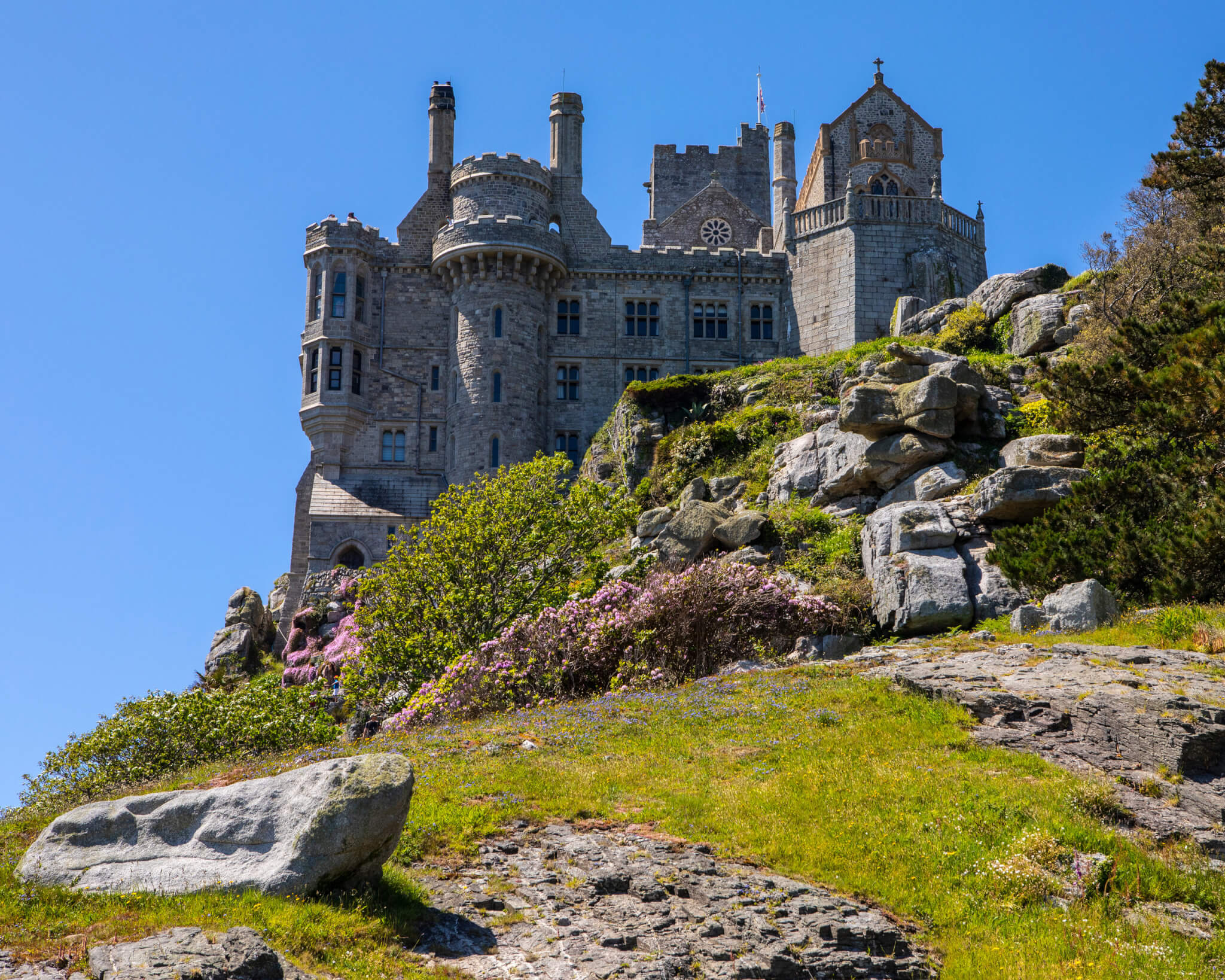
People have been crossing to it for a very long time. Benedictine monks were granted the Mount in the 11th century by Edward the Confessor, and built a priory here as a sister site to Mont Saint-Michel across the water in Normandy, the island it so closely resembles. Pilgrims followed. So did soldiers, and the castle you see today grew out of that mix of church and fortress.
In 1659 Colonel John St Aubyn bought the Mount, and the St Aubyn family have held it ever since. They gave most of the island to the National Trust in 1954, while keeping a 999-year lease and the right to go on living in the castle, which they still do. James St Aubyn has run the island since 2004. Look down at the harbour cobbles and you will find bronze casts of royal footprints, left by Queen Victoria, Queen Elizabeth II and King Charles III to mark their visits.
The causeway that disappears
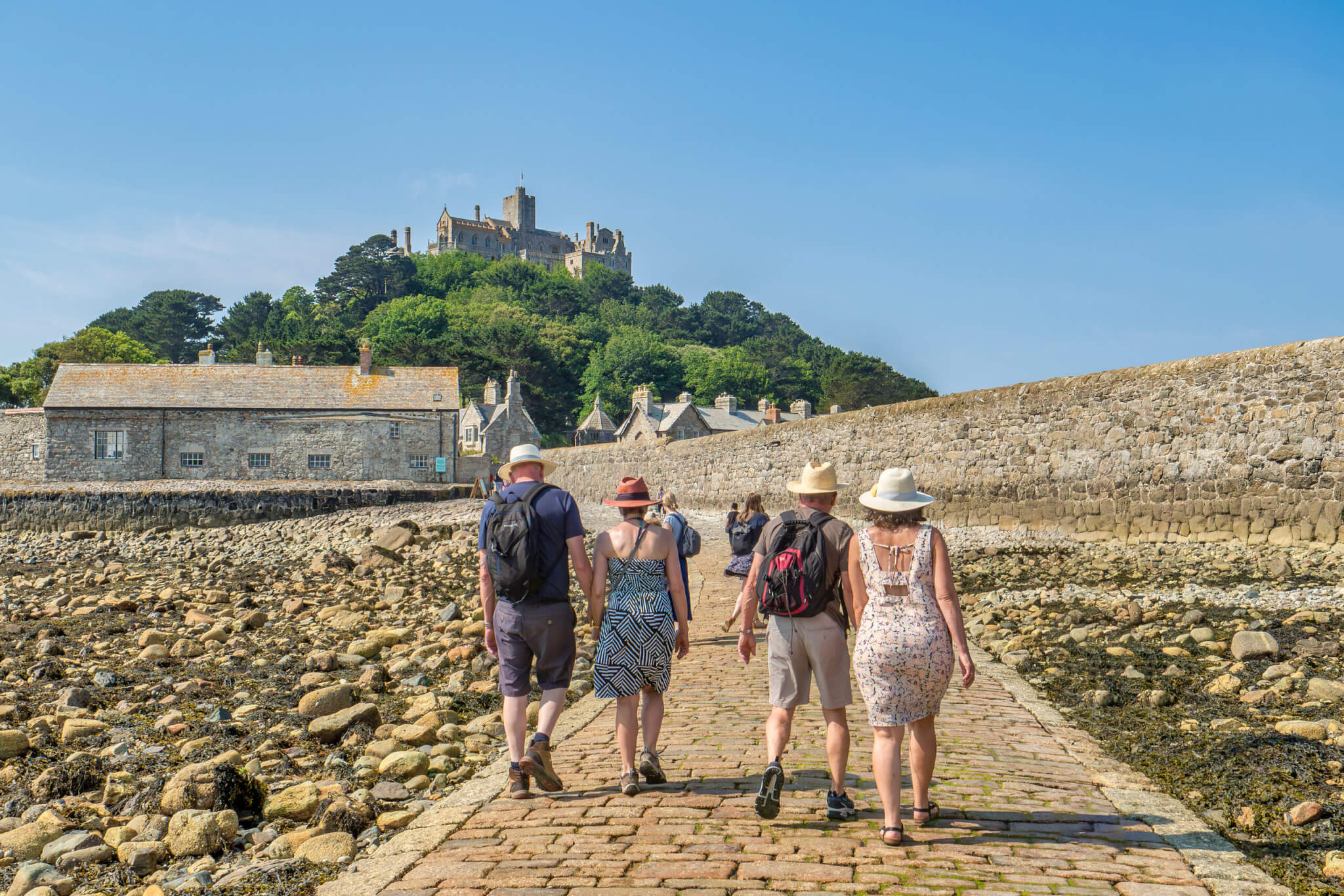
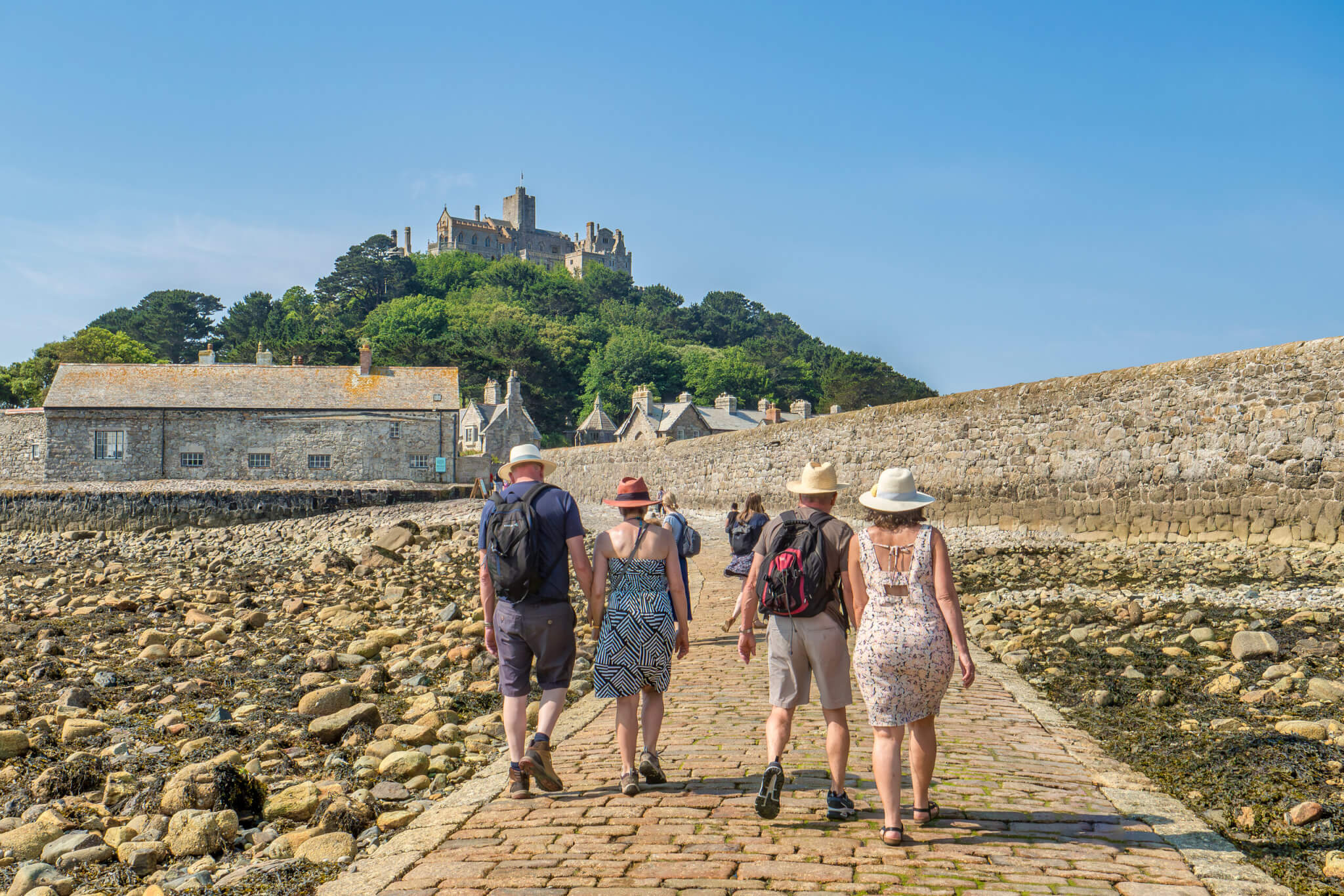
The link to the mainland is a causeway of granite setts, laid across the seabed and worn smooth by centuries of feet. When the tide is out you can walk it in about 15 minutes, straight across the sand and stone from Marazion. When the tide is in it is gone, drowned under several metres of water.
That leaves a window of roughly four hours a day, and it moves with the tide, so the time changes daily. The island’s own advice is blunt about the risks of pushing your luck. The path is uneven, currents run strong, and the sea comes back fast, so once the water starts covering the setts the safe crossing is over. Miss the window on foot and your only way across is by boat.
Living where the tide runs the timetable
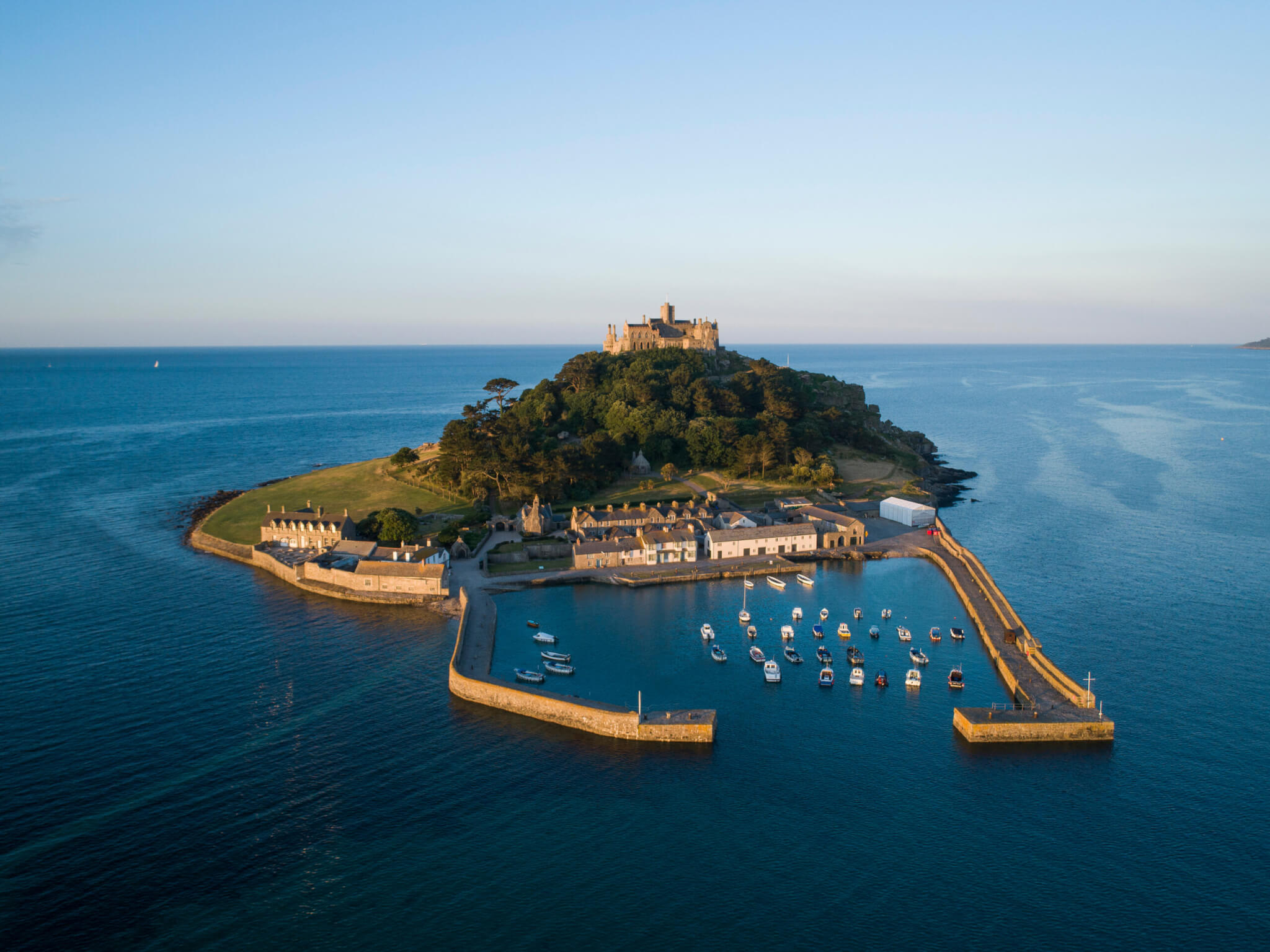
Around 30 people live on the Mount today. That is a long way down from the early 1800s, when more than 200 islanders filled dozens of houses, with pubs, a school and a working pilchard fishery packed onto the same slope. The village that remains is a cluster of cottages around the harbour, and life in it runs to the rhythm of the water rather than the clock.
Islanders tend to work where they live, as boatmen, gardeners, castle stewards and visitor staff, and all are trained to help in an emergency. Children catch a boat across to school on the mainland each morning and back each afternoon. In winter, with the last boat leaving around 5pm, after-school clubs and teenage nights out get tricky, because the tide, not the parent, decides the curfew.
Shopping takes planning. Supermarket vans cannot deliver to an island, so residents lean on click-and-collect and do the big shop when the causeway is open and they can be driven to their doors. Heavy goods bound for the castle go up on a Victorian underground railway built into the rock.
From roughly March to October the ferry boats run to something close to a bus timetable. Through the winter, when the sea is too rough for the small boats, the island’s lifeline is a bright orange amphibious craft called the St Michael, which drives down the beach, floats across the bay and climbs out again on the other side. Built in Falmouth, it can carry 46 passengers and six tonnes of cargo, ferrying children to school and provisions to the shop.
And then there are the days when nothing runs at all. On what the island calls “black flag” days, the sea is too dangerous for boats, and if the tide is also in, the Mount is cut off completely. For the grown-ups that means staying put. For the children, an island storm day works rather like a snow day anywhere else.
Your daily dose of Cornwall
News, events and goings on across the Duchy
How to visit
The Mount keeps two seasons. Through summer, when the castle and garden are open, you book online in advance, walk the causeway when it is exposed or take the boat when it is not, and pay to go into the castle and gardens. Through winter the castle largely closes, the boats stop, and the harbour and village are free to wander whenever the causeway is open. It is closed to visitors every Saturday, and tickets are released online eight weeks ahead.
For 2026, castle entry runs to £15.75 for an adult booking in advance and £7.88 for a child, with a combined castle and garden ticket at £28 for adults. If the tide is in, the boat across costs £3.20 for adults and £1.60 for children. National Trust members get in free but still pay the boat fare.
Park in the long-stay car park in Marazion, check the causeway and boat times before you set off, and wear something sensible on your feet, because those cobbles are as uneven as they are old. Dogs are welcome in the harbour and village at certain times of year, and assistance dogs at any time. Last entry onto the island is 3.45pm, a hard cut-off that exists for one reason. Stay too long, and the sea decides when you leave. More detail, and the all-important tide calculator, is on the St Michael’s Mount website.
For the 30 or so people who call it home, that is not a novelty. It is just Tuesday.
Share This Story, Choose Your Platform!
To keep up with the latest cornish news follow us below
Follow CornishStuff on Facebook - Like our Facebook page to get the latest news in your feed and join in the discussions in the comments. Click here to give us a like!
Follow us on Twitter - For the latest breaking news in Cornwall and the latest stories, click here to follow CornishStuff on X.
Follow us on Instagram - We also put the latest news in our Instagram Stories. Click here to follow CornishStuff on Instagram.
- 1
- 2
- 3
- 4
- 5
- 6

You Might Also Be Interested In


Discover More In Cornwall


Daily Cornish news by email
The latest daily news in Cornwall, sent direct to your inbox.