Wheal Coates: the ruined engine house above St Agnes
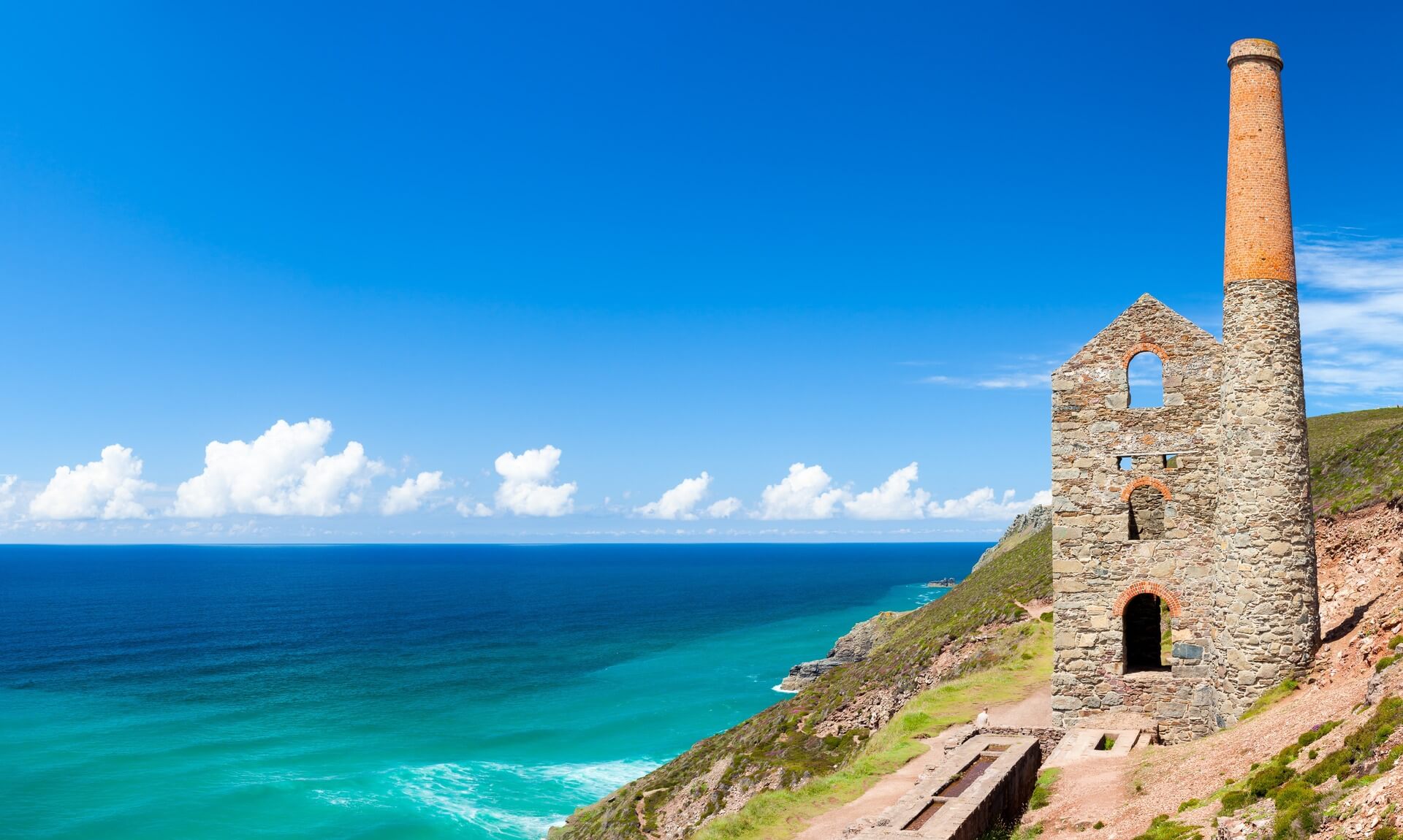
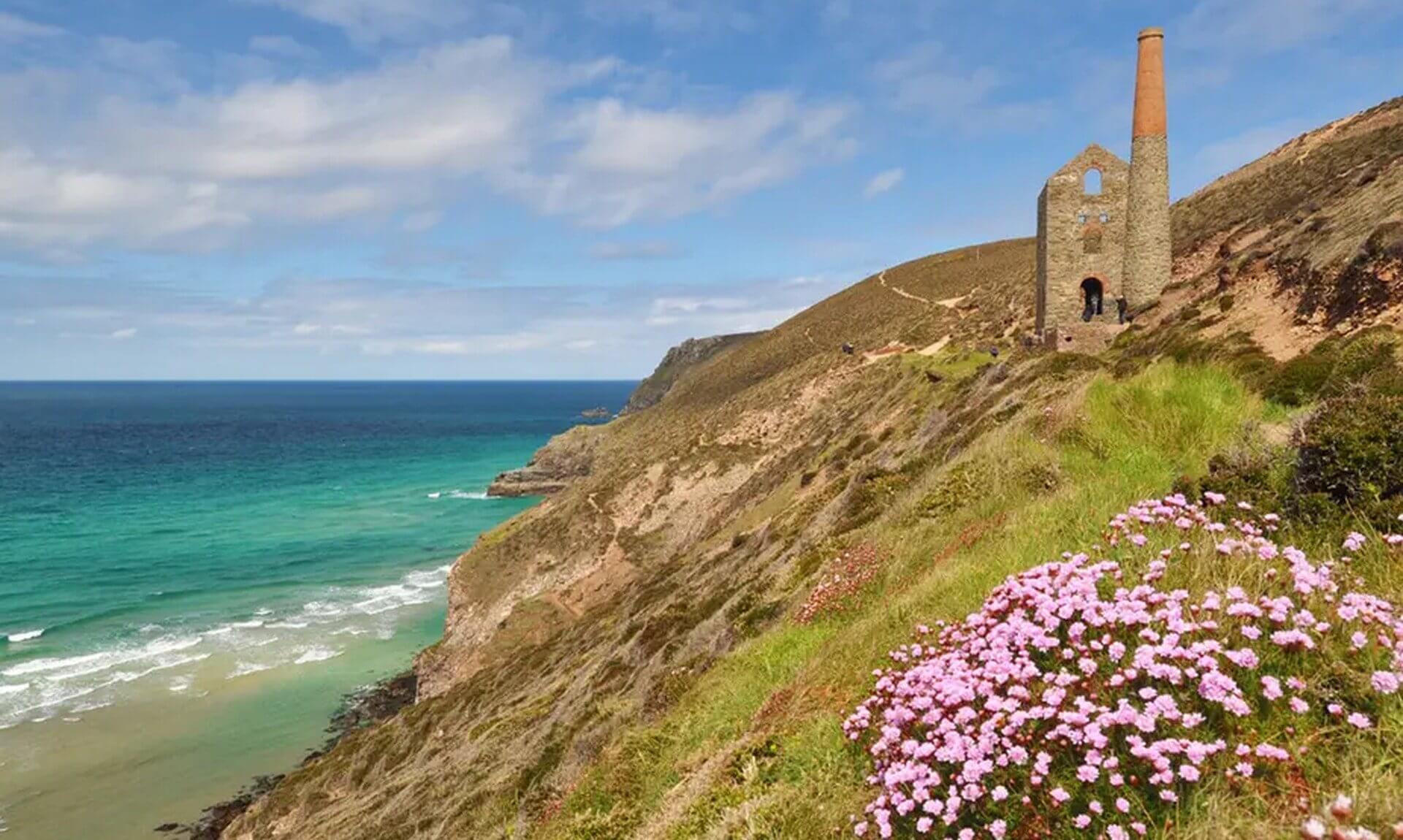
There is a particular kind of quiet at Wheal Coates. Even on a busy Saturday, with the car park full and a steady trickle of walkers heading out along the cliff path, the site itself seems to absorb sound. Stand beside the Towanroath engine house on a grey morning, with the sea mist rolling in off the Atlantic and the gorse dripping, and it is easy to forget you are looking at a ruin at all. It looks less like something that fell down and more like something that grew there, stone out of stone, clinging to the edge of the cliff as if it had always been part of it.
It is one of the most photographed buildings in this pocket of the Cornish coast, and one of the least understood. Most people who stop for the picture know it as “the old tin mine near St Agnes.” Fewer know that the engine inside that tower was built to solve a single, brutal problem, that the shaft beneath the grille at its foot drops 600 feet through solid rock, or that the men who kept that engine running rarely lived to see old age.
Your daily dose of Cornwall
News, events and goings on across the Duchy
A mine older than its famous ruin
The building everyone photographs is not, in fact, particularly old by Cornish mining standards. The Towanroath engine house that dominates every postcard was built in 1872, when Wheal Coates reopened after a long period of inactivity. But mining on this stretch of coast goes back much further. Wheal Coates was worked for tin and copper, and there is evidence of activity on these cliffs from long before its official opening. The first written record of a mine on the site dates to 1692, and there are traces of even earlier, informal digging in the area, hand worked shafts and surface scratchings left by people chasing a vein of ore with nothing more than a pick and a candle.
Wheal Coates as most visitors know it opened in 1802 and worked until 1889. “Wheal” is simply the Cornish word for a working mine, and the county is scattered with them, Wheal Charlotte a short walk up the valley, Wheal Lushington toward Porthtowan, dozens more along this coast alone. By the time Wheal Coates was in full production it had grown into a proper industrial site, not the lone tower that survives today but a working complex of engine houses, stamps, dressing floors and tramways, all clinging to a strip of cliff above the sea.
By 1872 the mine had grown to have the three engine houses that remain today, in various states of repair. Each did a different job. Towanroath, the one everyone photographs, housed a pumping engine, responsible for keeping the water out of the shaft 600 feet below. Higher up the slope stood the whim engine house, which hauled ore up from underground and doubled as power for the crushing stamps, and beside it the stamping engine itself, which helped raise ore from the depths of the mine to the surface and powered the crushing process. Between them, these three buildings represent the whole cycle of a working mine in miniature. Pump the water out, haul the ore up, crush it down.
What the miners actually faced
It is worth pausing on what this place actually was, because the romance of a ruin on a clifftop can flatten a genuinely hard human story. Working deep underground in cramped and stifling conditions meant that miners were worn out and out of work by the age of 40. The air in the mine was thick with powder smoke, dust and fumes from rock blasting, and miners often coughed up black phlegm. Many suffered with bronchitis, silicosis, tuberculosis and rheumatism. Accidents were common and often fatal. Explosions, falls, rock falls, drowning and entanglement in machinery took many lives.
At its busiest the mine is thought to have employed around 140 people, working underground galleries that ran out beneath the seabed itself, chasing lodes of tin and copper into the dark. Production figures survive from the mine’s better years, 335 tons of copper ore raised in 1836, and 700 tons of tin in 1861, numbers that meant nothing to most of the men hauling and shovelling and pumping, beyond the fact that there was work, for now.
The pumping problem at Towanroath was constant and unglamorous. A mine dug this close to the sea floods relentlessly, and without a beam engine running around the clock to lift water out of the workings, the shaft would simply drown. That single, dogged job, keep the water down, keep the mine dry, keep the men able to work, is the entire reason the most photographed building in Cornwall exists at all. It was never built to be beautiful. It was built to buy the mine a few more years underground.
A slow closure, and one last gamble
Wheal Coates closed in 1889, and was reopened for a short period between 1911 and 1913 before finally shutting for good. That last reopening was something of a gamble. A calciner building, used to roast ore and burn off impurities like arsenic and sulphur, was added around 1910 as part of a final push to make the mine pay again. It didn’t work. By the outbreak of the First World War, Wheal Coates was silent for the last time, and the buildings that had spent a century roaring with machinery, steam and shouted orders began their long slide into ruin.
For decades afterwards the site sat abandoned, stripped of anything worth salvaging, its roofs gone, its timber floors rotted away, exposed to the Atlantic weather that eventually claims most things left unattended on this coast. It was the sort of slow collapse that has swallowed hundreds of Cornish mine buildings entirely. Wheal Coates was saved from that fate largely by luck of geography, a spectacular clifftop setting that made it worth saving long after its machinery had been sold for scrap.
Your daily dose of Cornwall
News, events and goings on across the Duchy
From industrial wreck to Cornish icon
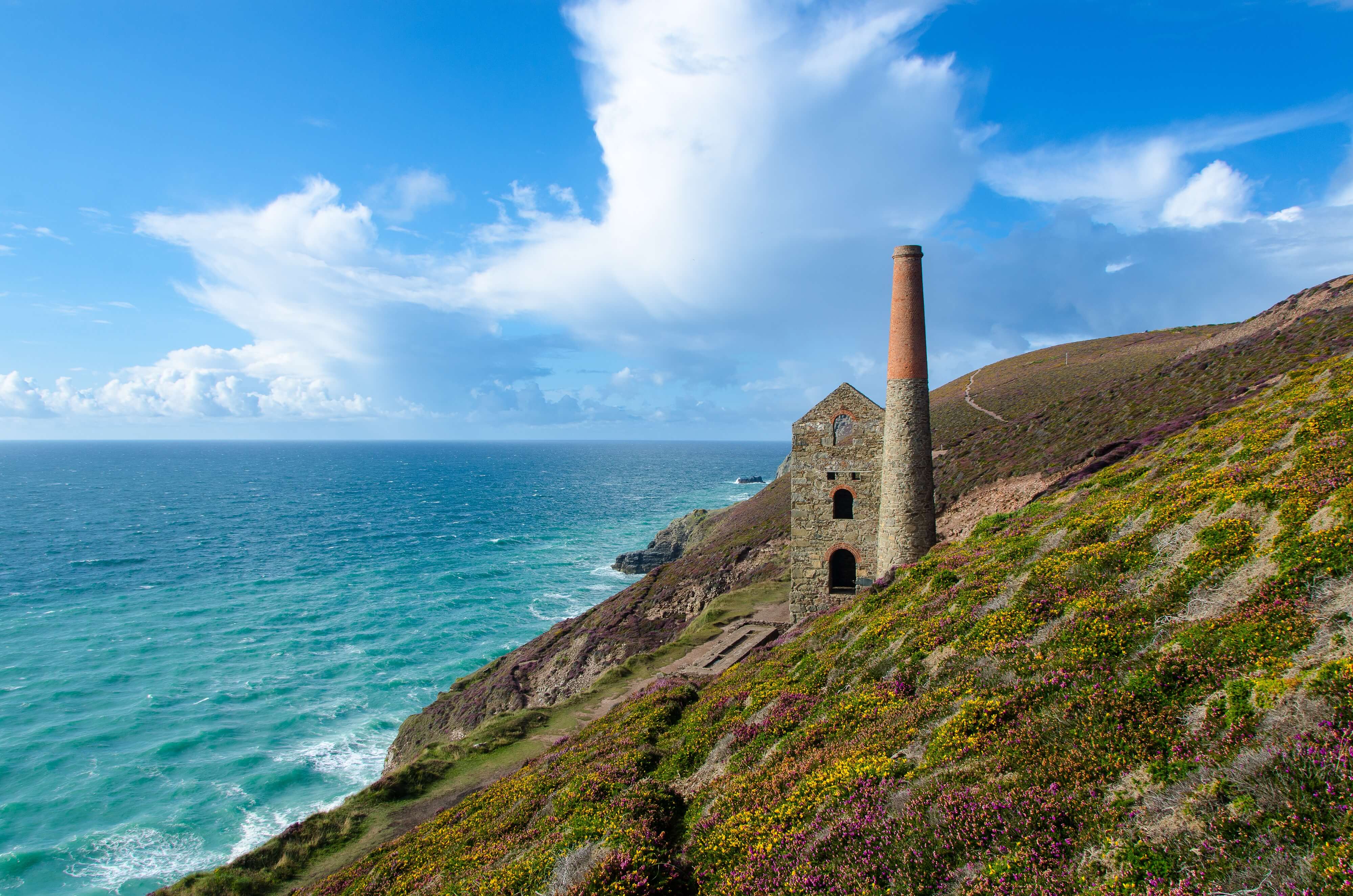
The turning point came in the 1980s. In 1986, the National Trust stabilised and preserved the three surviving buildings, shoring up walls that had stood unmaintained for seventy years, and began managing the site for visitors. Towanroath Engine House is now Grade II listed, its listing entry noting the round headed openings, the brick voussoirs over its arches, and the clasping chimney at its rear corner, the small architectural details of a building nobody was supposed to still be looking at more than a century later. The wider mining landscape around St Agnes, along with the rest of Cornwall’s historic mining districts, was inscribed as part of the Cornish Mining World Heritage Site in 2006, recognition that this coastline once powered an industry that shaped the world.
It was television, more than any listing or designation, that turned Wheal Coates into a household image. The site and the surrounding cliffs at St Agnes Head became a stand in for the fictional Nampara Valley in the BBC’s Poldark, appearing repeatedly across the show’s run, most memorably in horseback scenes shot along the clifftop with Towanroath framed in the background. It had already done service in adaptations of Rosamunde Pilcher’s novels for German television, one of Cornwall’s stranger open secrets, a stretch of the north coast quietly famous across Germany for decades before Poldark made it famous at home. There is a pleasing irony in it. A building constructed purely to solve a drainage problem in a working tin mine has become one of the most recognisable pieces of scenery in British and European period drama.
The walk from Beacon Drive
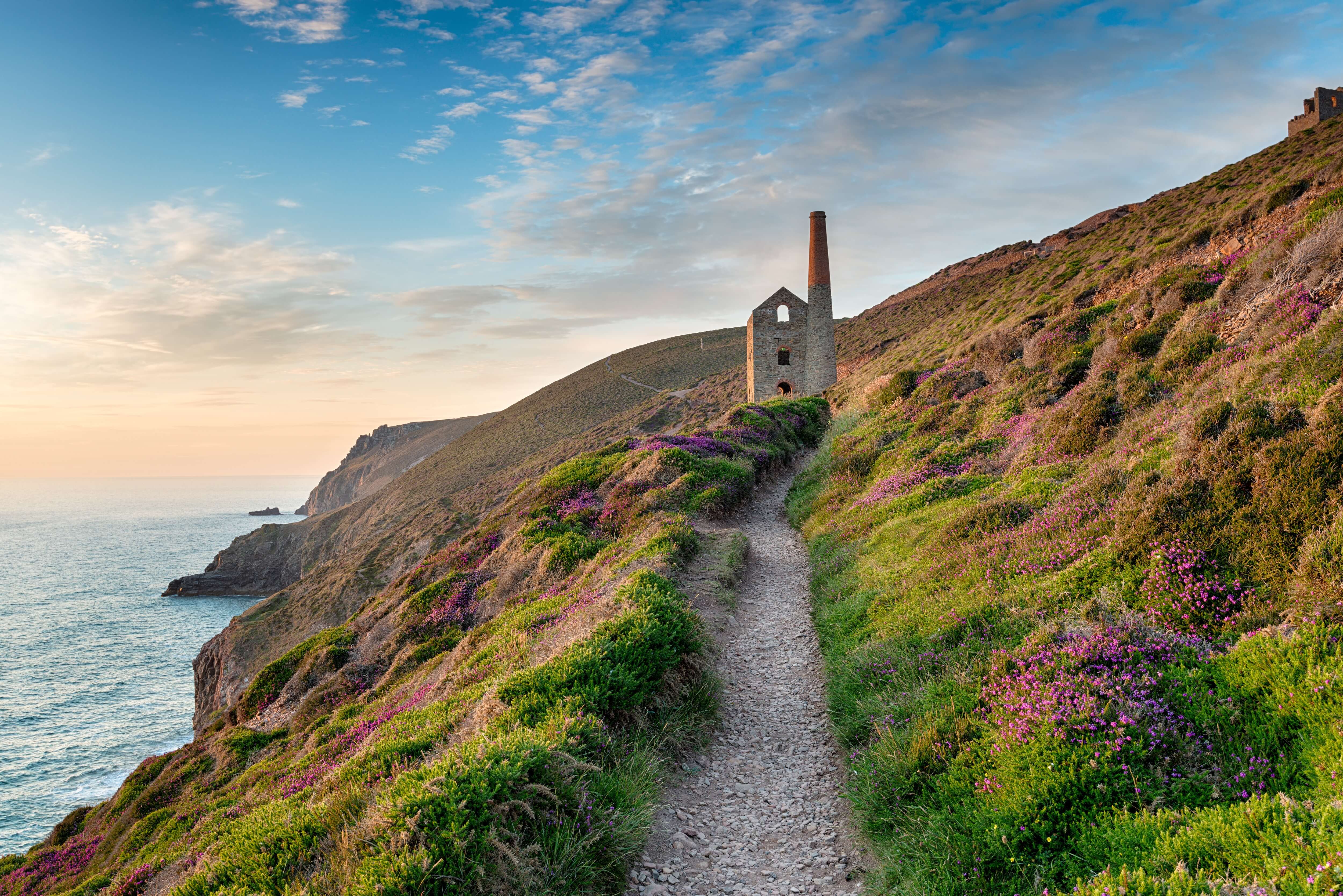
The good news for anyone planning a visit is that Wheal Coates rewards very little effort. From the National Trust car park just off Beacon Drive (the postcode TR5 0NT will get you close, though the sat nav covers a wide area, so follow the road round and watch for the National Trust sign at the car park entrance), the mine buildings are within about a third of a mile, a short, gentle stroll along a well worn path beside a stream. Ten or fifteen minutes after leaving the car, most people are standing at the fence line looking down the same shaft the pumping engine once fought to keep dry.
For those who want more, the classic route turns this into a proper coastal walk. From the mine, the path drops down to Chapel Porth, a broad, dramatic beach reached either along the clifftop or via the steep little road down to the National Trust’s own car park there. The beach takes its name from a long vanished medieval chapel and holy well dedicated to St Agnes, earthwork traces of it can still be made out on the ground above the gully. At low tide it is worth checking the cave at the base of the cliffs, known locally as Towanroath Vugga, where the lower workings of the mine can still be traced, and where evidence of prehistoric and medieval digging has also been found. Chapel Porth has a small National Trust concession cafe, best known locally for its “hedgehog” ice cream, Cornish clotted cream rolled in crushed hazelnuts, a genuinely good reward at the end of a clifftop walk.
From Chapel Porth the coast path climbs back north, following the cliff edge past Towanroath and up toward St Agnes Head, with St Agnes Beacon rising inland behind it. Energetic walkers can push on to the head itself for some of the widest views on this stretch of coast, and iWalk Cornwall’s St Agnes Beacon route is worth a look if you want a full step by step guide with an OS map before you set off. The full loop between the two car parks, out via the clifftop and back via the mine (or the other way round), comes to roughly a mile and a half to two miles depending on the route taken, achievable in well under an hour at an easy pace, or comfortably stretched into a half day with the beach, the cafe and plenty of stops for photographs factored in.
The terrain is uneven in places, with some short, steep sections around the Chapel Porth valley and the descent to the beach, so it is not a route for flip flops, but nothing on the main loop requires serious fitness. Dogs are welcome throughout. The heathland either side of the path is part of what remains of a much larger tract of Cornish heath, home to adders and lizards basking on the warmer slopes, greater and lesser horseshoe bats roosting in the old mine tunnels, and peregrine falcons hunting from the cliffs above, a genuinely wild landscape that happens to have a Grade II listed engine house sitting in the middle of it.
Before you go
Both car parks fill early on fine days, particularly through the summer months, so an early start is worth it if a specific parking spot matters to you. The Chapel Porth beach itself carries a tide warning that is worth taking seriously, the sand disappears quickly as the water comes in, and the National Trust advises checking tide times before setting off, especially if the plan involves the low tide cave at the base of the cliffs.
There is one temptation worth resisting. The shaft beneath Towanroath is genuinely 600 feet deep, and the grille across it is there for a reason. It is an extraordinary thing to stand beside, an actual working mine shaft rather than a museum reconstruction, but it deserves the same respect the men who worked it were forced to give it every single day. Drop a stone if you like, and count the seconds. Just don’t lean too far over the edge to do it.
The mine has been closed for well over a century now. The men who built and worked it are long gone, and nobody alive remembers the sound the pumping engine made. But stand on that clifftop path with the mist coming in off the sea, and it is not hard to understand why, out of the hundreds of engine houses once scattered across this county, this is the one Cornwall chose to keep.
Share This Story, Choose Your Platform!
To keep up with the latest cornish news follow us below
Follow CornishStuff on Facebook - Like our Facebook page to get the latest news in your feed and join in the discussions in the comments. Click here to give us a like!
Follow us on Twitter - For the latest breaking news in Cornwall and the latest stories, click here to follow CornishStuff on X.
Follow us on Instagram - We also put the latest news in our Instagram Stories. Click here to follow CornishStuff on Instagram.
- 1
- 2
- 3
- 4
- 5
- 6





You Might Also Be Interested In





Discover More In Cornwall


Daily Cornish news by email
The latest daily news in Cornwall, sent direct to your inbox.