Rame Head to Coverack: Cornwall’s best places for sunrise
Cornwall built its whole reputation on sunsets. Every clifftop bar and beach hut from St Ives to Porthtowan markets itself around that last golden hour over the Atlantic, and there is a reason for that. Most of the county’s best-loved coastline faces west. But turn your back on it for one morning and Cornwall has a completely different trick up its sleeve, and almost nobody is awake to see it. Get up before the rest of the county and you can discover a different Cornwall entirely, on the south and east-facing coast that never makes the postcards.
Your daily dose of Cornwall
News, events and goings on across the Duchy
Why the south coast has the edge
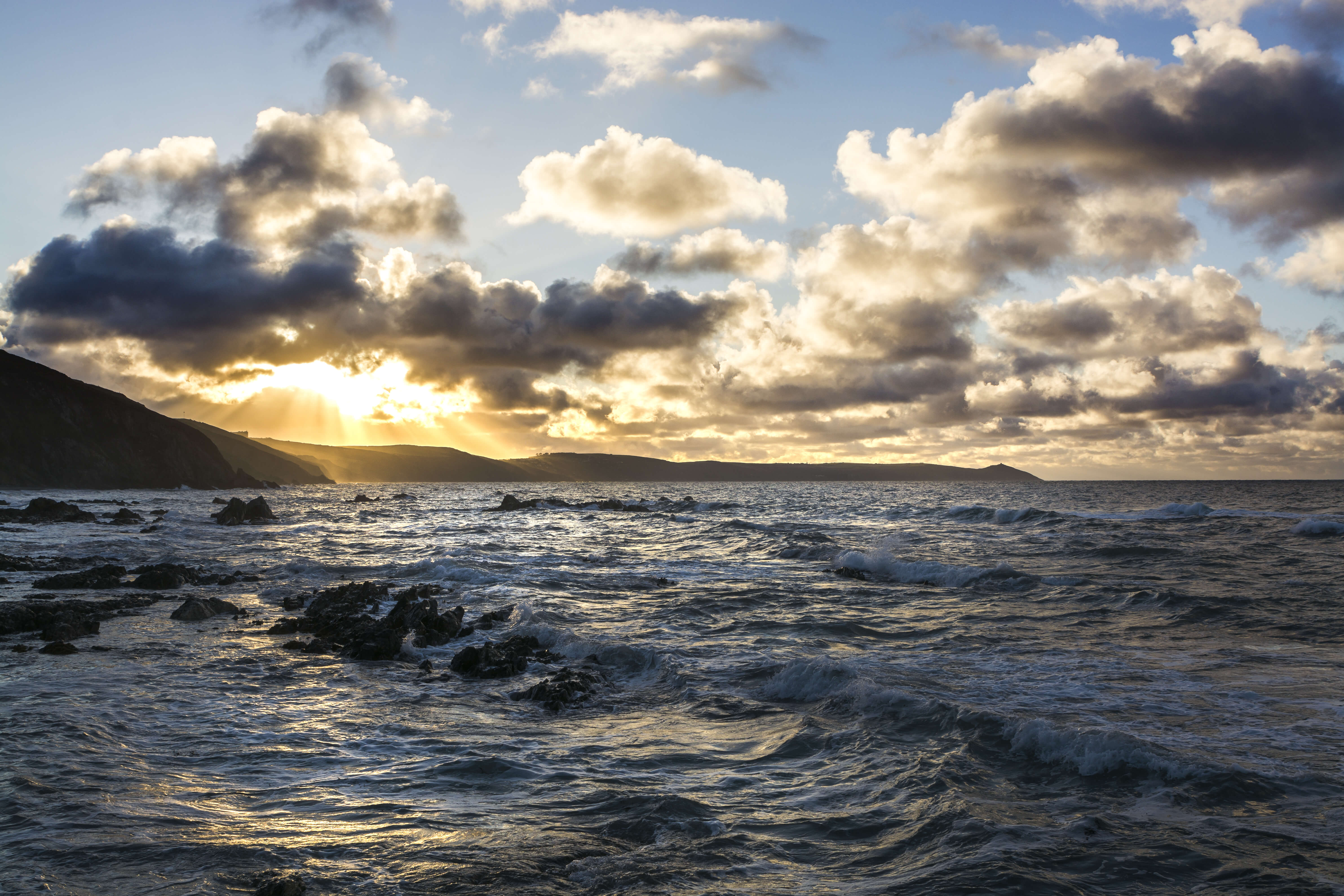
The sun comes up in the east. That single fact rules out most of the coastline people think of first when they picture Cornwall. St Ives, Newquay, Fistral and the whole run of north coast beaches face broadly west and northwest, which is exactly why they own the sunset trade. For a proper sunrise, with the light climbing straight out of the sea rather than sliding in sideways across land, you want the coast that looks out towards the Channel. That means the far south east corner around the Tamar, the eastern side of the Lizard peninsula, and the sweep of Mount’s Bay down towards Penzance.
It also means far fewer people. A sunset draws a crowd with a flask, a picnic rug and a phone held up ready. A sunrise mostly draws dog walkers, the odd fisherman heading out, and whoever happened to already be awake. You get the same colours, the same light, the same reason people move to Cornwall in the first place, minus the audience.
Rame Head and Whitsand Bay
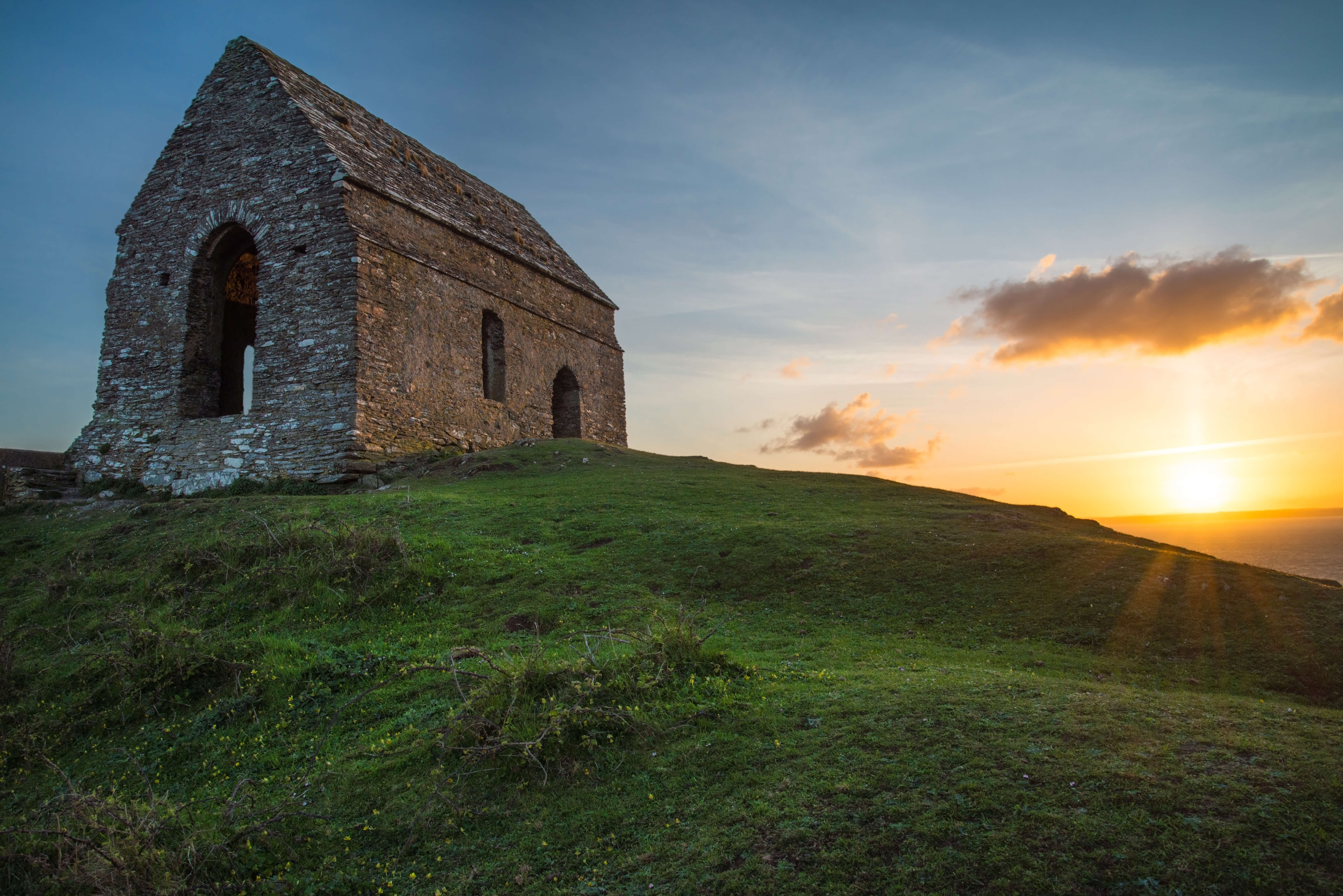
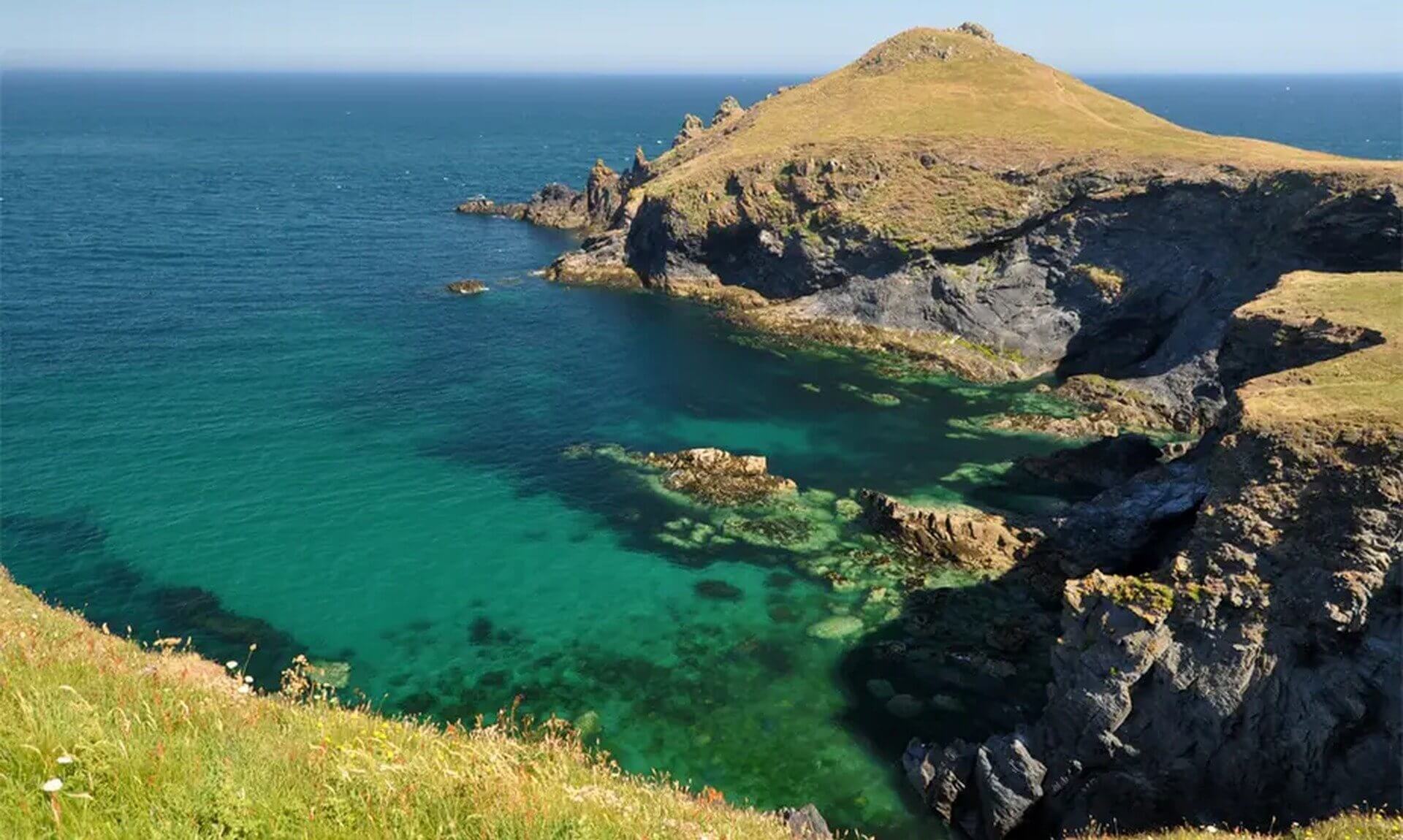
Start in the far south east corner of the county, on the Rame peninsula near the Devon border, and it is hard to beat Rame Head itself. Whitsand Bay runs for more than three miles from the headland down to Portwrinkle, backed by steep cliffs that catch the first light with nothing between you and the open Channel.
The headland has been watched from for a genuinely long time. A tiny stone chapel dedicated to St Michael the Archangel has stood on the summit since at least 1397, when it was first licensed for Mass, and it is thought to sit on the site of an even earlier Celtic hermitage. It doubled as a lookout for centuries. Plymouth Corporation paid a watchman to keep a beacon burning there from at least 1486, and in 1588 that same fire was one of the first lit in England to signal the approach of the Spanish Armada. A National Coastwatch Institution station now stands next to the ruined chapel, staffed by volunteers who carry on much the same job, keeping an eye on the water at first light most mornings with nobody else for company. There is something fitting about a headland built for watching being one of the best places in Cornwall to watch the sun come up.
Park near Rame church and it is a short, fairly steep walk out along the coast path to the headland, with the whole sweep of Whitsand Bay opening up to your right as you go.
Coverack and the Manacles
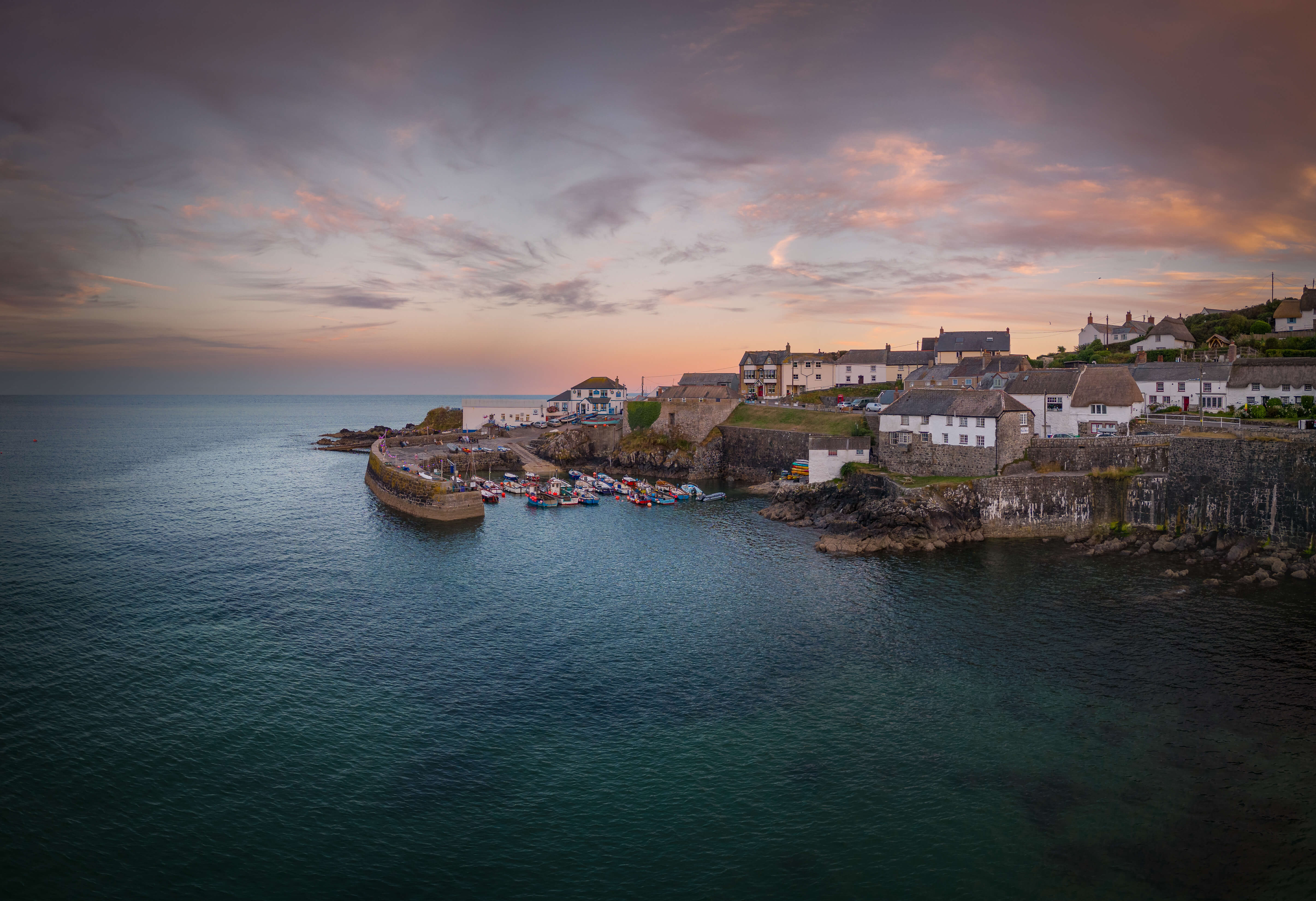
Head south west onto the Lizard and the geography does the rest of the work for you. Coverack is one of the most southerly working villages left in Cornwall, a small horseshoe harbour with fishing boats still tied up against the wall. The sun rises directly out over the Manacles, a reef about a mile offshore whose Cornish name, Meyn Eglos, means church stones.
It is a beautiful thing to watch the light come up over, and a sobering one once you know what is under the water. More than a hundred ships are known to have been wrecked on the Manacles over the centuries, with well over a thousand lives lost between them. The steamship SS Mohegan struck the reef in October 1898 and sank inside twenty minutes, with more than a hundred people on board never making it off. The reef still draws divers from all over the country for exactly that reason. None of that history shows on the surface at dawn. The bay is usually calm, the harbour wall gives an open line straight out to the horizon, and the water is clean enough that a lot of locals go in for an early swim once the sun is properly up.
Your daily dose of Cornwall
News, events and goings on across the Duchy
Gyllyngvase Beach and Pendennis Point, Falmouth
Falmouth does not get talked about as a sunrise town, which is most of its appeal. Gyllyngvase, the town’s main beach, faces broadly south east across the mouth of the harbour, and at dawn the water is often completely flat, sheltered enough to mirror the sky back at itself rather than break it up into chop. Open-water swimmers and paddleboarders use it for exactly this reason, and it is one of the few spots on this list where you can watch the sunrise from the sea itself if you fancy it.
Walk on a little further round the headland to Pendennis Point and Pendennis Castle sits in silhouette against the light, built by Henry VIII in the 1540s to guard the harbour mouth alongside its twin at St Mawes across the water. By the time the sun clears the horizon properly, the first of Falmouth’s shipping is usually already moving in and out of one of the deepest natural harbours in the world.
Marazion and St Michael’s Mount
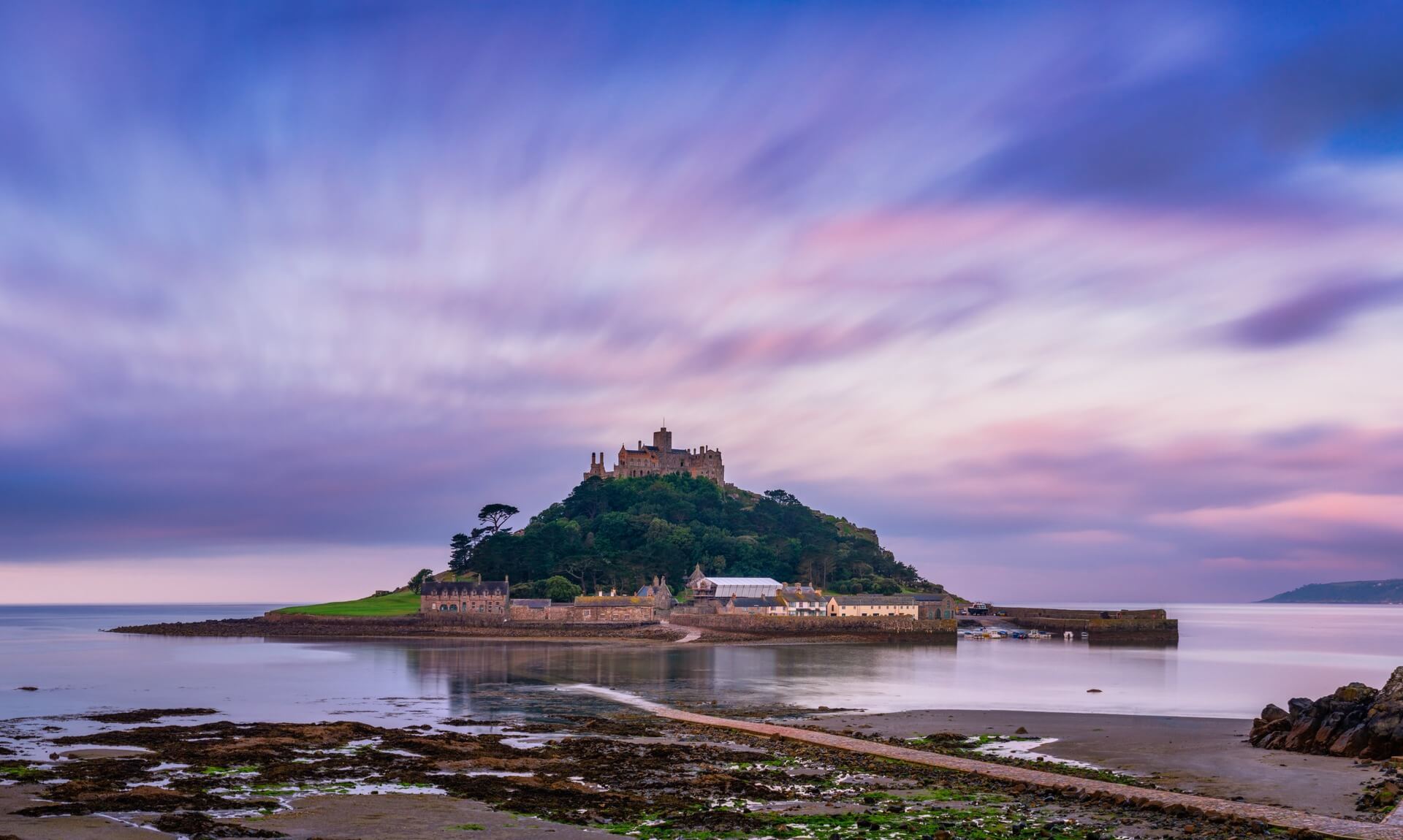
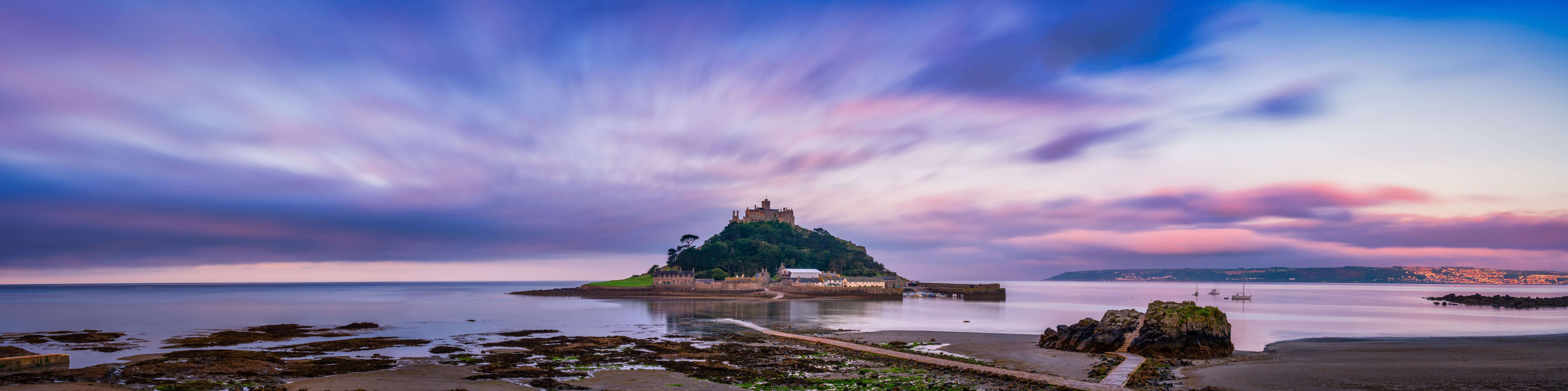
Few views anywhere in Cornwall are as recognisable as St Michael’s Mount rising out of Mount’s Bay, and dawn is when it earns that reputation properly. The castle and chapel on the island are managed by the National Trust, and the ancient granite causeway connecting it to Marazion is passable on foot for roughly two and a half hours either side of low tide, so it is worth checking the tide times before setting out.
Catch it right and you can walk the half mile of cobbled setts out towards the island with the sun climbing up behind it, the castle still lit orange while the beach at Marazion sits in shadow. The Mount has drawn pilgrims since the medieval period, with its main feast day falling on Michaelmas, 29 September, and there is something of that same pull in standing on the causeway at first light with the tide still creeping back from your feet. Even without the tide cooperating, the beach itself gives a wide, uninterrupted run across the whole of Mount’s Bay towards the Lizard and Land’s End.
Looe and Polperro
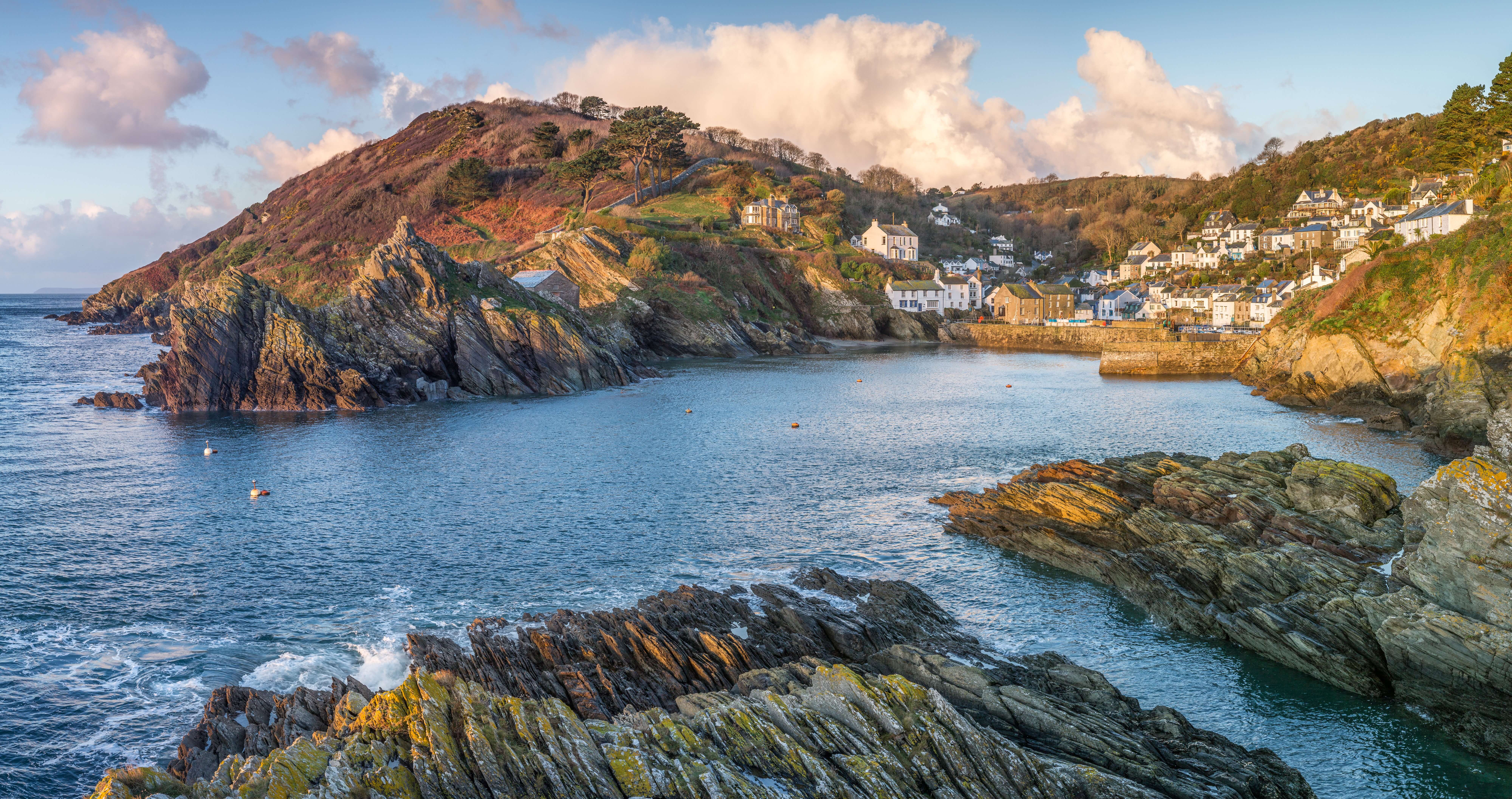
For something quieter still, the twin harbour towns of Looe and Polperro on the south east coast both open straight out towards the sunrise. Neither needs a headland climbed or a tide table checked. Polperro in particular is one of the prettiest working harbours left in the county, a tangle of whitewashed cottages tumbling down to a tidal pool that drains twice a day and leaves the fishing boats resting on the sand. It has a properly disreputable past to go with the postcard looks. Smuggling brandy, tea and tobacco in from Guernsey and France was close to a village-wide trade here through the 18th century, and when the preacher John Wesley visited in 1762 he remarked that every local seemed to be involved in it somehow.
None of that history is visible at six in the morning. What you get instead is a working harbour waking up around you, boats readying for the day, gulls starting their racket, and the sky over the Channel doing the rest without an audience.
Your daily dose of Cornwall
News, events and goings on across the Duchy
Getting the timing right
A sunrise is far less forgiving than a sunset if you get the timing wrong, because there is no warning glow beforehand to tell you it is about to happen. Check the actual sunrise time for the day you’re going rather than trusting memory or last year’s figure, since Cornwall’s mornings shift fast through the seasons. The gap between a 5am start in midsummer and a 7.30am one in late autumn is easily enough to sleep straight through it.
Aim to arrive twenty to thirty minutes before the official sunrise time. The best colour in the sky, the deep pinks and purples of civil twilight, often happens before the sun itself is visible, and it is gone quickly once the light flattens out. Bring more layers than the daytime temperature suggests, because a clifftop or an open beach at dawn is considerably colder than the same spot at noon, whatever the season. And if St Michael’s Mount is on the list, check the tide times for Marazion specifically rather than a general Cornwall tide guide, since the causeway window is short and unforgiving either side of low water.
Share This Story, Choose Your Platform!
To keep up with the latest cornish news follow us below
Follow CornishStuff on Facebook - Like our Facebook page to get the latest news in your feed and join in the discussions in the comments. Click here to give us a like!
Follow us on Twitter - For the latest breaking news in Cornwall and the latest stories, click here to follow CornishStuff on X.
Follow us on Instagram - We also put the latest news in our Instagram Stories. Click here to follow CornishStuff on Instagram.
- 1
- 2
- 3
- 4
- 5
- 6


You Might Also Be Interested In






Discover More In Cornwall


Daily Cornish news by email
The latest daily news in Cornwall, sent direct to your inbox.