The Pool car park now home to nearly 200 wild orchids
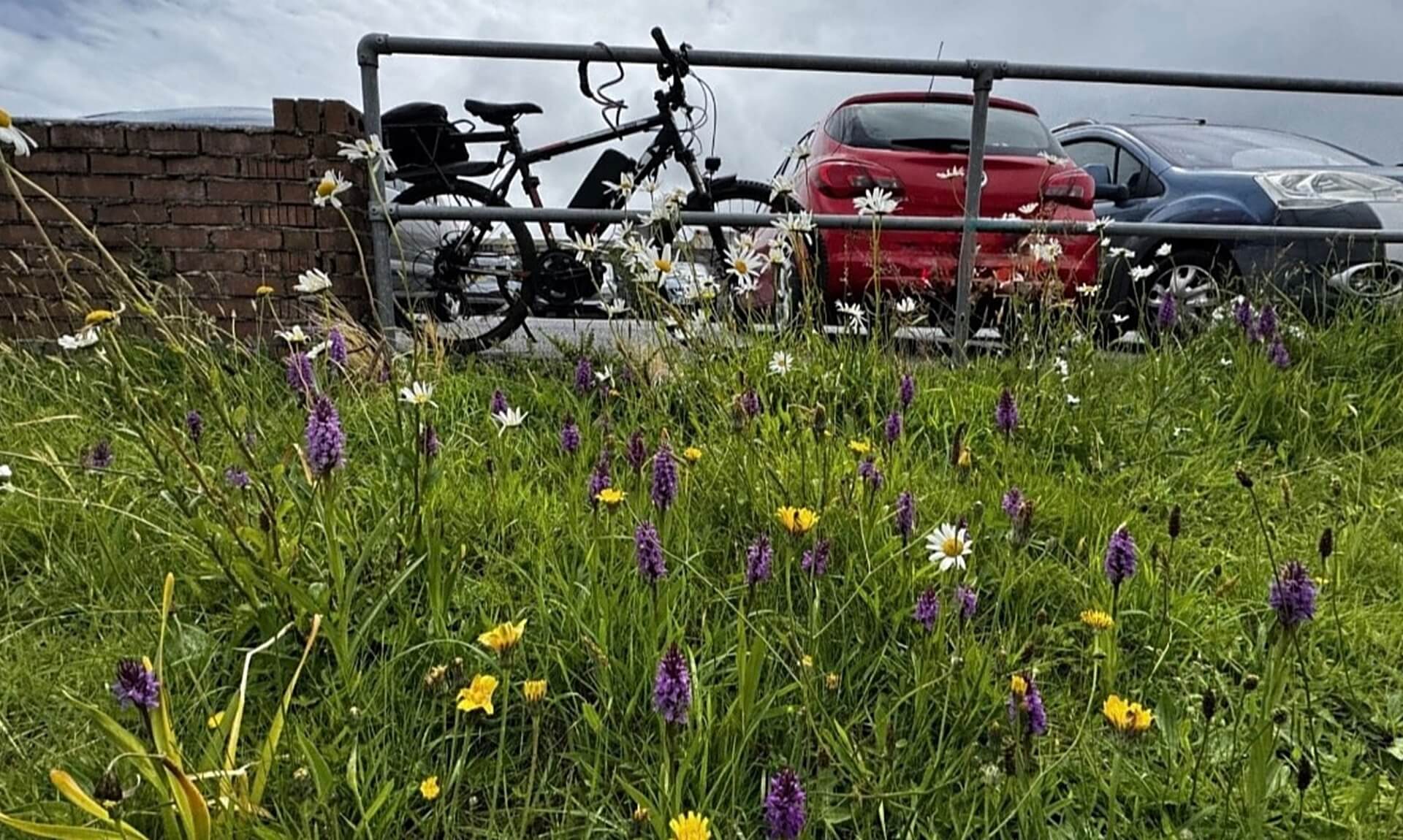
Not every wildlife success story needs a nature reserve. This one is happening in a car park, on a strip of grass most people would have walked straight past two years ago.
Your daily dose of Cornwall
News, events and goings on across the Duchy
From mowed verge to meadow
The Kernow Building sits on an industrial estate in Pool, hemmed in by traffic and warehouses rather than fields. It is also home to staff from Cornwall Partnership NHS Foundation Trust, who have spent the past two years working with the Trust’s Estates team to change how the land around the building is managed.
Instead of the usual routine of cutting the grass through spring and summer, selected areas have simply been left alone. The change has turned ordinary verges into a meadow-style habitat, and the results have gone well beyond what anyone expected.
Kelly Uren, who works in the Kernow Building, said the aim was always modest.
“The Kernow Building sits within a bustling industrial estate, but we’ve been trying to turn our small patch of land into a calm oasis for both staff and local wildlife. By working with the Estates team and allowing some areas to grow naturally, we’re now seeing the real benefits of that approach.”
Nearly 200 orchids, and what they tell you about the soil
The longer grass has drawn in bees, butterflies and hoverflies, and a colony of yellow meadow ants has settled in, building anthills through the grass. But the standout result is in a patch bordering the car park, where wild orchids have taken hold. This year’s count reached 196.
“We are absolutely delighted by the number of orchids that have appeared this year,” Kelly Uren said. “To count 196 orchids in what is actually quite a small grassed area is fantastic and shows what can happen when nature is given the chance to thrive. Orchids are also a great indicator of healthy soil, so it’s a really encouraging sign that biodiversity is improving across the site.”
The bee hotel that finally got tenants
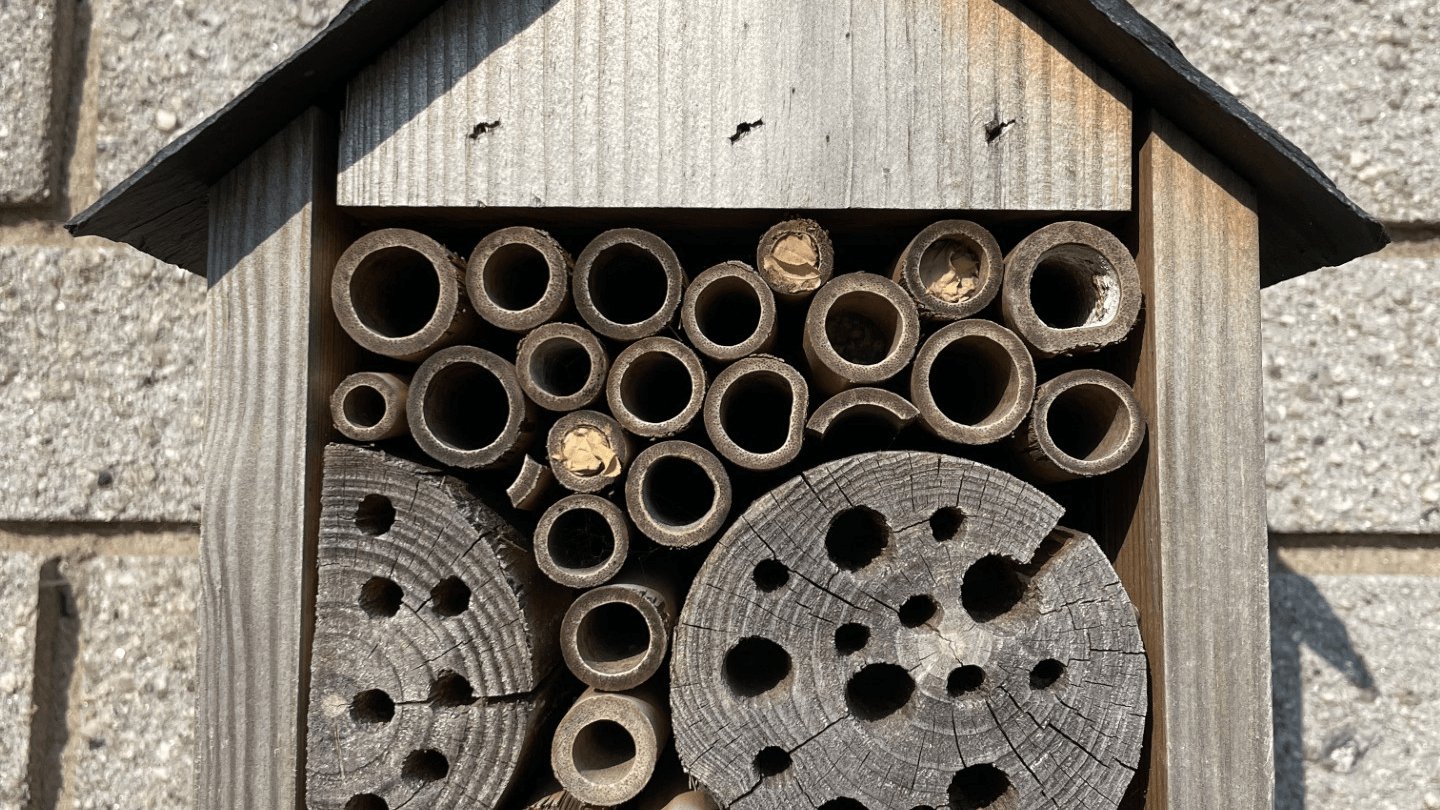
The site’s other milestone this year involves a bee hotel installed to give local pollinators somewhere to nest. Last year it sat empty. This year, staff found three of its nesting cells filled with pollen and eggs, and carefully sealed over with leaves.
“This is incredibly exciting because the bee hotel wasn’t used at all last year,” Kelly said. “We now have three cells that have been filled and sealed by what we believe are leafcutter bees. It’s a fantastic sign that our efforts are creating a genuine sanctuary for pollinators.”
Solitary bees tend to forage within a few hundred metres of where they nest, so their presence says as much about the wider area as it does about the hotel itself. Research also suggests that once one solitary bee moves in, others tend to follow.
“Who knows how many more of these nesting holes will be occupied before the summer is out?” Kelly said. “The fact that these bees are choosing to nest here suggests the habitat we are creating is supporting pollinating species in the local area, which is exactly what we hoped to achieve.”
Your daily dose of Cornwall
News, events and goings on across the Duchy
Grasshoppers join the list
The species list keeps growing. Staff recently spotted a grasshopper among the vegetation for the first time, and it wasn’t long before the chirping of several more could be heard from a grassy bank nearby, hinting at a small population settling in.
“It was lovely to see a very handsome grasshopper hop out in front of me while I was watering our pot plants,” Kelly said. “Then, just around the corner, I could hear a cluster of grasshoppers chirping from the grassy bank. It’s such great news that word is getting around in the insect world that we are here. Every new species we record feels like confirmation that the habitat is becoming richer and more diverse.”
A calmer place to step outside
The change has been noticeable for staff too. Stepping outside the Kernow Building now often means sparrows chirping from the shrubs, dust-bathing in the car park or using nest boxes put up last winter, along with the smell of meadow grass replacing the usual industrial estate backdrop.
“It’s wonderful to step outside and hear sparrows singing, see insects busy among the wildflowers and enjoy the smell of meadow grass,” Kelly said. “It’s helping to make the area feel greener, calmer and more connected with nature, which can have a real positive impact on wellbeing during the working day.”
What was, until two years ago, just another patch of mown grass on a busy industrial estate is now pulling in orchids, bees, grasshoppers and sparrows, proof that a small change in how a small space is managed can go a long way.
Read Next
- Mental HealthBehind every one of Cornwall's suicide figures is a family, a workplace, a street, a friendship group left to make sense of a loss that never fully goes away.
Share This Story, Choose Your Platform!
To keep up with the latest cornish news follow us below
Follow CornishStuff on Facebook - Like our Facebook page to get the latest news in your feed and join in the discussions in the comments. Click here to give us a like!
Follow us on Twitter - For the latest breaking news in Cornwall and the latest stories, click here to follow CornishStuff on X.
Follow us on Instagram - We also put the latest news in our Instagram Stories. Click here to follow CornishStuff on Instagram.
- 1
- 2
- 3
- 4
- 5
- 6