Golitha Falls: the short waterfall walk hiding on Bodmin Moor
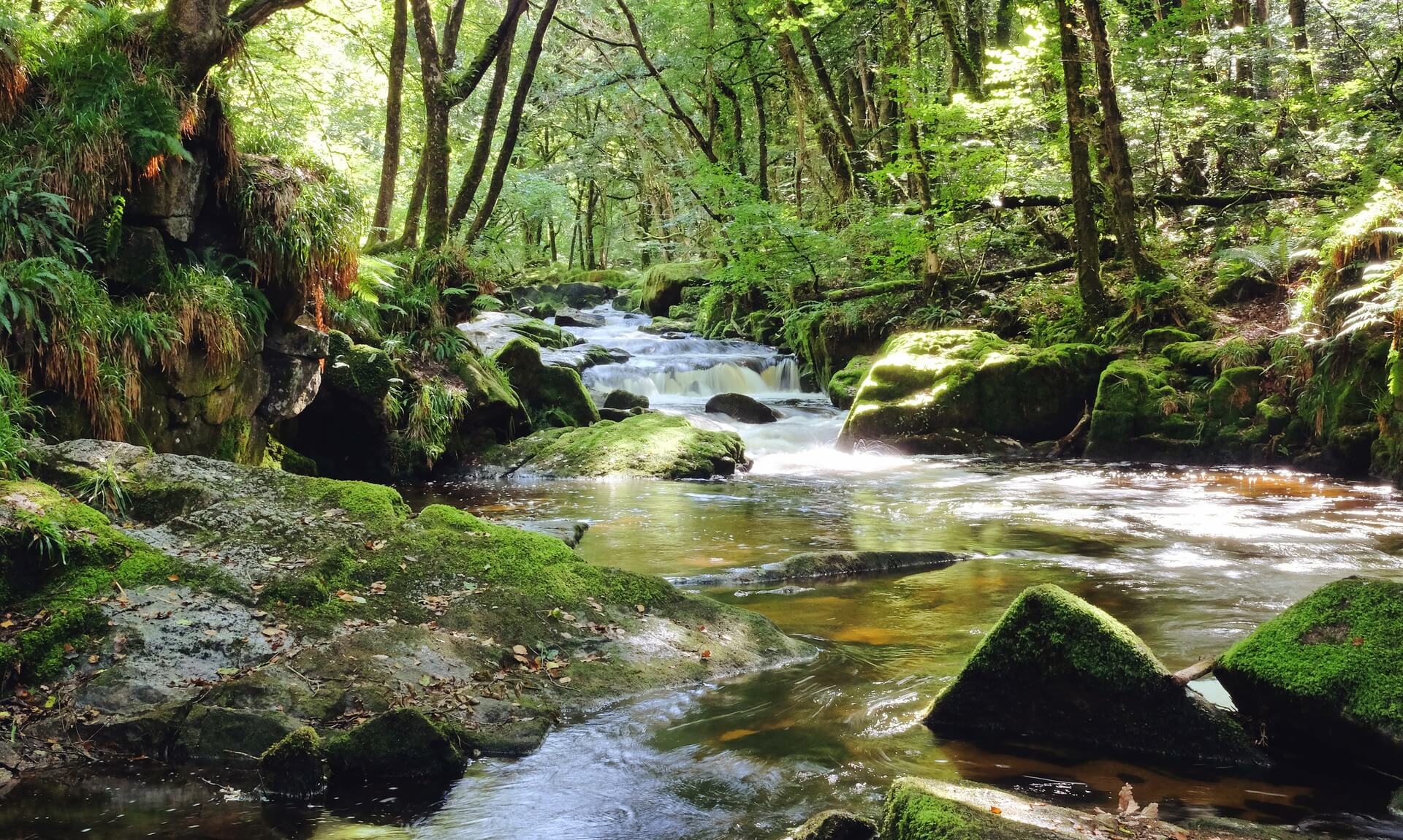
Ten minutes from the car, on a path flat enough for trainers, the River Fowey drops into a wooded gorge and starts making a noise you hear before you see it. Golitha Falls is one of the easiest places in Cornwall to get to moving water, and one of the most likely to be driven straight past by anyone heading for the coast.
Your daily dose of Cornwall
News, events and goings on across the Duchy
What you are actually walking to
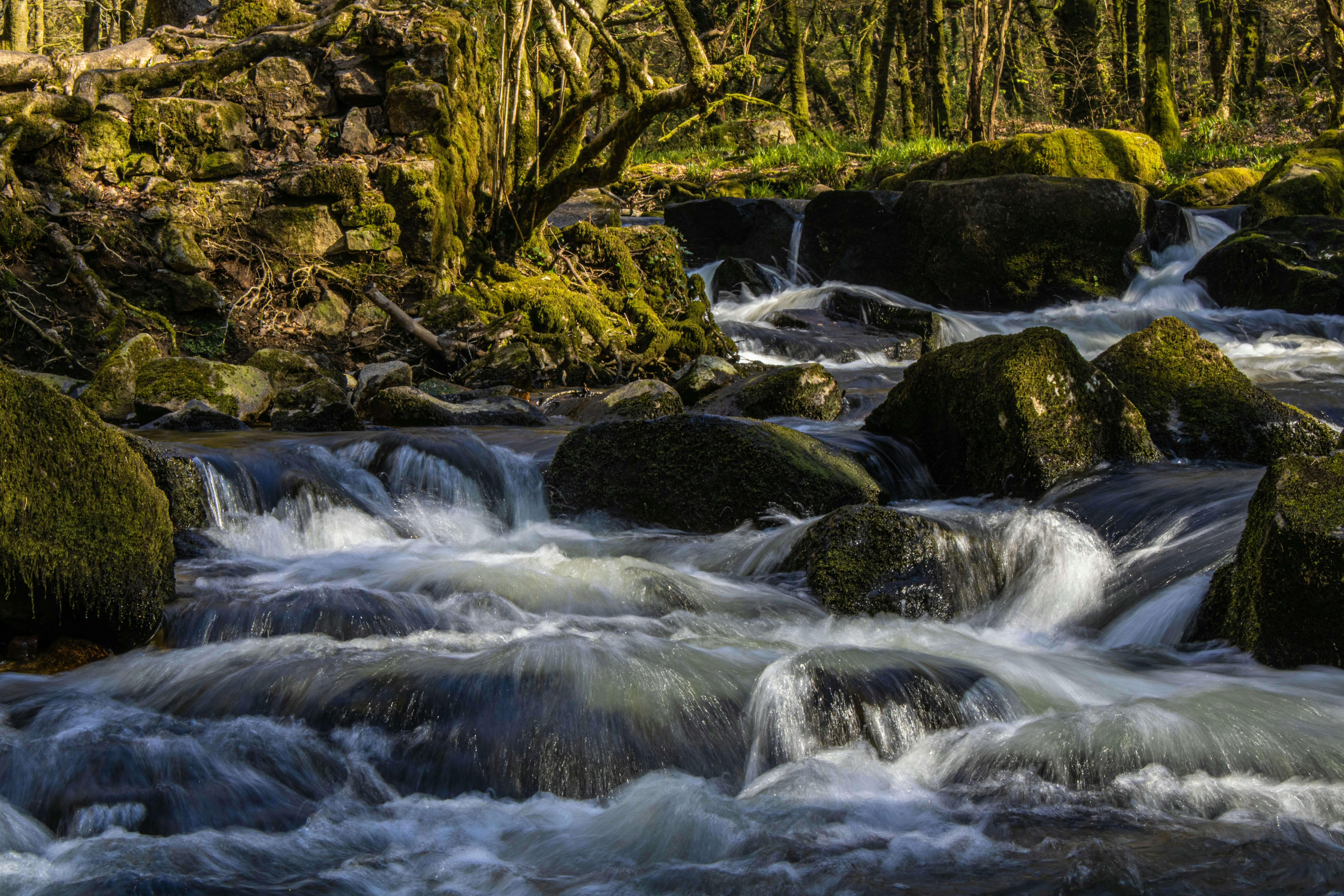
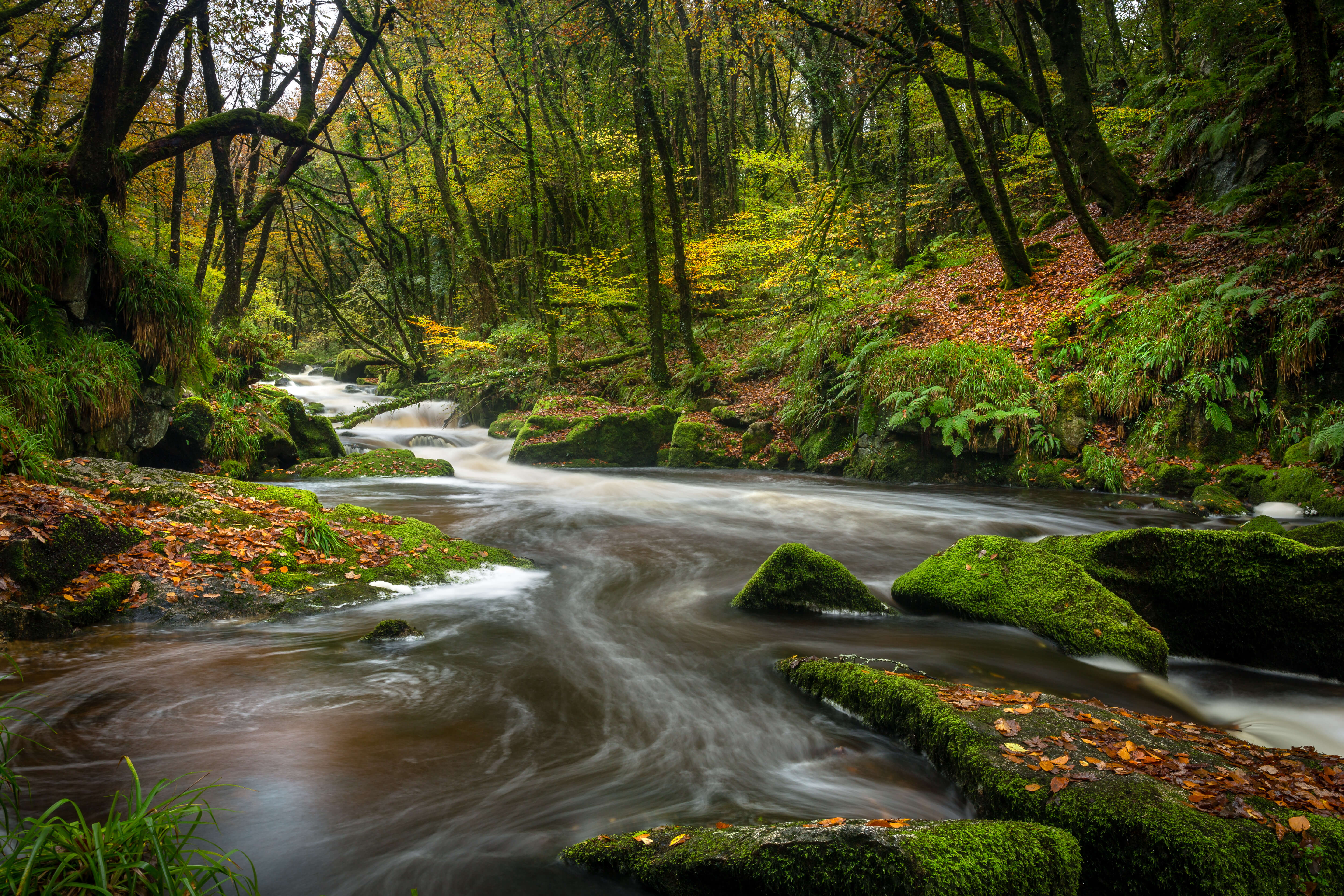
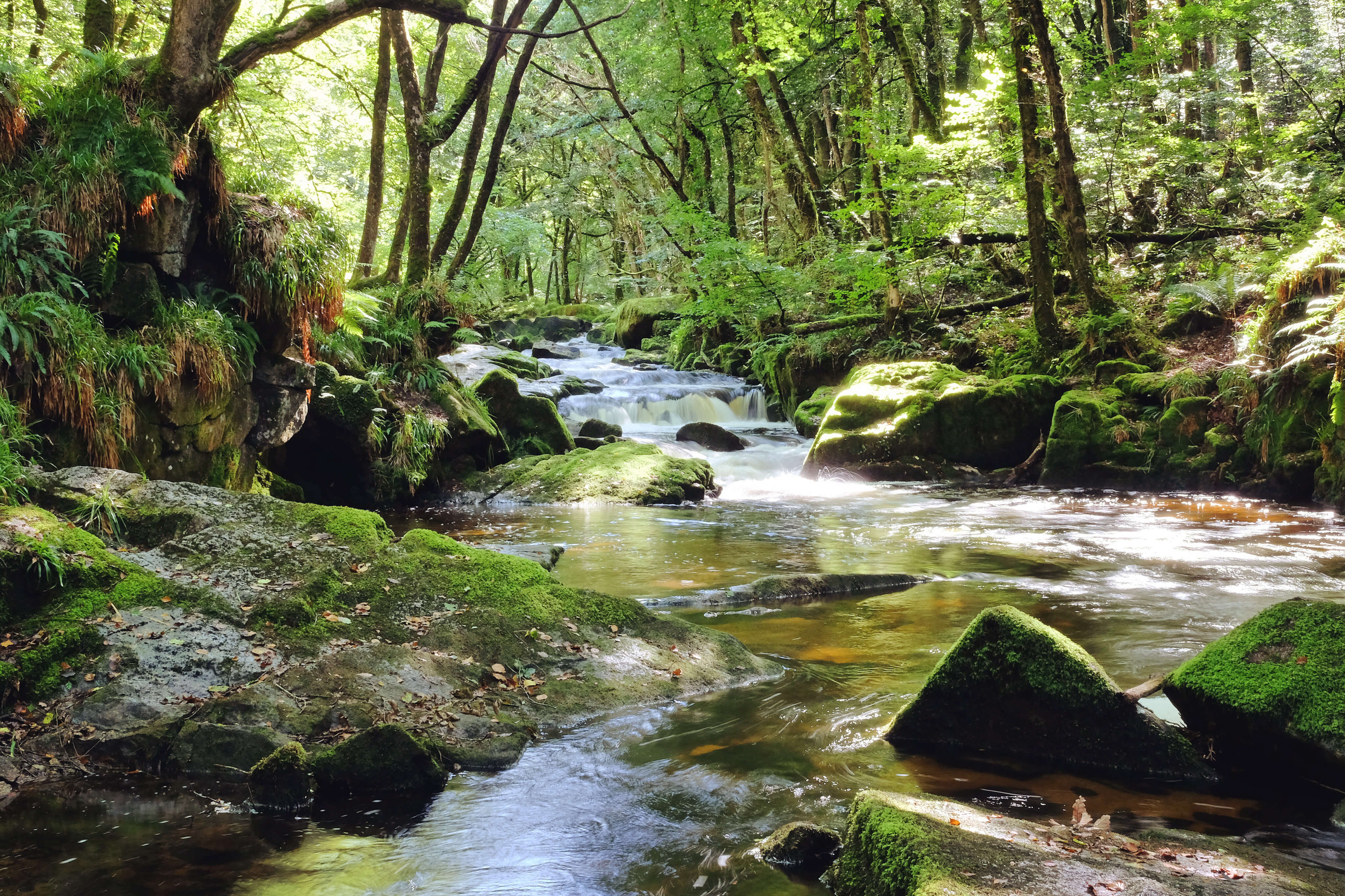
Golitha is not one big plunge. It is a run of cascades and rapids where the Fowey cuts through a steep-sided gorge on the southern edge of Bodmin Moor, between Draynes Bridge and Treverbyn Bridge. The name promises a single sheet of falling water and the river does not quite deliver one, which catches some first-time visitors out. Go after heavy rain and the argument disappears.
The whole thing sits inside Golitha Falls National Nature Reserve, 18 hectares of upland oak and mixed ash woodland looked after by Natural England. It is a Site of Special Scientific Interest for its woodland plants, and the landscape the river has carved is protected as an Area of Outstanding Natural Beauty.
Distance, difficulty and what the ground is actually like
Natural England describes a flat out-and-back path of roughly 0.6km from the car park to the viewing area for the falls, with benches about 0.2km in. That is the version most people do, and it is one of the more forgiving short walks in Cornwall.
For a circuit, the reserve has waymarked routes from the same starting point. The shorter red loop, around three-quarters of a mile, follows the Fowey past the smaller cascades and brings you back to the car park. The longer yellow route carries on down the valley towards the bigger falls before looping back. Red is the one to pick with young children or an hour to spare.
Difficulty depends entirely on how far you go. The first stretch is level, well surfaced and manageable for most people with reasonable mobility. Past that the paths get rougher, with tree roots, loose rock, mud and some steep sections, and reaching the best of the cascades means a bit of clambering. The rocks beside the water are slippery in any weather. Boots or grippy trainers, not sandals.
Mobile signal is patchy across the site, so download a map before you set off rather than relying on one loading in the valley.
Parking, toilets and the barbecue shack in the car park
The car park sits at Draynes Bridge, postcode PL14 6RX, directly opposite the reserve entrance, and it is free. Natural England asks for a voluntary contribution through the RingGo app or the donation boxes on site, which goes towards looking after the reserve. There are toilets in the car park, and the whole site is open at all hours with no admission charge.
The car park and toilets are maintained by Inkie’s Smokehouse BBQ, a family-run American barbecue place in a timber cabin at the entrance, which has built a following well beyond people who came for the walk. Opening days are limited, so check before you plan lunch around it.
It fills up. On warm weekends and through the school holidays the car park can be full by late morning, and early or late in the day is the safer bet. The nearest station is Liskeard, about three miles away, with bus services running from Liskeard to St Cleer. Access by car is on minor roads off the A38, A30 and B3254.
Your daily dose of Cornwall
News, events and goings on across the Duchy
The wood is much older than the path
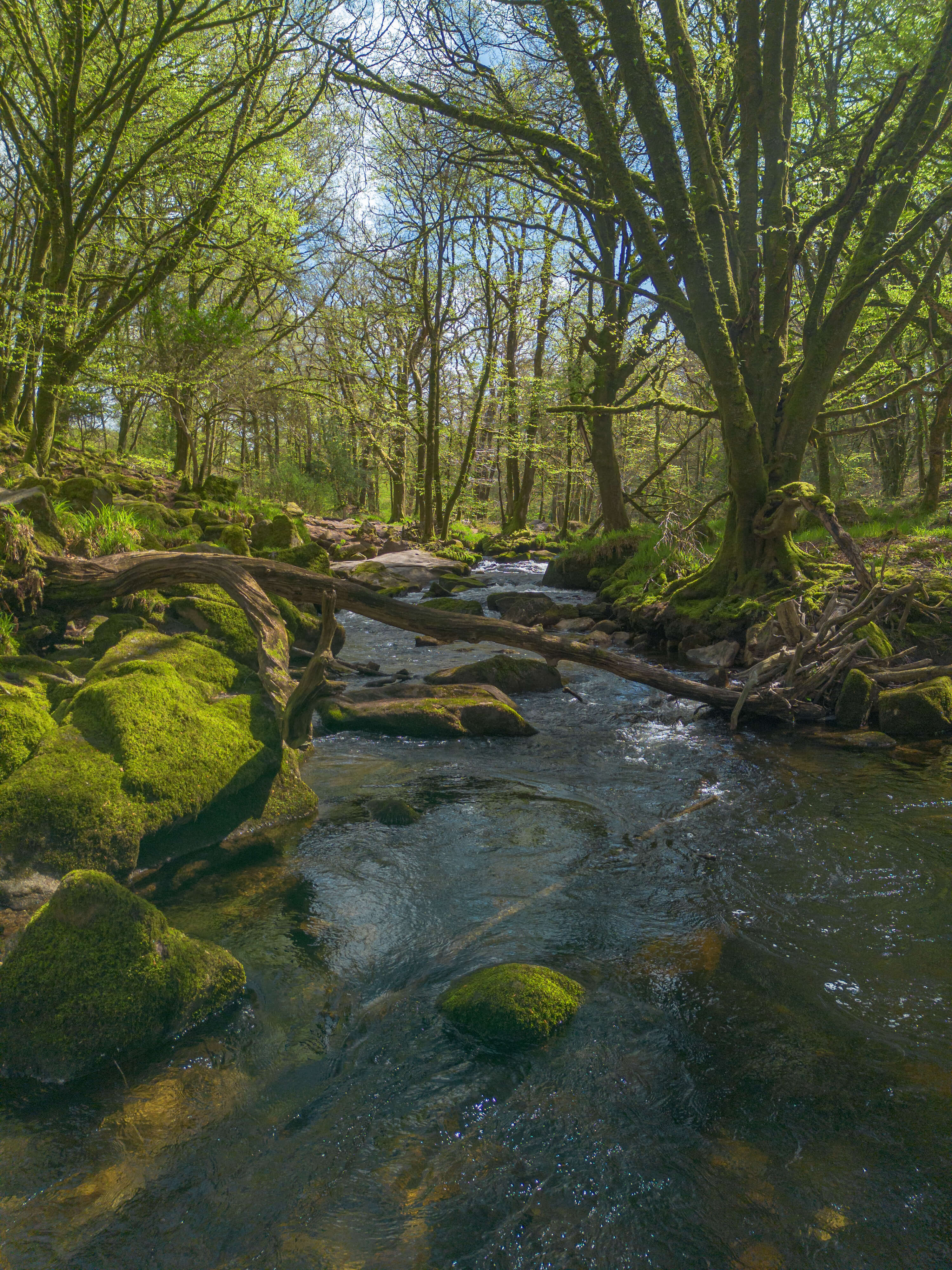
Draynes Wood, the ancient oak woodland the river runs through, was recorded in the Domesday Book in 1086, and it has been managed by coppicing on and off ever since. Some of that work has been reintroduced on a small scale inside the reserve.
What it grows is the reason the site is protected. This is one of Cornwall’s richest valleys for bryophytes, the mosses and liverworts, with more than 120 species recorded. There are 48 species of lichen, including the nationally rare Parmelia minarum. In spring the floor goes over to bluebells and wood anemone, and the meadow areas bring bugle, self-heal, white clover, common tormentil and valerian.
The wildlife list is just as long. Dormice live in the ancient hazel coppice. Noctule, brown long-eared and lesser horseshoe bats have all been recorded. The Fowey holds healthy populations of salmon and sea trout, and otters are often seen around the falls themselves. The reserve supports 83 species of moth, and butterflies including the silver-washed fritillary, marbled white, gatekeeper and speckled wood.
A copper mine and a drowned king
Past the falls, moss has almost finished swallowing the remains of Wheal Victoria, a copper mine worked in the 1840s and 1850s. Stonework, old adits and the outline of a waterwheel are still there in the undergrowth for anyone paying attention.
Halfway between the car park and St Cleer village stands King Doniert’s Stone, two pieces of a decorated ninth-century cross. The inscription asks for prayers for Doniert’s soul, and he is generally identified with Dungarth, a king of Cornwall. Tradition has it that he drowned in the Fowey around AD 875, somewhere below the lower falls, though whether that was accident or something less accidental has never been settled.
When to go
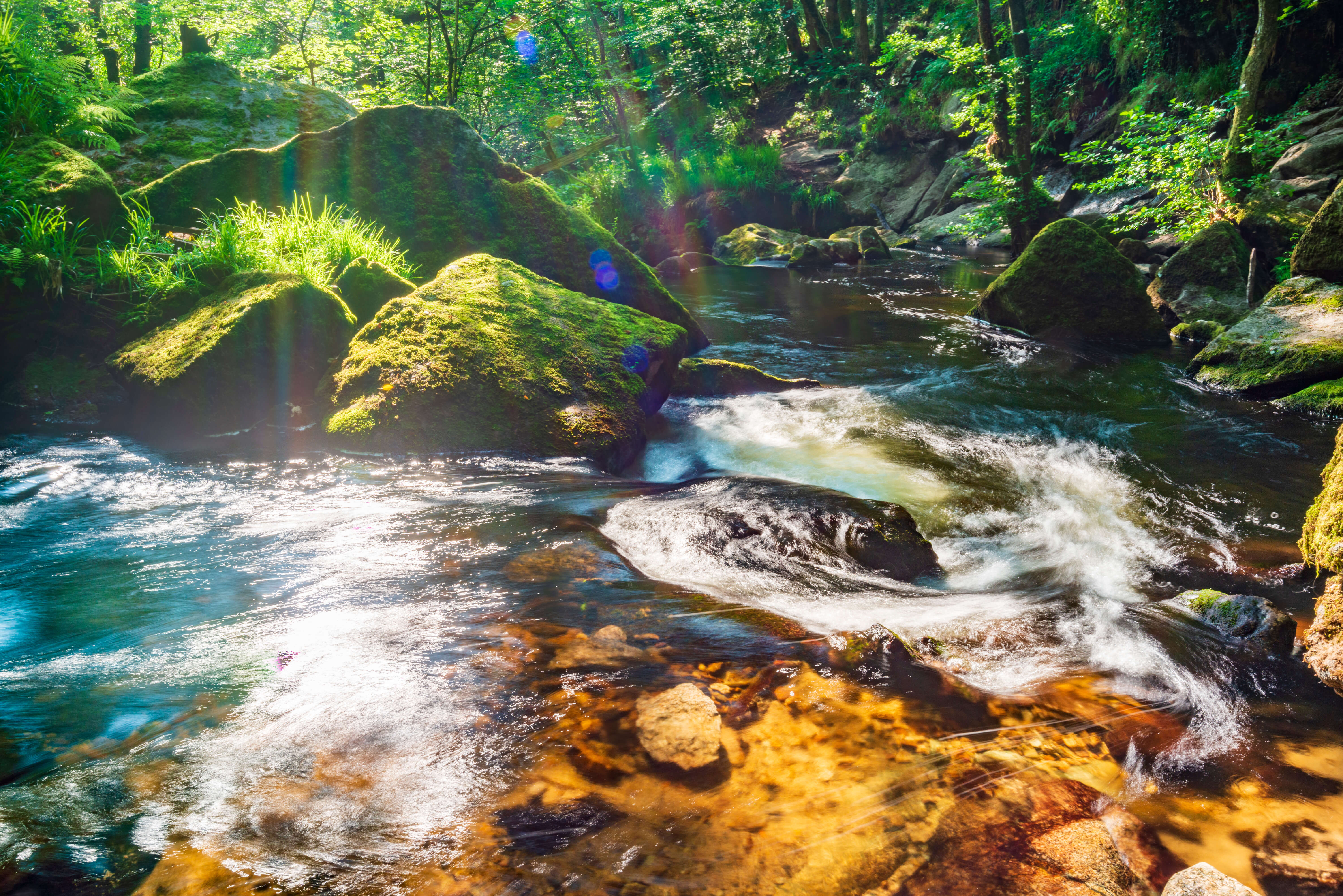
After rain, always. The falls are at their loudest and most photogenic when the moor has had a soaking and the river is running hard. Spring brings the bluebells, summer brings the shallow pools where children paddle in the shade, and autumn brings fungi and colour to a wood that already looks like a film set.
Your daily dose of Cornwall
News, events and goings on across the Duchy
If you want the other one
Cornwall’s better-known waterfall walk is St Nectan’s Glen near Tintagel, where the Trevillet River drops through a hole worn in the slate. It is a different sort of day. The walk in from Trethevy is roughly a mile each way and uphill, parking is pay-and-display at £3 for the day, and there is an entry charge to see the falls themselves. Golitha asks nothing at the gate and gets you there in ten minutes.
Natural England’s own note on the reserve is worth carrying with you. Winter storms swell the Fowey and make the falls more torrential, and extra care should be taken after heavy rainfall. The days that make Golitha worth the drive are the same days the rocks stop forgiving mistakes.
Share This Story, Choose Your Platform!
To keep up with the latest cornish news follow us below
Follow CornishStuff on Facebook - Like our Facebook page to get the latest news in your feed and join in the discussions in the comments. Click here to give us a like!
Follow us on Twitter - For the latest breaking news in Cornwall and the latest stories, click here to follow CornishStuff on X.
Follow us on Instagram - We also put the latest news in our Instagram Stories. Click here to follow CornishStuff on Instagram.
- 1
- 2
- 3
- 4
- 5
- 6




You Might Also Be Interested In




Discover More In Cornwall

Daily Cornish news by email
The latest daily news in Cornwall, sent direct to your inbox.