Cornwall tides explained: the guide every beach day needs

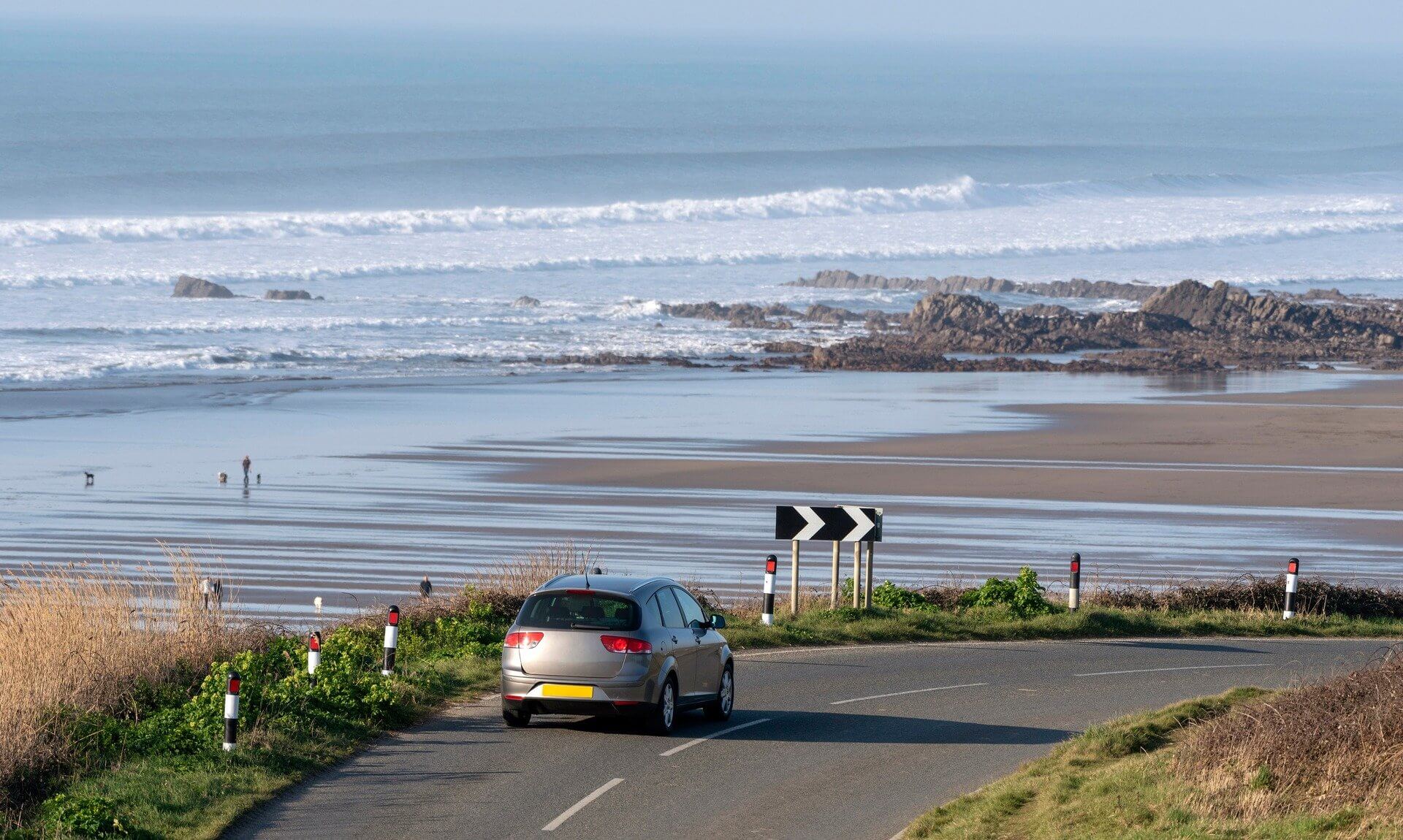
Stand on the same patch of sand at nine in the morning and again at three in the afternoon, and you could be looking at two different beaches. First there’s a wide run of firm sand, rockpools and exposed rock stretching out towards the waves. A few hours later that same ground is gone, swallowed by the sea without so much as a warning. That’s the tide doing what it does twice a day, every day, on the same stretch of the Cornish coast you’re about to visit, and it catches out more people than almost anything else on a beach day.
Your daily dose of Cornwall
News, events and goings on across the Duchy
Why Cornwall’s tides swing so much
A tide is the regular rise and fall of the sea, driven mostly by the pull of the moon’s gravity and, to a smaller degree, the sun’s. As the Earth turns, the moon’s pull drags a bulge of water around with it, one on the side of the planet facing the moon and a second on the opposite side. Land passing through those bulges gets a high tide. The lower water in between is low tide.
Most of the Cornish coast experiences two high tides and two low tides a day, roughly twelve and a half hours apart. How far the water actually moves between the two states, known as the tidal range, depends on where you’re standing. On the north coast around Newquay a spring tide can move the water by six to eight metres. Down on the more sheltered south coast at Falmouth, the same spring tide might only manage five, and a quiet neap tide barely two.
High tide: what changes on the beach
At high tide the sea is at its highest point on the sand, waves break further up the beach, and there’s simply less dry ground to stand on. Coves with cliffs at their back can lose their beach entirely, and rocks, gullies and sandbars that were dry a few hours earlier disappear under water. It’s also when a rising sea is most likely to cut off a path back to the car park, particularly on beaches reached along the base of a cliff.
Low tide: what it opens up
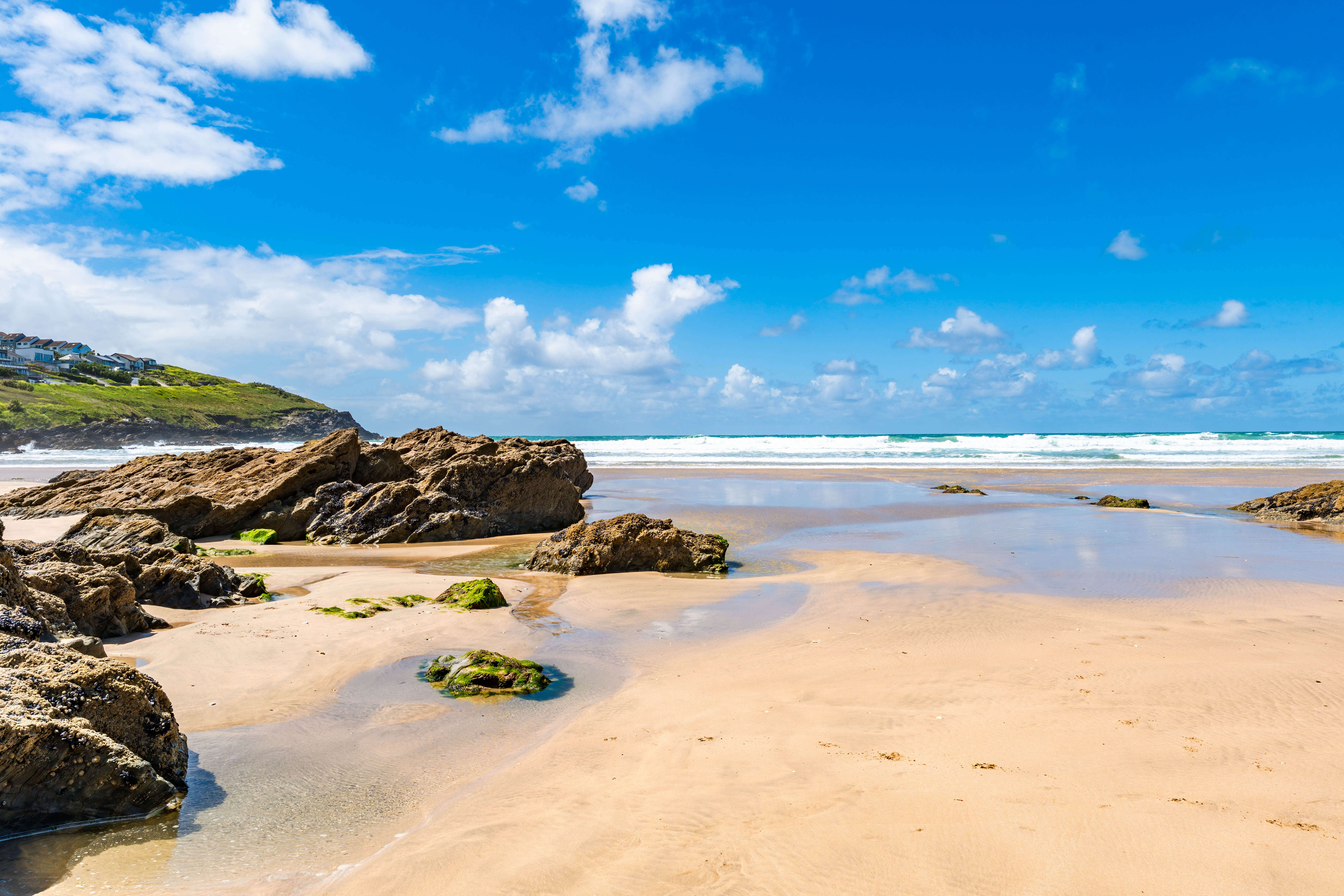
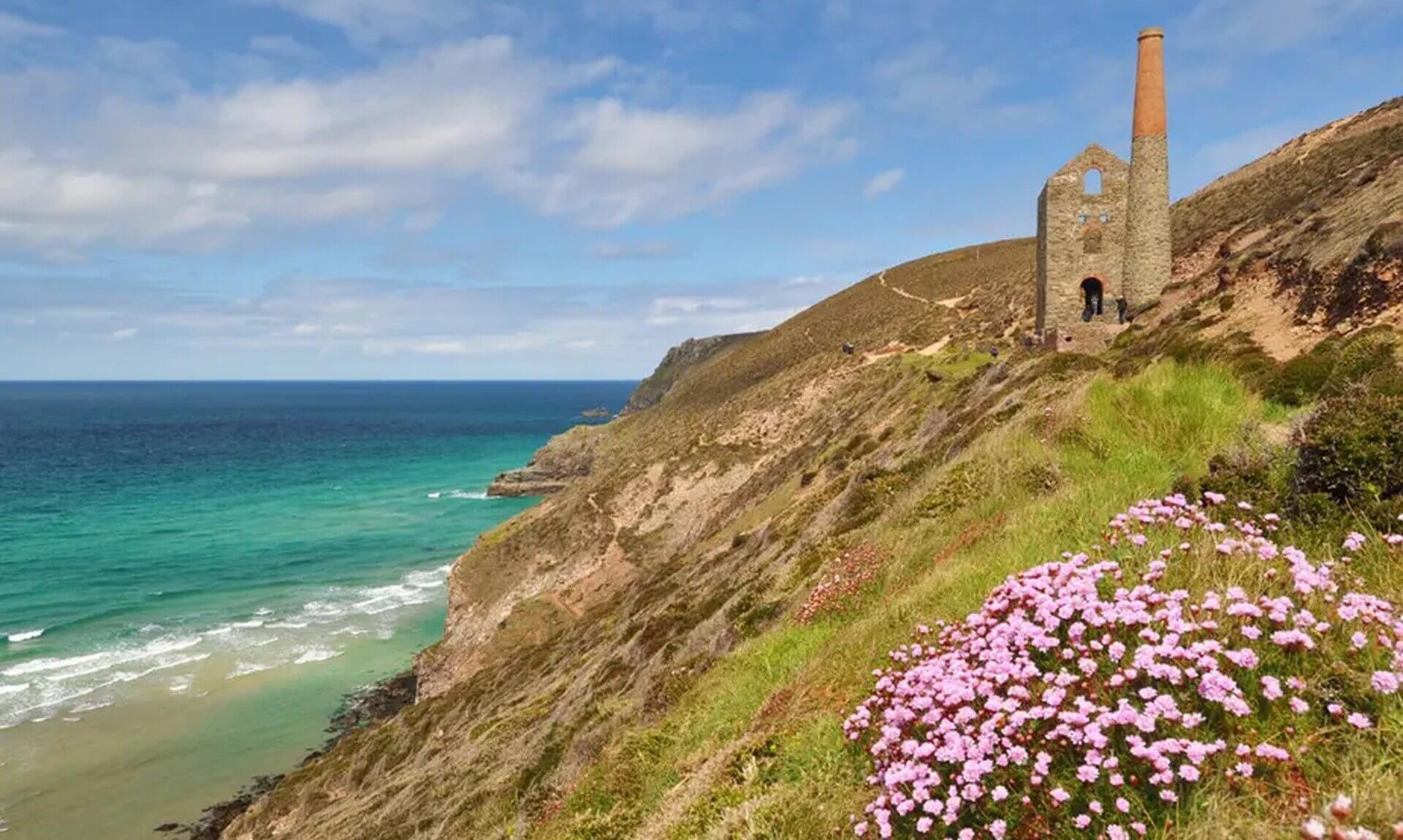
Low tide is the opposite story. More sand is exposed, rockpools appear in the gaps between boulders, and stretches of beach that are underwater for most of the day become walkable. It’s the best time for rockpooling, for exploring caves and arches that are cut off at other states of the tide, and for the handful of tidal crossings around the county, from the causeway out to St Michael’s Mount to sections of the Camel Estuary, that only open up as the water drops.
Your daily dose of Cornwall
News, events and goings on across the Duchy
Spring tides and neap tides
Every fortnight the tide’s range gets noticeably bigger, then noticeably smaller, and it has nothing to do with the season. A spring tide happens around the new moon and the full moon, when the sun and moon line up and their pull combines, producing the highest highs and the lowest lows. A neap tide falls in between, at the moon’s first and last quarter, when the sun’s pull works against the moon’s rather than with it, and the difference between high and low is much smaller.
For a beach day, this matters more than people realise. A spring low tide is the one that exposes the far rockpools and the sandbank that’s usually underwater. A neap low tide barely uncovers the middle of the beach. Most tide tables and apps mark spring and neap dates clearly, and it’s worth a glance before planning a rockpooling trip or a walk out to a tidal island.
Why tomorrow’s low tide is nearly an hour later
Tide times shift by around fifty minutes later each day. That’s because the moon isn’t fixed in the sky the way the sun appears to be. It’s slowly orbiting the Earth in the same direction the Earth spins, so it takes about twenty-four hours and fifty minutes, not twenty-four, for the same point on the coast to line up with the moon again. Over a week that fifty minutes a day adds up to several hours, which is why a beach that was fully exposed at 10am on Monday might not clear again until early afternoon by the following weekend.
How big Cornish tides really are
By UK standards, Cornwall’s tides are unremarkable, and that’s not a bad thing. Just up the coast, the Bristol Channel and Severn Estuary have the second largest tidal range on Earth, with spring tides that can rise and fall by well over 12 metres, beaten only by Canada’s Bay of Fundy. Cornwall’s own range, generally somewhere between two and eight metres depending on the coast and the state of the moon, is gentler, but it still moves enough water to turn a packed beach into an empty one, or an empty one into a rockpooling paradise, inside a single afternoon.
Your daily dose of Cornwall
News, events and goings on across the Duchy
Staying safe as the tide turns
Most tide-related trouble on the Cornish coast comes down to timing rather than bad luck. A sandbank exposed at low tide can create a rip current as the water drains off it on the push back in, which is one reason RNLI lifeguards see so many rip current rescues on an incoming tide. Coves that look generous at low water can lose their sand entirely within a couple of hours, leaving no dry route back along the base of the cliff.
A few habits go a long way. Check the tide times before setting out, not after arriving. Keep an eye on how much beach is left rather than assuming it’ll still be there in an hour. If in doubt about a rip current or a current pulling you out, don’t fight it, stay calm, and swim parallel to the shore until you’re clear of it. And on a lifeguarded beach, the flags are there for a reason, they move as the sandbanks and currents shift through the day.
Where to check tide times before you go
The UK’s official tide predictions come from the Admiralty’s EasyTide service, which covers ports and beaches right around Cornwall free of charge. Most seaside towns also have their own local tide table posted near the beach access, worth a glance on the way down even if you checked online that morning. Conditions can shift the actual water level slightly either way, so treat any prediction as a close guide rather than a guarantee.
Whichever beach you’re heading to today, it’s worth checking again before you leave. By the time the windbreak comes down, the tide will already be on its way to somewhere else, and tomorrow’s low water won’t arrive at the same time twice.
Share This Story, Choose Your Platform!
To keep up with the latest cornish news follow us below
Follow CornishStuff on Facebook - Like our Facebook page to get the latest news in your feed and join in the discussions in the comments. Click here to give us a like!
Follow us on Twitter - For the latest breaking news in Cornwall and the latest stories, click here to follow CornishStuff on X.
Follow us on Instagram - We also put the latest news in our Instagram Stories. Click here to follow CornishStuff on Instagram.
- 1
- 2
- 3
- 4
- 5
- 6






You Might Also Be Interested In






Discover More In Cornwall



Daily Cornish news by email
The latest daily news in Cornwall, sent direct to your inbox.