Wheal Coates: the ghost story behind Cornwall’s grandest ruin
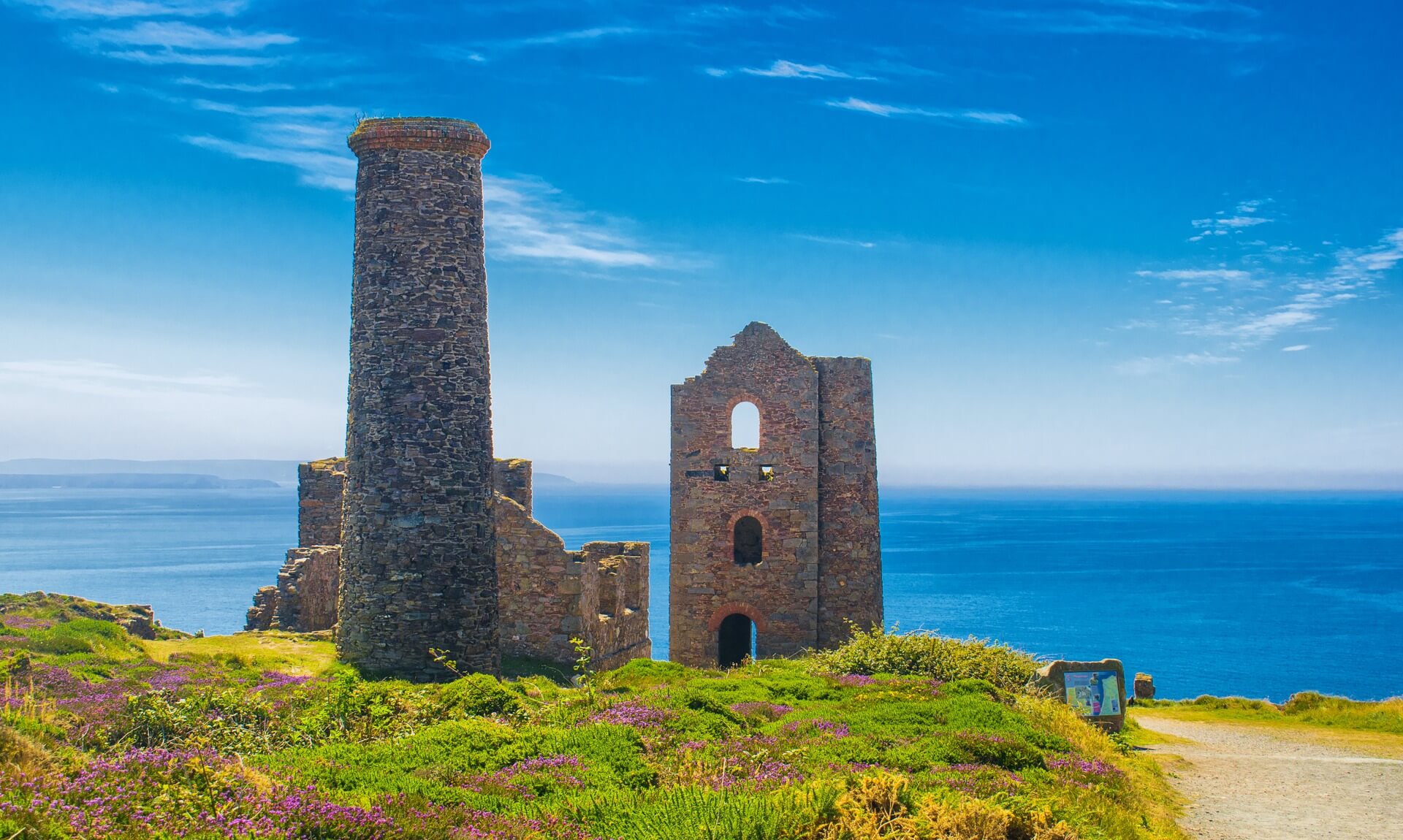
Stand on the cliffs above Chapel Porth as the light goes and the shape on the skyline starts to play tricks on you. A tall stone building with a dark, empty window where a light should be. A chimney leaning into the wind. The sea working away somewhere below in the dark. It could be a haunted inn. It could be the last tower of a clifftop castle. It is neither, and the real story is stranger than either guess.
Your daily dose of Cornwall
News, events and goings on across the Duchy
The ruin everyone gets wrong
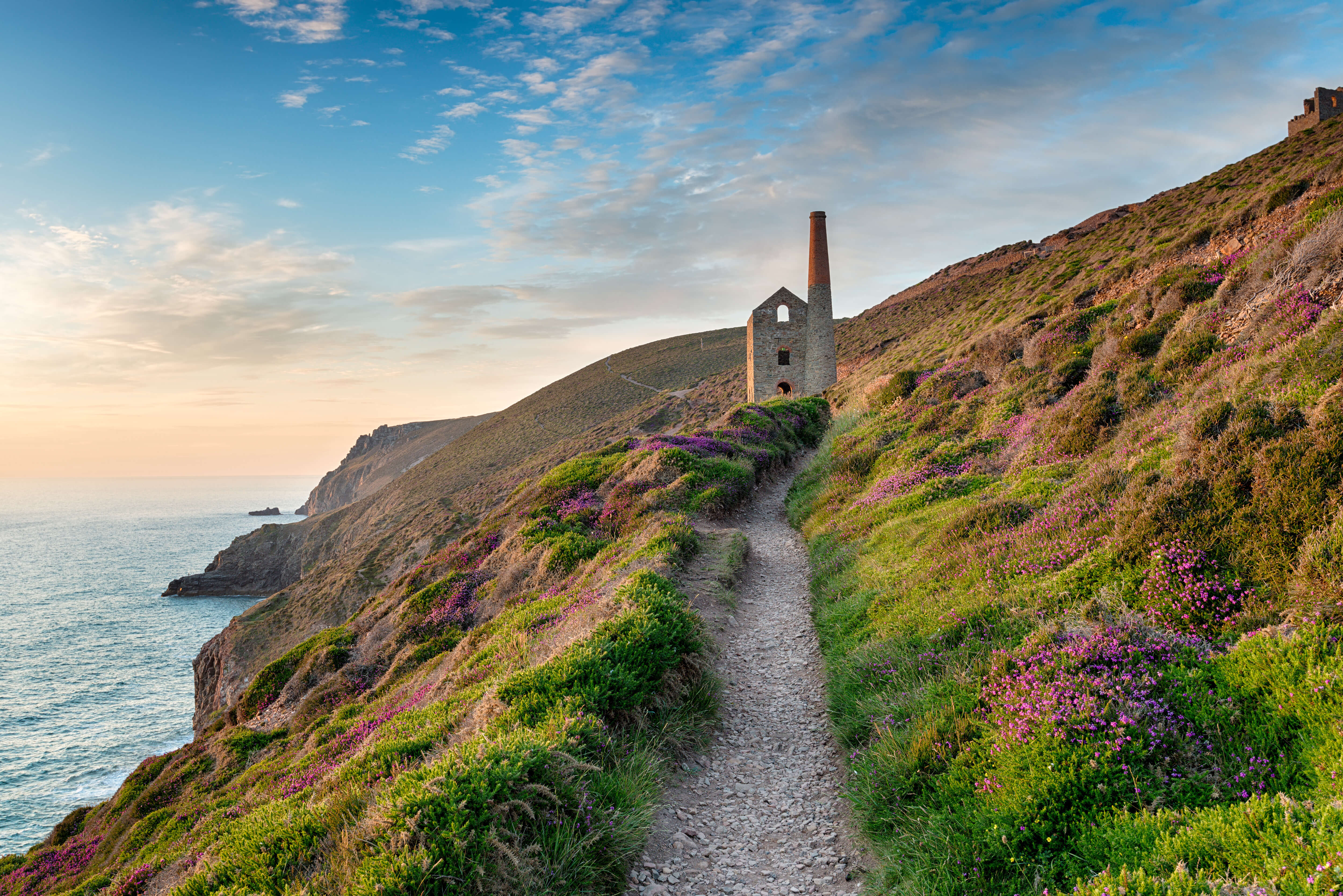
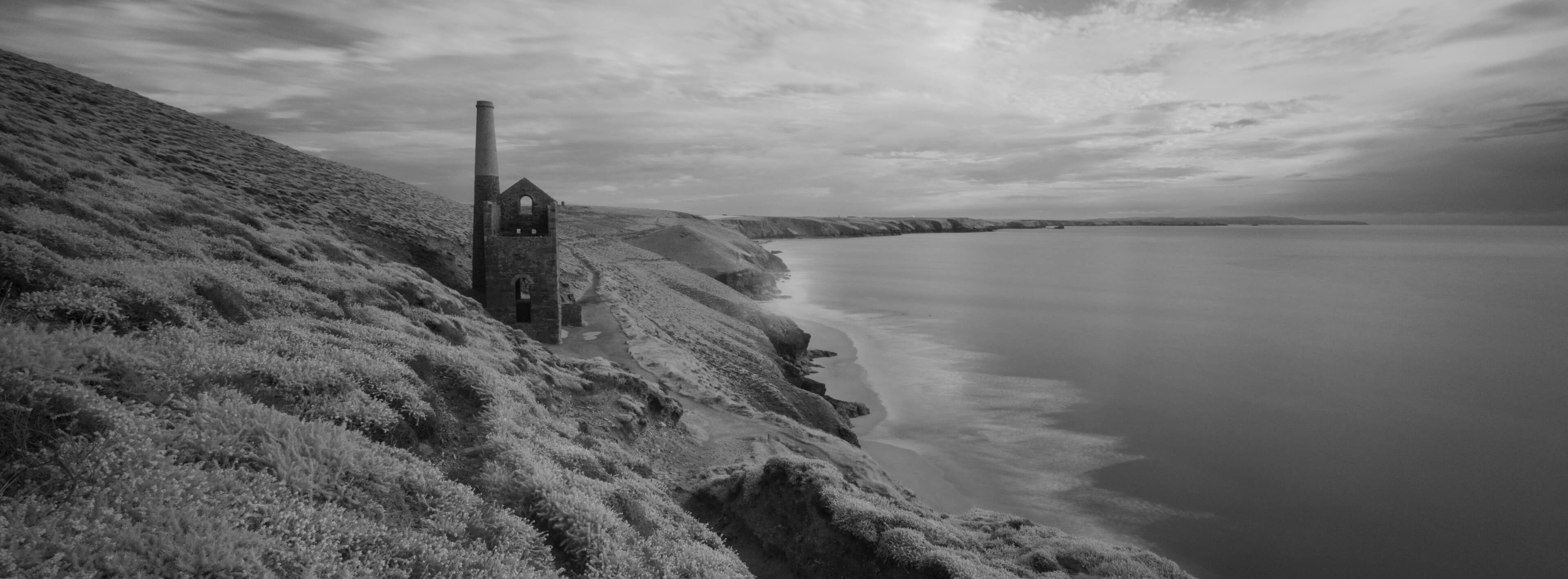
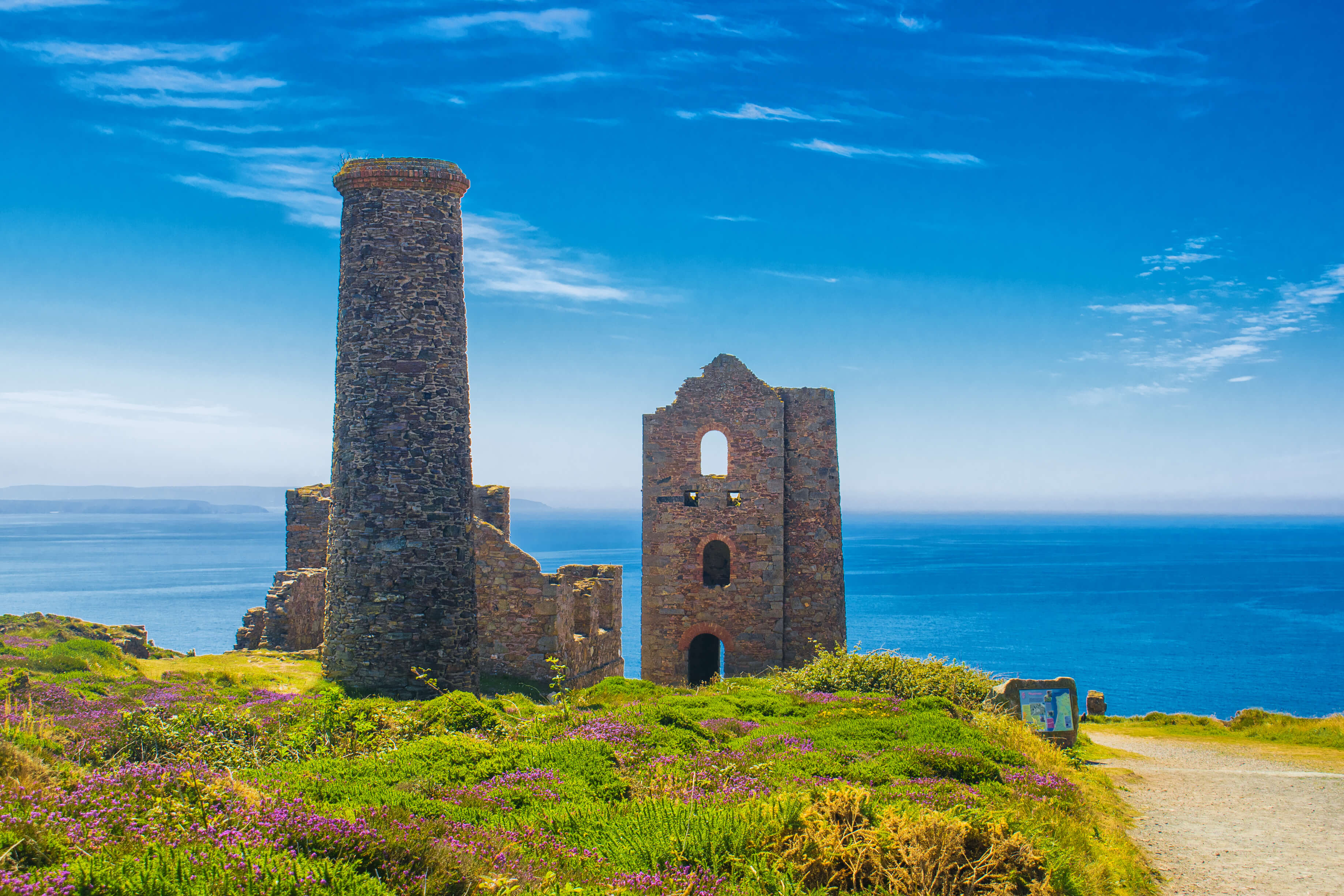
The building people photograph more than almost any other on the north coast stands on the National Trust cliffs between St Agnes and Chapel Porth. It is the Towanroath engine house, built in 1872, and from a distance it fools people every time. The gaunt walls and the arched window read like a chapel, a keep, or the shell of an old coaching inn left to the gulls. It is one of the most photographed places to discover in Cornwall, and most people who point a camera at it have no idea what they are actually looking at.
What it really is: the pump house for a mine. The engine that once stood inside those walls hauled water up a shaft that dropped 600 feet through solid rock, down below the level of the waves breaking at the foot of the cliff. Not a castle. Not an inn. A machine for keeping the sea out of a hole in the ground.
What Wheal Coates really was
Men had scratched at this ground for centuries, but the mine as we know it opened around 1802 and reached full production by about 1815. Tin was the prize, with a little copper alongside it. The records that survive are blunt about the scale of it: 335 tons of copper ore raised in 1836, 700 tons of tin in 1861. At its height something like 140 people worked here, and not all of them underground. Women known as bal maidens stood at the surface with hammers, breaking the ore into smaller and smaller pieces in all weathers.
It was brutal work for short lives. A miner who went below was often worn out and finished by the age of 40. Beyond Towanroath there were two more engine houses winding and crushing ore, and by 1910 a calciner had been added to roast the tin and drive off the arsenic locked up with it. Then the tin price collapsed. The mine closed in 1889, coughed back into life for a final unprofitable push between 1911 and 1913, and was finished for good by 1914.
The cliffs kept it. The National Trust stabilised the ruins in 1986, the surviving structures were listed Grade II in 1988, and the whole site now sits inside the Cornwall and West Devon Mining Landscape World Heritage Site. What looks like a folly is a genuine relic of the industry that once ran under half of Cornwall.
The knockers in the dark
Every deep mine in Cornwall had its unseen residents. The knockers, or knackers, were small spirits said to be no more than two feet tall, dressed as miners and living in the rock. Men working by candlelight heard them: a faint, deliberate tapping somewhere off in the dark beyond the last worked face.
What the tapping meant depended on who you asked. To some it was a warning, the knockers hammering on failing timber to send men running before the roof came down. To others it was a gift, the sound leading a miner straight to a rich vein of ore. Either way you kept them sweet. You left the crust of your pasty behind for them, you never whistled underground, and you never made the sign of the cross or laid your tools in one. Speak ill of the knockers and you would answer for it. Some said they were not spirits at all but the souls of miners killed in old falls, still working the ground they died in.
Your daily dose of Cornwall
News, events and goings on across the Duchy
The miners who never left
That last belief has never quite let go of Wheal Coates. The ruins turn up again and again on lists of the most haunted corners of Cornwall, with the ghosts of miners who died at the workings said to linger among the stones. Stand alone up there on a grey afternoon with the wind coming off the sea and the empty window looking back at you, and it is not hard to see how the stories started.
And yet plenty of people who know the place well will tell you the opposite. Spend time by the engine house and what you feel is not dread but a kind of stillness, the calm of a spot that has been quiet for well over a hundred years. The ghosts, if there are any, seem content.
The giant whose blood is on the cliffs
The oldest story here is bigger than any ghost. Long before the mine, the north coast belonged to Bolster, a giant so large he could stand with one foot on St Agnes Beacon and the other on Carn Brea miles away. Bolster was a bully and a brute, and he became obsessed with Saint Agnes herself, following her about and declaring his love no matter how often she turned him down.
So she set him a task to prove it. Fill a small hole in the cliff at Chapel Porth with your blood, she told him, and I am yours. Bolster opened a vein in his arm and let it run into the hole, certain a giant of his size could never bleed dry. What he did not know was that the hole ran straight through to the sea. He bled and bled, the tide carried it all away, and the giant weakened and died on the rocks. The red staining that streaks the cliffs at Chapel Porth to this day is said to be his blood. It is really the iron in the rock, the same mineral wealth the miners came for, but the story is better. Every spring the village turns out to re-enact the whole thing at the St Agnes Bolster festival, giant and all.
Chapel Porth is the cove directly below Wheal Coates. So the lovesick giant bled out on the very rocks the engine house looks down on, and the mine that came a thousand years later went digging for the iron that folk had already decided was his blood.
Go up there at dusk and decide for yourself which story the building is telling. Just know that the shaft beneath it still drops 600 feet into the dark, and nobody has worked it for more than a century.
Share This Story, Choose Your Platform!
To keep up with the latest cornish news follow us below
Follow CornishStuff on Facebook - Like our Facebook page to get the latest news in your feed and join in the discussions in the comments. Click here to give us a like!
Follow us on Twitter - For the latest breaking news in Cornwall and the latest stories, click here to follow CornishStuff on X.
Follow us on Instagram - We also put the latest news in our Instagram Stories. Click here to follow CornishStuff on Instagram.
- 1
- 2
- 3
- 4
- 5
- 6






You Might Also Be Interested In


Discover More In Cornwall


Daily Cornish news by email
The latest daily news in Cornwall, sent direct to your inbox.