The camping habit Cornwall fire crews want you to break
Rain hammering the flysheet, everything damp, and the little gas stove is the only warm thing you own. Dragging it just inside the porch feels like common sense at that point. It is also the one thing fire crews would most like you never to do again.
Cornwall Fire and Rescue Service has put out a short reminder for anyone off on a camping or caravanning trip. It runs to four lines, which is about as blunt as safety advice gets, and each one covers a different way a good week away turns into a bad one.
Your daily dose of Cornwall
News, events and goings on across the Duchy
The four things the service is asking for
- Keep exits clear
- Keep flames away from tents and caravans
- Charge devices safely
- Never use cooking equipment inside tents
“Have a safe and happy holiday,” the post signs off. Short as that list is, there is a lot packed behind each line, and the fuller version sits on the service’s own caravans and camping safety pages.
Cooking inside a tent is the one that kills
Of the four, this is the line fire crews across Cornwall repeat the most, and it is the one with real deaths behind it. A barbecue or a camping stove burns fuel, and burning fuel produces carbon monoxide. You cannot see it, smell it or taste it, and it keeps coming off a barbecue for hours after the coals have stopped glowing and the thing looks safely dead.
Modern tents make that worse. Sewn-in groundsheets and a sealed inner mean there is nowhere for the gas to go, so levels can climb to something lethal in minutes while everyone inside simply feels sleepy. The advice covers the awning and the porch too, not only the sleeping compartment. And it is never a heater. Stoves and barbecues are built for cooking, and using one to take the chill off a tent is how people die in their sleep.
A carbon monoxide alarm is worth having in a caravan or a motorhome. It is not the answer in a tent, because the standard household units are not designed for that kind of space or that kind of temperature swing. The only reliable protection is keeping the fuel outside.
Then there is the fire itself. A tent can be destroyed in around 60 seconds. Fire-retardant fabric slows the start, it does not save the tent, and there is no realistic way to fight a fire in something that goes that fast.
Keeping flames away means further away than you think
Cook outside, and cook well clear of the tent walls and the guy lines. Long dry grass counts as fuel, so put the stove or barbecue on a firm, level surface and raise it off the ground where you can. Most sites keep bricks or slabs near the water point for exactly that. Keep a bucket of water beside you while you cook, because a bucket sitting where you can reach it is worth more than a fire extinguisher you have to go and find.
Candles are out. A torch does the job and cannot fall over. Gas cylinders and any flammable liquids live outside the tent, not tucked in the porch out of the rain. Turn the gas off at the cylinder before you change it, do it in the open air, and store spares away from direct sun. Nobody should be smoking inside either.
Your daily dose of Cornwall
News, events and goings on across the Duchy
Exits are the bit people forget
This is the line that sounds like paperwork and is not. On a wet evening the doorway is where the boots, the cool box, the wet coats and the folding chairs end up, and that is the route everyone has to use in the dark with no time to think.
Have a plan before you need one. In a tent, know how you would cut your way out if the door is blocked, and make sure everyone in the group knows it. In a caravan, the second way out is usually a window, so check which one opens, check it opens easily, and check nothing is stacked in front of it. Keep a torch where you can find it without looking.
Charging phones, power banks and batteries
Charging goes wrong in a tent for the same reason it goes wrong in a bedroom. A phone, a power bank or a battery pack left charging on a sleeping bag, an air bed or a pile of clothes has nowhere to lose its heat, and soft bedding is about the most flammable thing in the tent. Charge on a hard surface, in the open where you can see it.
Use the charger and cable that came with the device rather than the cheap spare from the service station. Unplug things once they are full instead of leaving them on overnight or while you are out for the day. If you are travelling with an e-bike or e-scooter battery, charge it outside the sleeping area and never in a doorway you would need to escape through.
Caravans and motorhomes have their own list
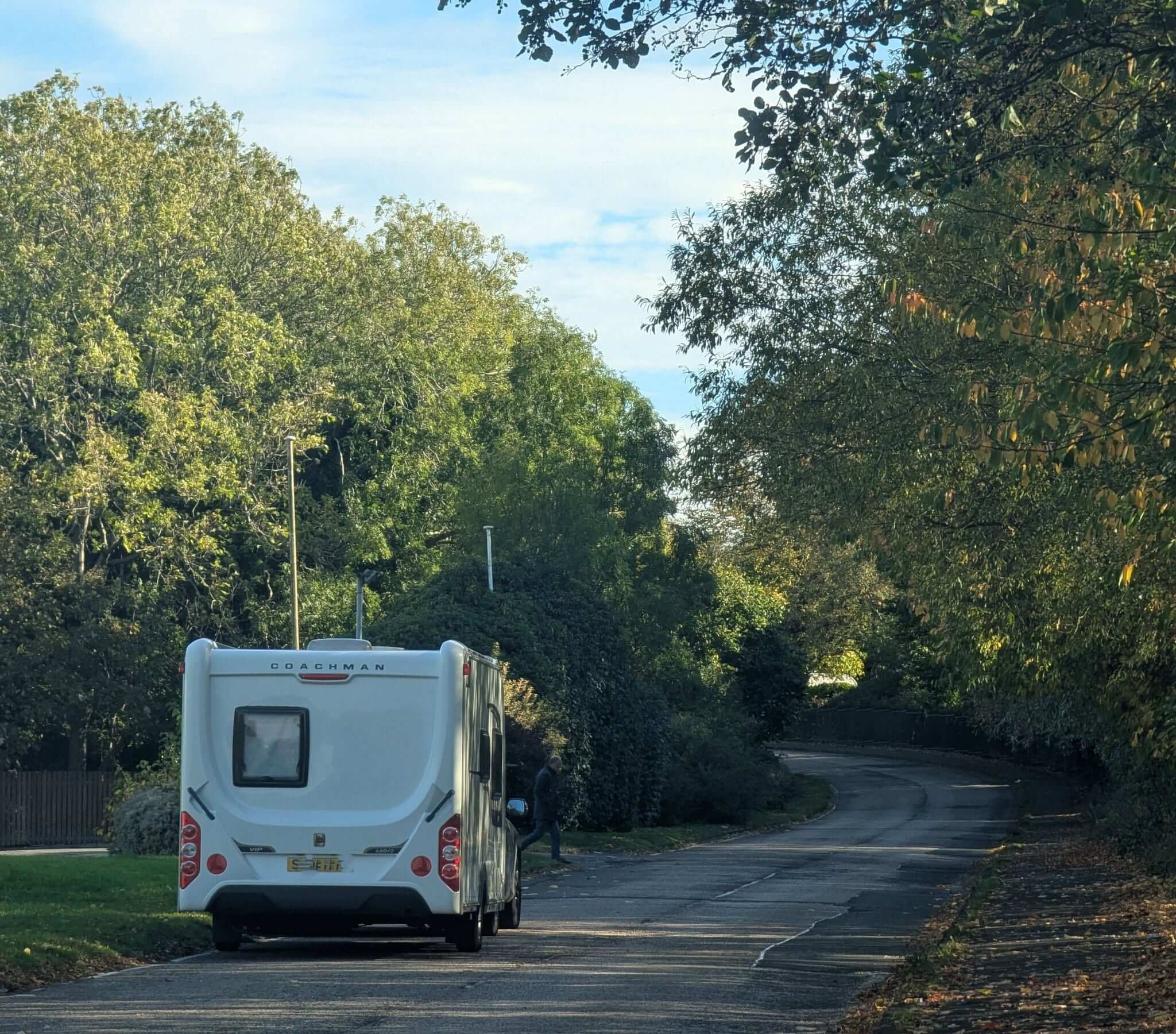
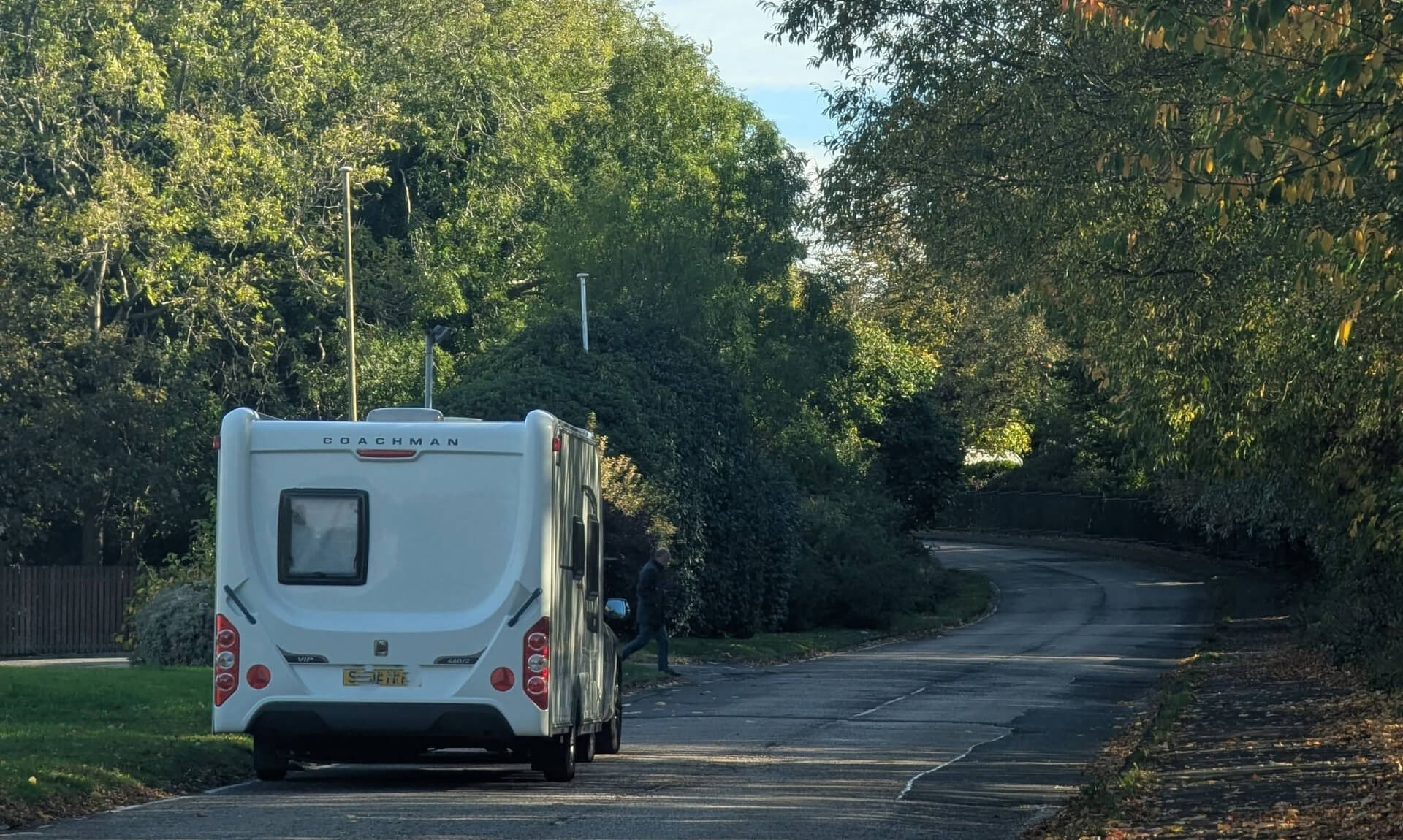
A caravan is a small home with a cooker in it, and the risks follow. Fit a smoke alarm and test it at the start of every trip rather than assuming last year’s battery survived the winter in storage. Fit a carbon monoxide alarm as well.
Beyond that it is mostly kitchen discipline. Do not leave pans unattended. Turn appliances off before you go to bed and before you head out. Never dry clothes over the hob or hang them near a heater. Keep the air vents clear, because they are there to stop fumes building up and blocking them in cold weather is a common and dangerous shortcut. Clear rubbish from around the outside too, so a fire nearby has nothing easy to travel on.
Your daily dose of Cornwall
News, events and goings on across the Duchy
Before you pitch
Most of the groundwork happens in the first ten minutes on site. Sites generally pitch tents, caravans and motorhomes at least six metres apart, and away from parked cars, so that one fire does not become five. Keep to it even when there is a tempting gap.
Read the site’s fire arrangements when you arrive, and note where the fire points and the nearest phone are. Check whether you have a signal where you are pitched. If you ever have to call 999 from a field at night, being able to give the site name, the pitch number or a what3words location is the difference between crews finding you and crews driving past the gate. Cornwall Fire and Rescue Service also runs a free Community Fire Safety Helpline on 0800 3581 999 for anyone who wants to ask about something before they pack.
The number the fire services keep coming back to is that 60 seconds. That is roughly how long a tent takes to go from a stray flame to nothing worth saving, which is why the advice is written as never rather than try not to.
Read Next
- FalmouthBoat after boat, wake after wake, spread out across the Carrick Roads.
Share This Story, Choose Your Platform!
To keep up with the latest cornish news follow us below
Follow CornishStuff on Facebook - Like our Facebook page to get the latest news in your feed and join in the discussions in the comments. Click here to give us a like!
Follow us on Twitter - For the latest breaking news in Cornwall and the latest stories, click here to follow CornishStuff on X.
Follow us on Instagram - We also put the latest news in our Instagram Stories. Click here to follow CornishStuff on Instagram.
- 1
- 2
- 3
- 4
- 5
- 6