Why Cormac leaves some Cornwall grass long and cuts the rest

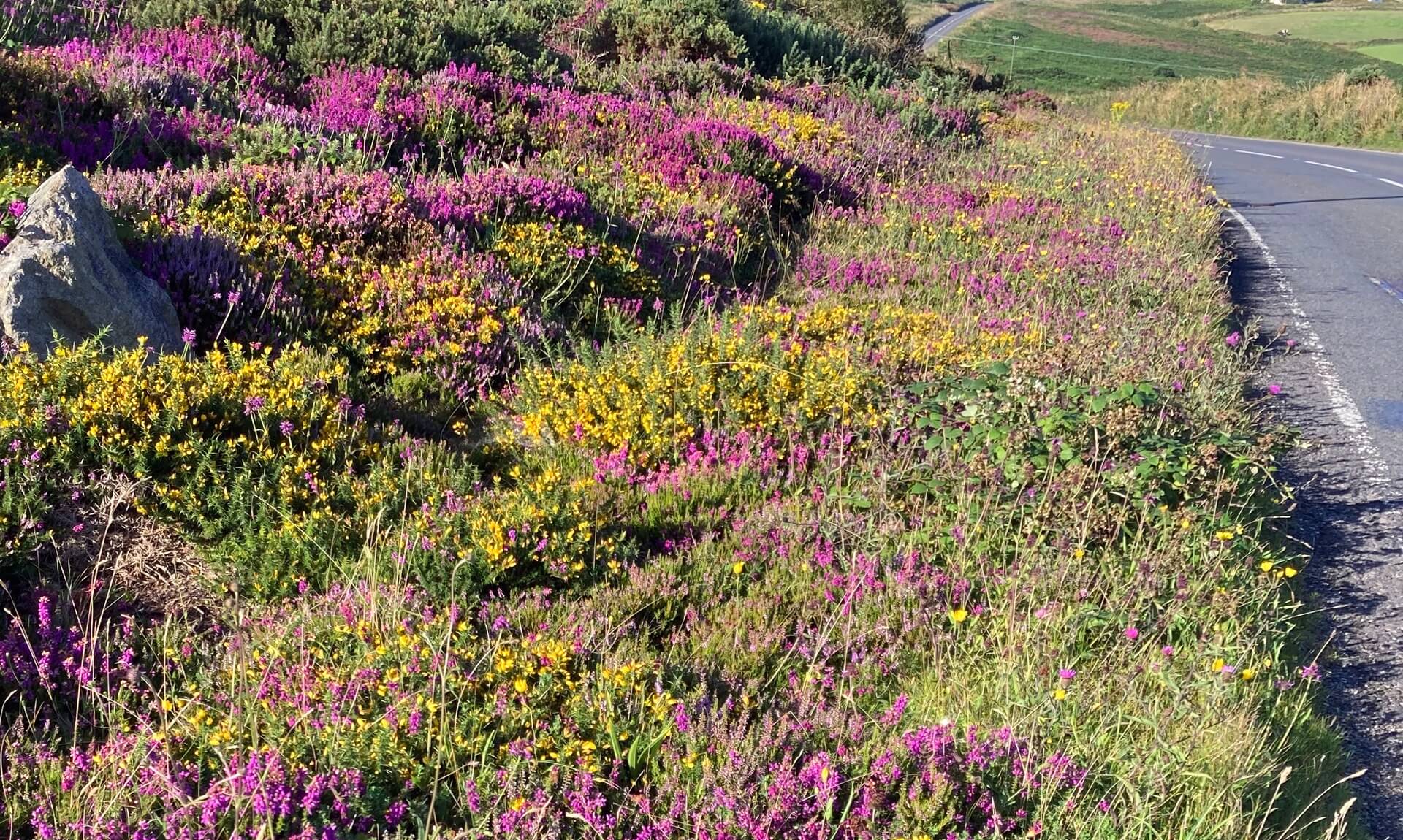
You have probably driven past it and wondered. One stretch of verge clipped short and tidy, the next left to grow tall with heather, gorse and wildflowers spilling towards the road. It looks like someone forgot. They did not. The long grass is doing a job, and so is the short grass.
Cormac, the Cornwall Council company that looks after the county’s public open spaces, has set out why it treats green spaces so differently from one patch to the next. The short answer is that some grass is managed for people and some is managed for nature.
Your daily dose of Cornwall
News, events and goings on across the Duchy
Two jobs, one green space
Cormac is responsible for maintaining parks, gardens, playgrounds, sports fields and verges on behalf of Cornwall Council, covering more than 416 hectares of amenity sites. Across Cornwall there are currently 855 amenity sites. Of those, 540 are public open spaces such as parks, recreation grounds and sports facilities, and 142 are play facilities. Some grass cutting is carried out by local town and parish councils, whose approach can vary.
The thinking behind the split comes from Cornwall Council’s Nature Recovery Strategy, which aims to create the space and conditions for more abundant, resilient and connected habitats. Rather than mow everything to the same length on the same schedule, Cormac’s teams adjust the cutting to suit how each space is actually used.
Grass managed for people is kept short. Regular cutting keeps sightlines clear, spaces safe and areas easy to walk through and use. Grass managed for nature is allowed to grow. Longer areas give wildflowers, bees, butterflies and other wildlife somewhere to live, and they bring wider benefits including flood management, healthier soils and improved air quality.
When the mowers come out
From spring to autumn, Cormac’s environment teams visit sites on average every four weeks. Most cutting happens between March and October, depending on the weather, ground conditions and how fast the grass is growing. During drought or prolonged rain the teams may hold off until conditions improve. Little or no cutting is done over the winter.
The two approaches even use different methods. On grass managed for people, the teams use a “cut and drop”, leaving the clippings where they fall to break down naturally, because the sheer volume would be impractical to collect. Blowers keep the footpaths clear afterwards. On wildlife meadows it is the opposite. The grass is cut only a few times a year using a “cut and collect”, removing the clippings to gradually strip nutrients out of the soil, which over time helps more species take hold.
On the meadows there is a rhythm to it. An early spring cut “tops” the grass, then later cuts follow once the native flowers have grown tall, bloomed and set seed, usually in late summer.
The neat strip and the wild middle
Roadside verges in towns and villages, within 20mph and 30mph limits, get their own treatment. Safety comes first here, so Cormac keeps sightlines and junctions clear and footways accessible.
The trick is an approach the teams call “picture framing”. The centre of a verge is left long for nature, with a neat strip of shorter grass cut around the edges, giving a tidy, framed look while the wildlife area sits in the middle. Mown paths are kept through where people need to walk, and access is kept clear to bins, seats and bus stops. Rural verges are a separate job, managed by Cornwall Highways across nearly 1,660 miles of Cornish roadside.
Teams assess each site on the day, using what they know about how a space is used and listening to what local people tell them. Where there is a safety or access concern, extra cutting can be added on top of the programmed rounds. In some places the work goes the other way, with communities helping to enhance areas through wildflower seeding.
Your daily dose of Cornwall
News, events and goings on across the Duchy
Getting involved
Cormac works with community volunteers to help keep public open spaces in good condition, something it says supports a stronger sense of place along with benefits for health and wellbeing, nature recovery and climate resilience. Anyone who wants to find out about volunteering can email [email protected], and open space enquiries about grass cutting and site management go to [email protected].
Problems on a road or pavement can be logged through Cornwall Council’s report a road problem page. And if something is a threat to public safety, Cormac asks people to call 0300 1234 222, a 24-hour line, with details of the location.
Read Next
- SaltashIt has carried commuters, school traffic and hospital patients across the river for 65 years.
Share This Story, Choose Your Platform!
To keep up with the latest cornish news follow us below
Follow CornishStuff on Facebook - Like our Facebook page to get the latest news in your feed and join in the discussions in the comments. Click here to give us a like!
Follow us on Twitter - For the latest breaking news in Cornwall and the latest stories, click here to follow CornishStuff on X.
Follow us on Instagram - We also put the latest news in our Instagram Stories. Click here to follow CornishStuff on Instagram.
- 1
- 2
- 3
- 4
- 5
- 6