Cornwall’s most photographed places, from Minack to the Mount
Everyone seems to come home from Cornwall with the same photographs. The castle on the tidal island. The theatre carved into a cliff. The cove so turquoise it looks edited. You have probably scrolled past a hundred of them without ever catching the name of the place. Here are ten of the most photographed corners of Cornwall, the spots that fill more camera rolls than anywhere else in the county, with a little of what to know before you point your phone at them.
Your daily dose of Cornwall
News, events and goings on across the Duchy
1. St Michael’s Mount, Marazion
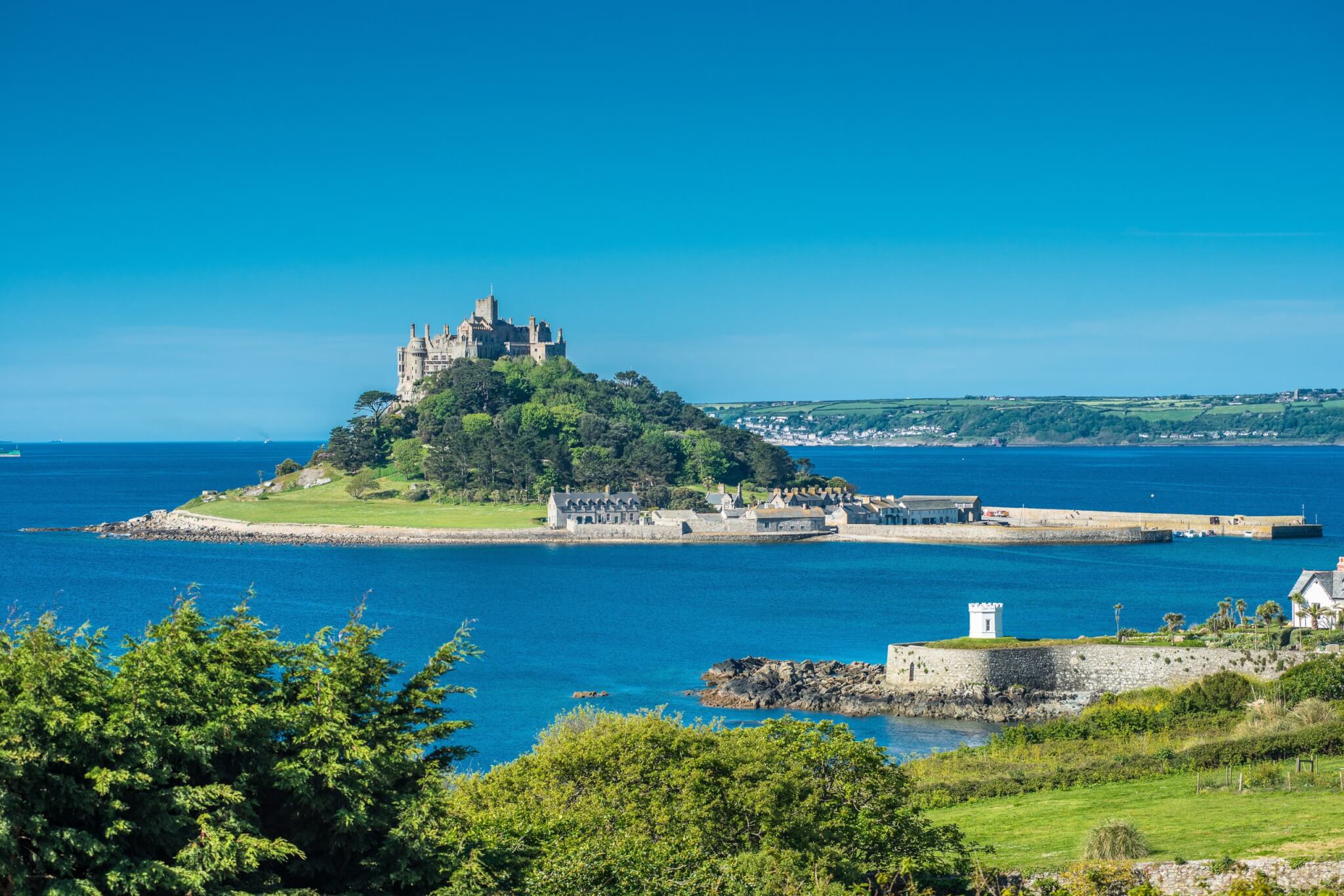
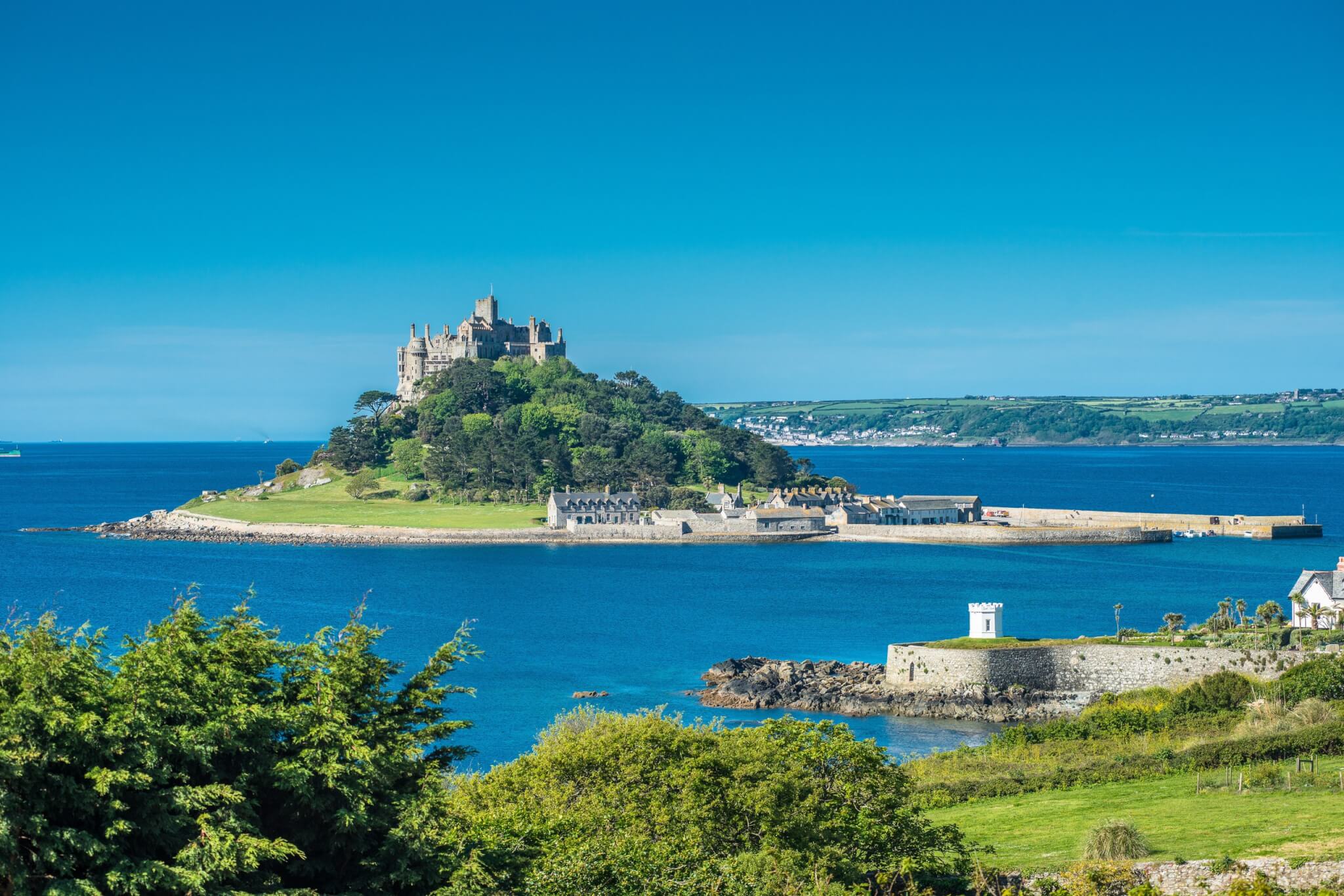
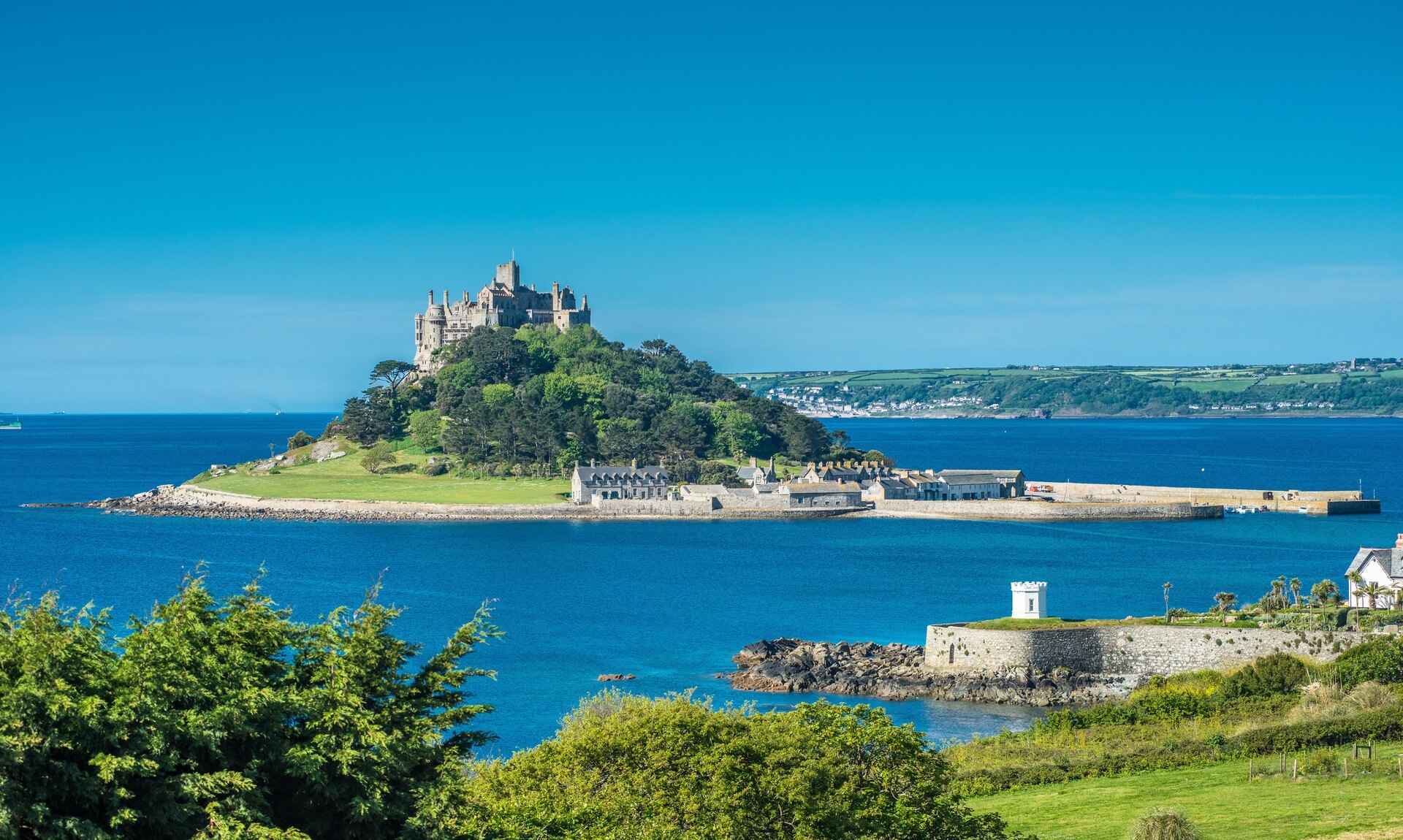
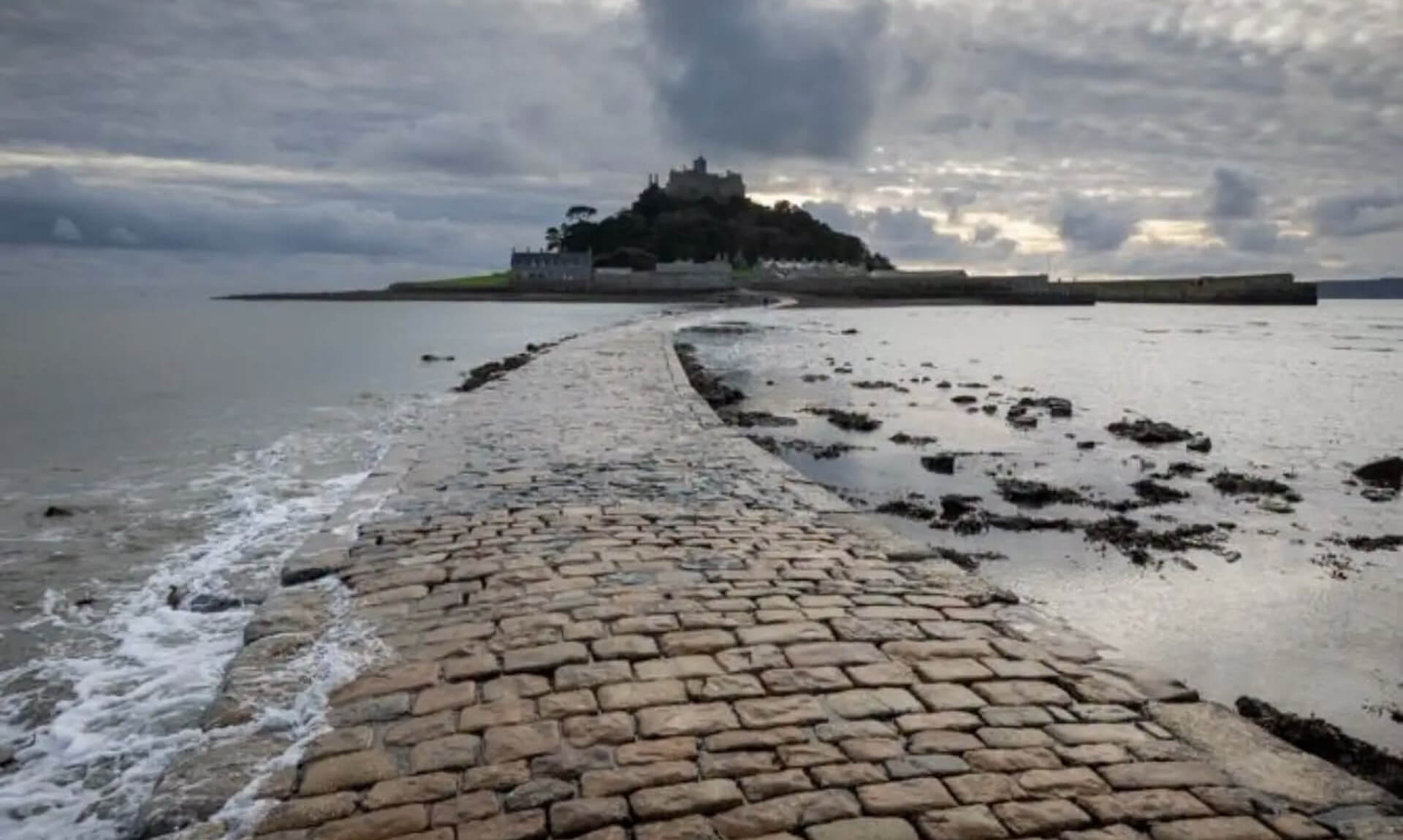
Start with the one on every postcard. St Michael’s Mount sits just off the beach at Marazion, a castle-topped island in Mount’s Bay that looks like a smaller cousin of Mont-Saint-Michel in Normandy, which is exactly what it once was. At low and mid tide a granite causeway rises out of the sand and you can walk across. At high tide the water closes over it and small boats do the ferrying instead, which is why the causeway half-submerged is the shot people wait for.
The National Trust has cared for the Mount since 1954, but the St Aubyn family still live in the castle on a 999-year lease, so this is a home as much as a monument. Check the tide times before you cross, or you will be photographing it from the wrong side of the sea.
2. Minack Theatre, Porthcurno
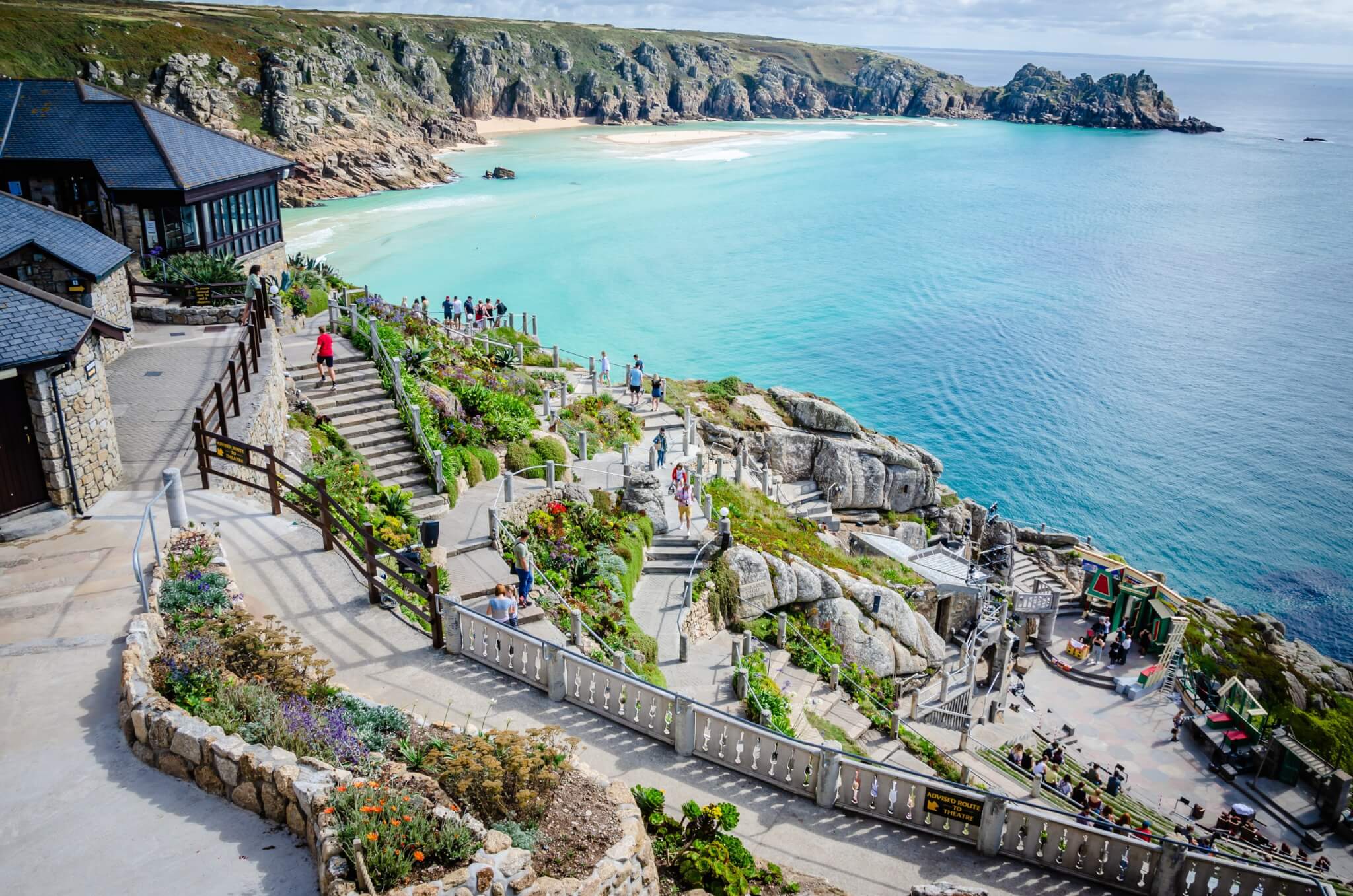
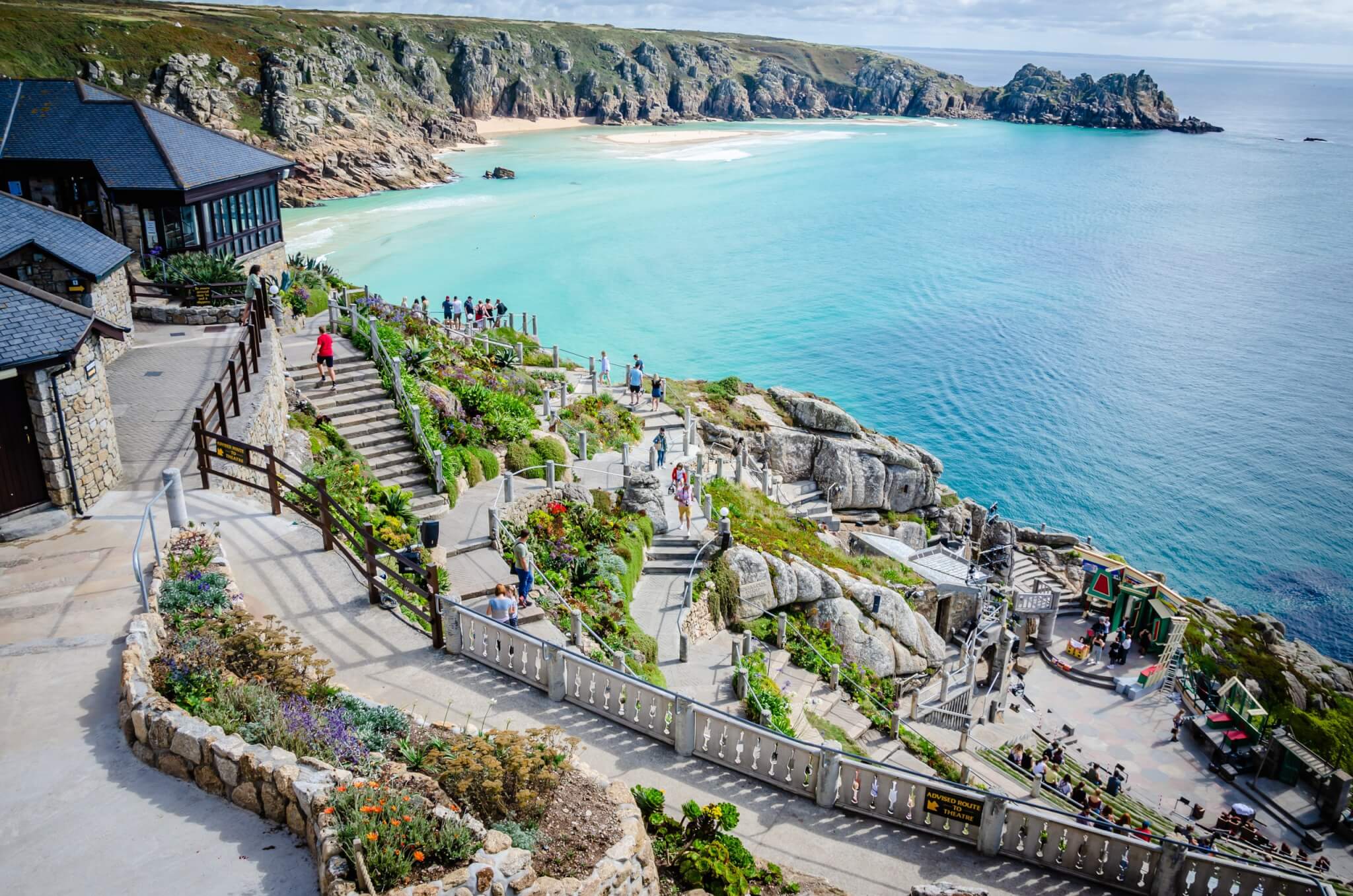
Perched on the cliffs above Porthcurno, the Minack Theatre is an open-air amphitheatre with the Atlantic as its backdrop, and the story behind it is better than the view. A woman named Rowena Cade began building it largely by hand in the early 1930s, mixing concrete with sand she carried up the cliff, and she kept at it into her eighties. The first performance, The Tempest, went on in 1932. Rowena worked on the place until her death in 1983.
It is still a working theatre with a full summer season, so the terraces frame real actors against real waves. Book ahead, both for shows and for daytime visits, because slots go quickly in high season.
3. Kynance Cove, the Lizard
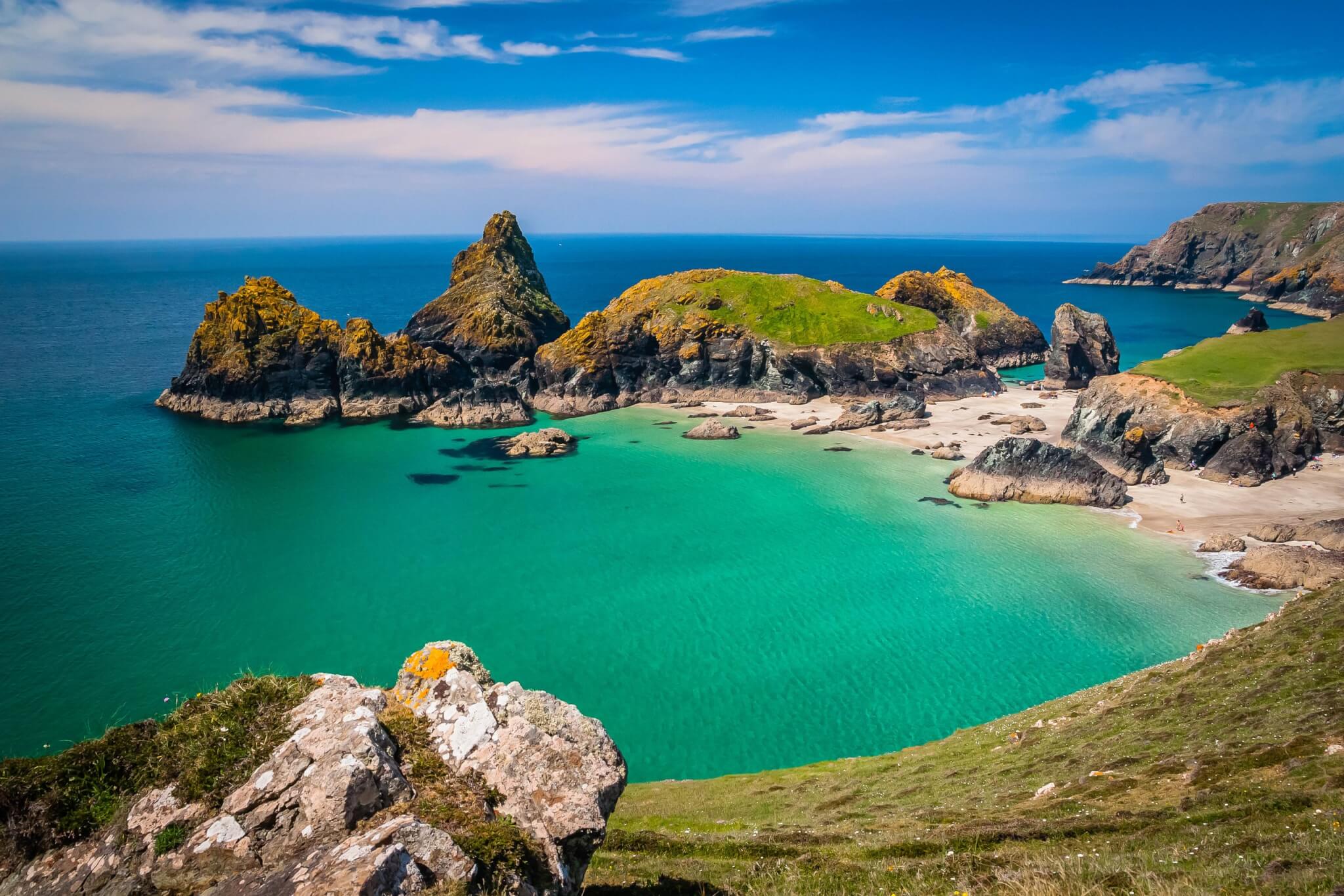
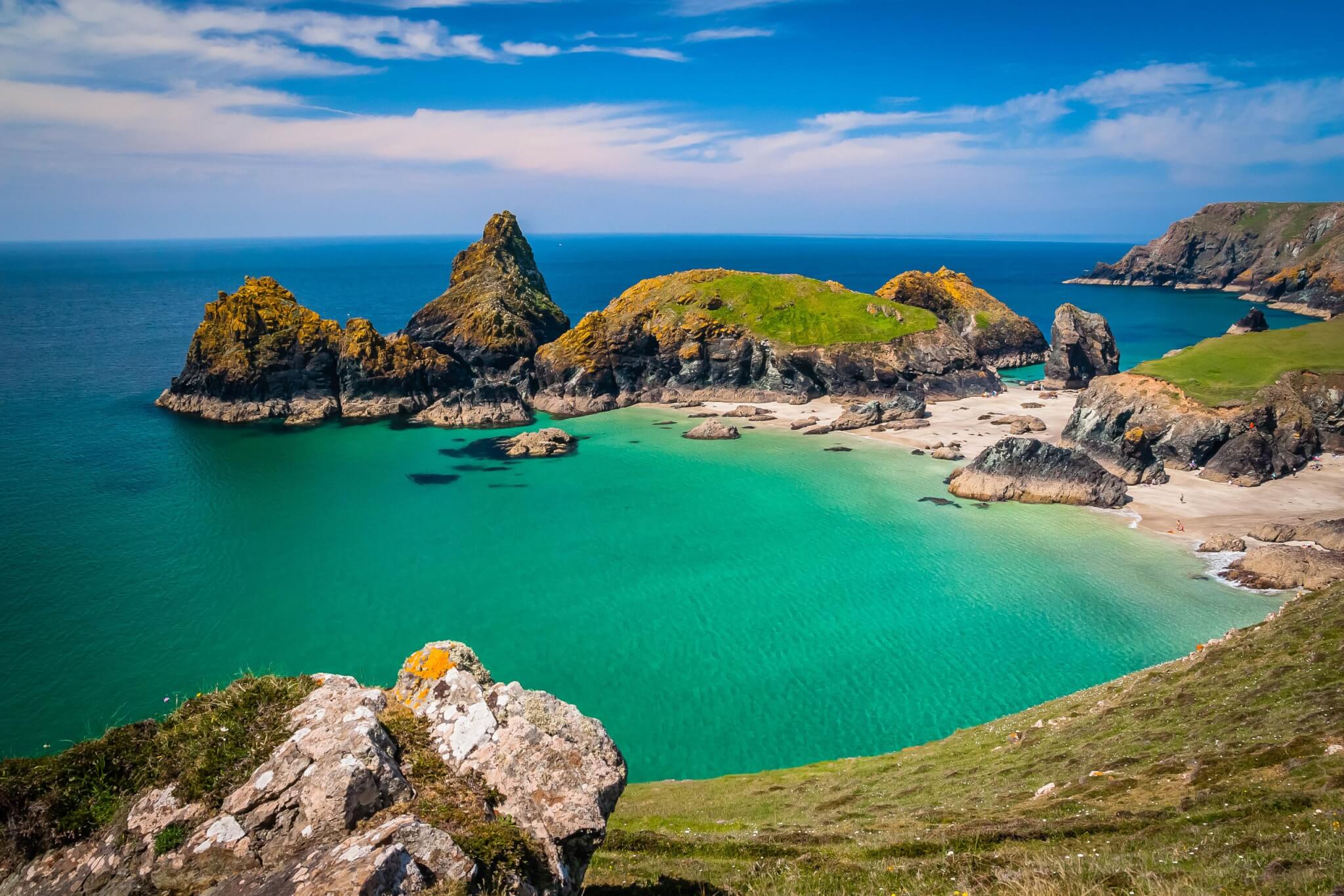
The National Trust calls Kynance Cove one of the most photographed, filmed and painted beaches in Cornwall, and standing above it you can see why. White sand, water the colour of a swimming pool, and dark serpentine rock stacks rising straight out of it. This is the far south of the county, on the western side of the Lizard peninsula.
It has pulled in visitors since Victorian times. Prince Albert brought his children here in 1846, and some of the rocks and caves still carry the genteel names the Victorians gave them. One warning worth heeding: the beach almost vanishes at high tide, so time your visit for the water going out, and expect the clifftop car park to fill early through the summer.
Your daily dose of Cornwall
News, events and goings on across the Duchy
4. Land’s End
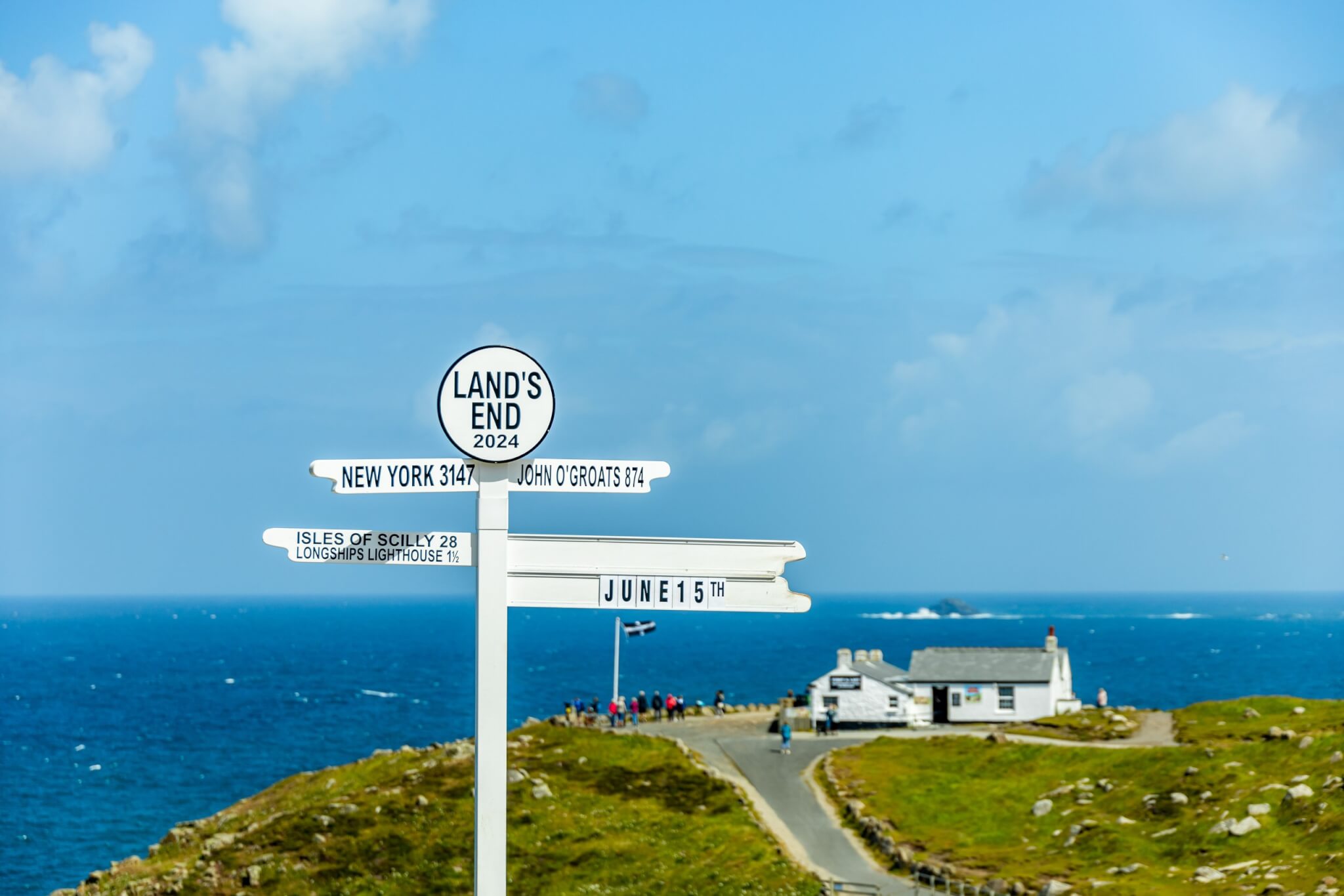
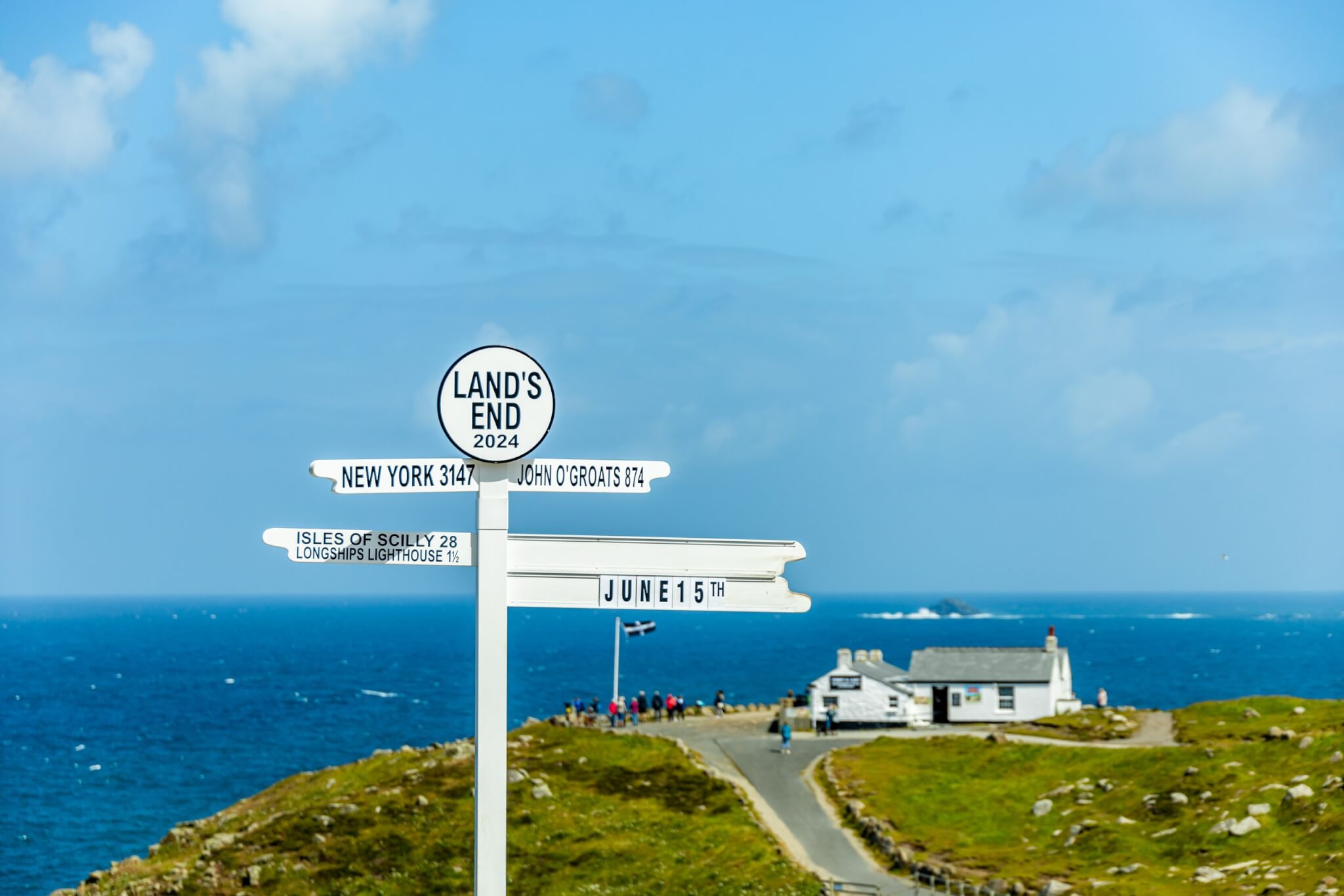
The most westerly point of mainland England is a photograph people travel the length of the country to take. The famous Land’s End signpost, with its arrows and mileages, is the centrepiece, and staff will add your home town and the date to it for a small fee. Out to sea, the Longships Lighthouse marks the reef offshore and gives the wider clifftop shots their focal point.
Worth knowing before you arrive: Land’s End is a privately run visitor complex now, with paid parking and paid attractions rather than a lonely headland. The cliffs on either side, though, are free, wild and every bit as dramatic as the ones inside the gates.
5. Botallack, near St Just
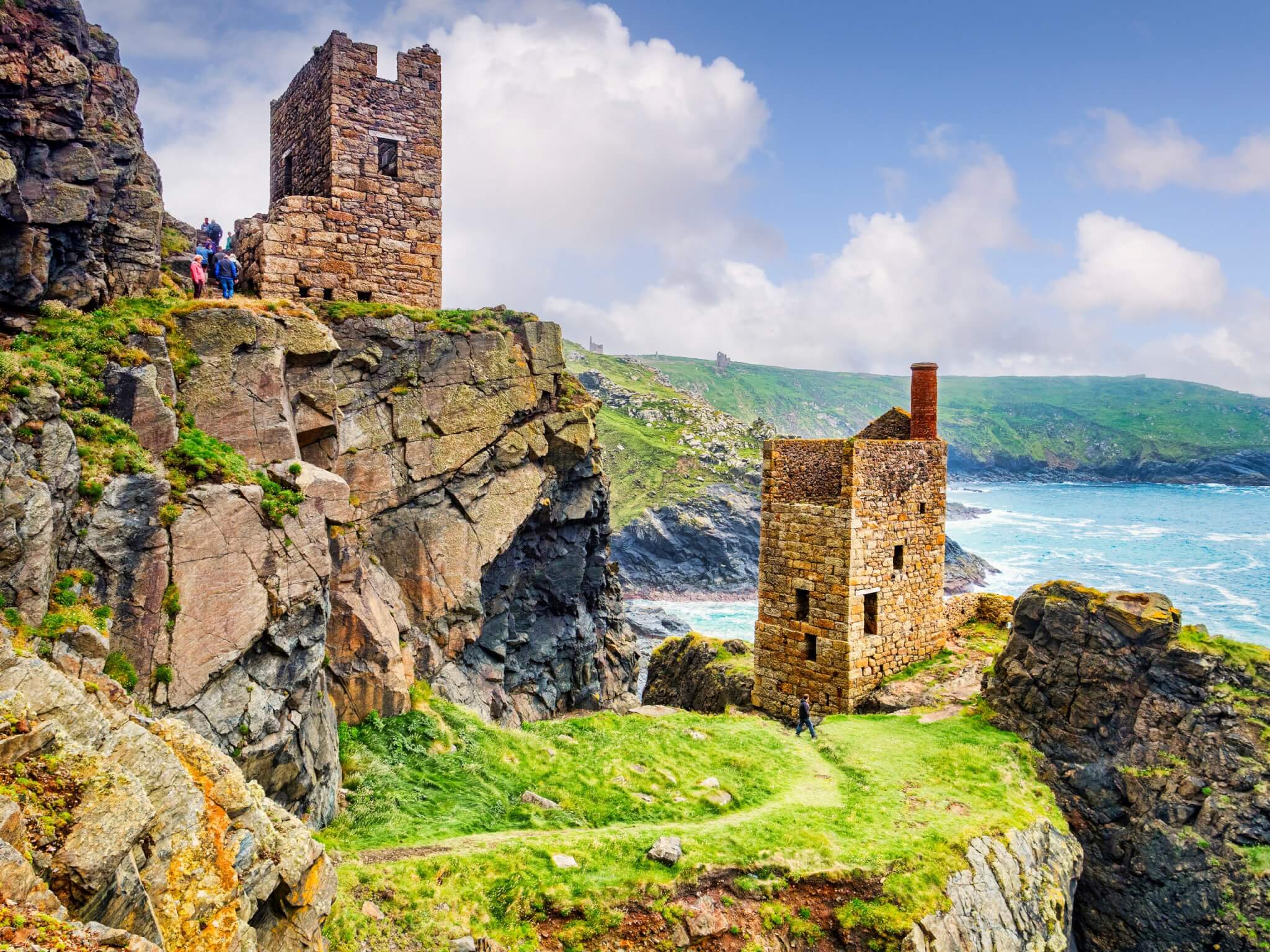
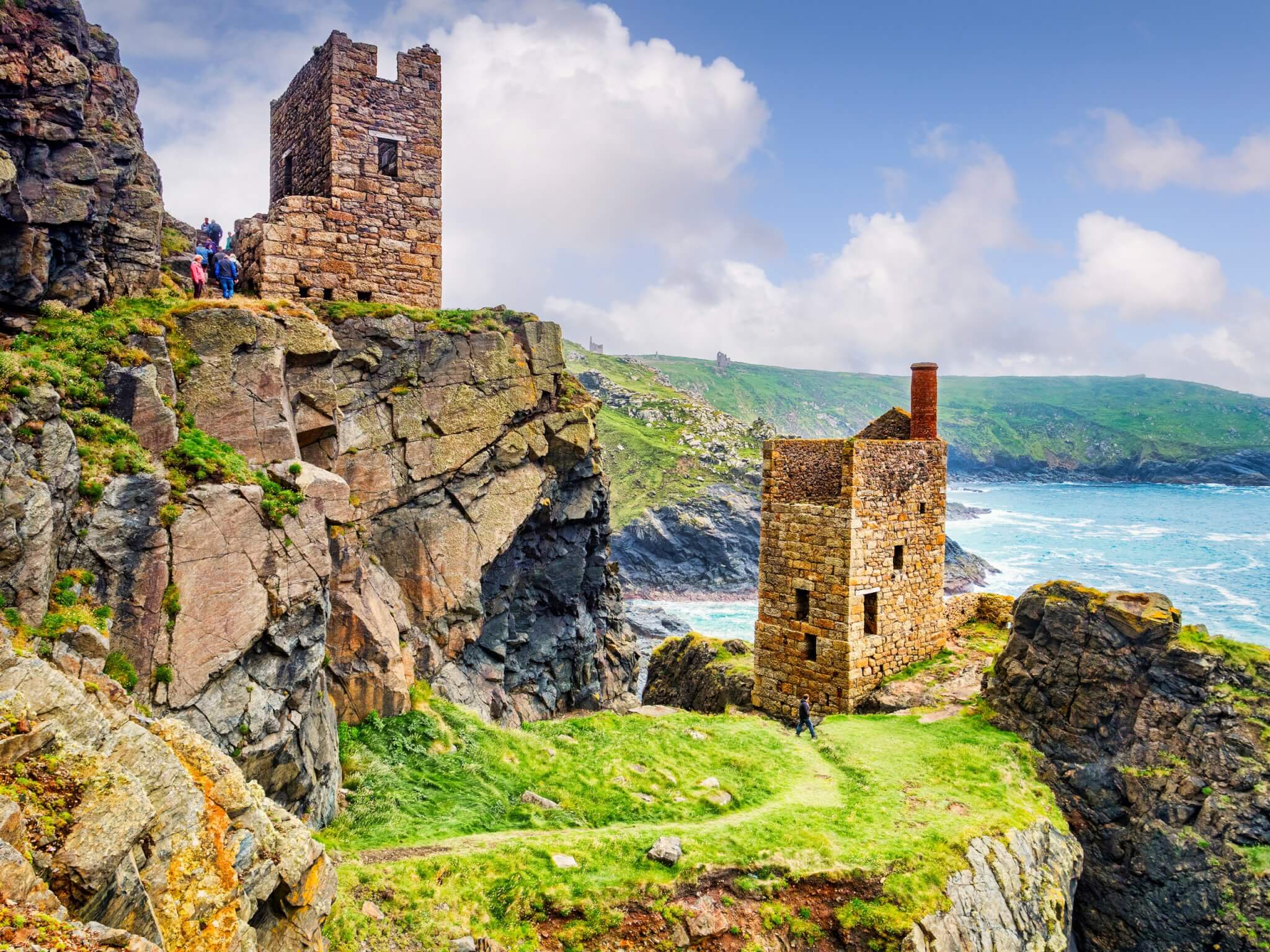
If you watched Poldark, you already have this image in your head. The two Crowns engine houses at Botallack cling to a shelf of rock at the foot of the cliffs near St Just, with the sea crashing directly below them. They are the postcard of Cornwall’s tin-mining coast, and the BBC used this stretch heavily when it filmed the series.
The mines here were extraordinary. The tunnels ran out under the seabed, and miners could reportedly hear boulders shifting in the swell above their heads. The site is National Trust land now, but the ground is riddled with old shafts and steep drops, so stay on the marked paths and keep the drama in the frame rather than under your feet.
6. St Ives
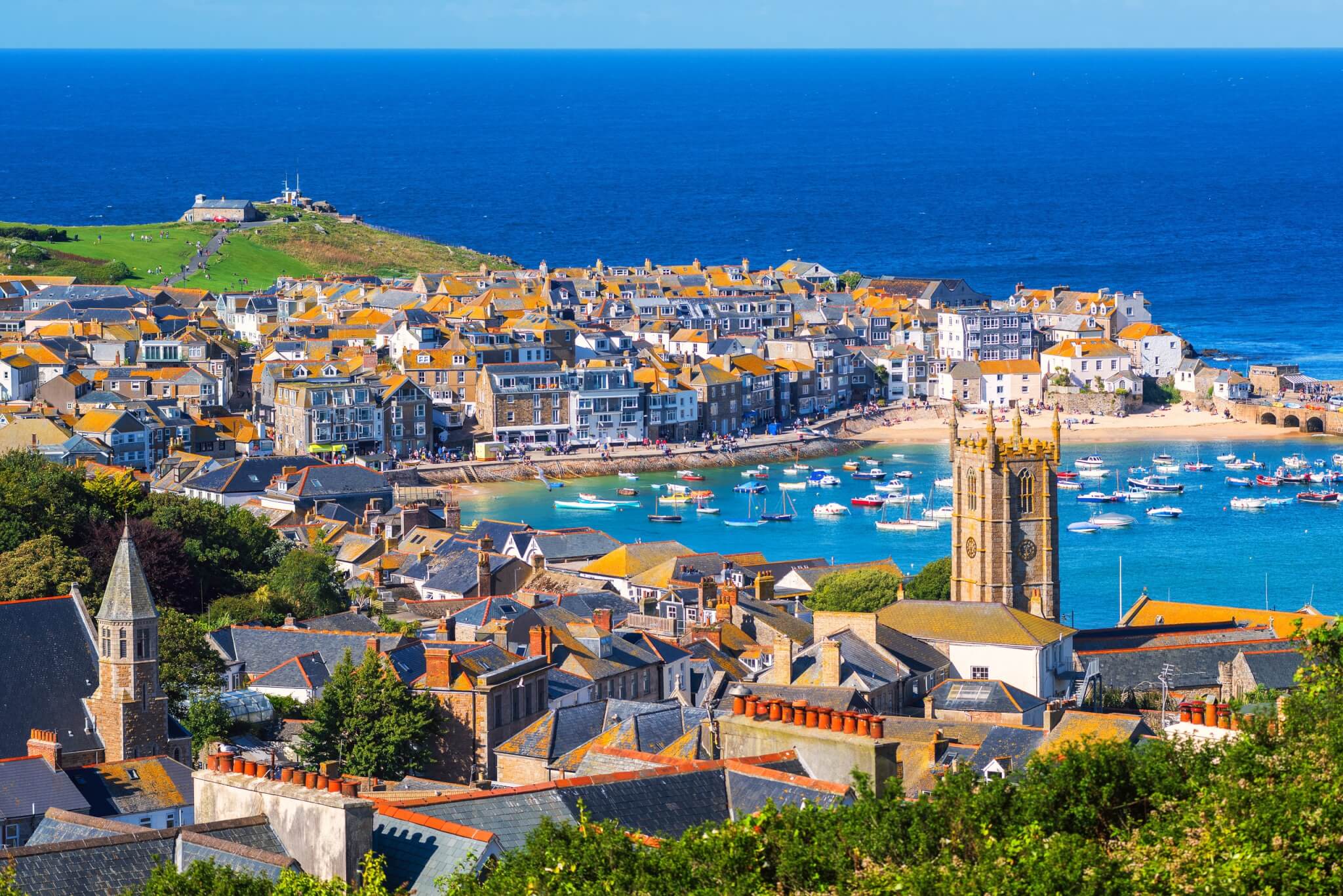
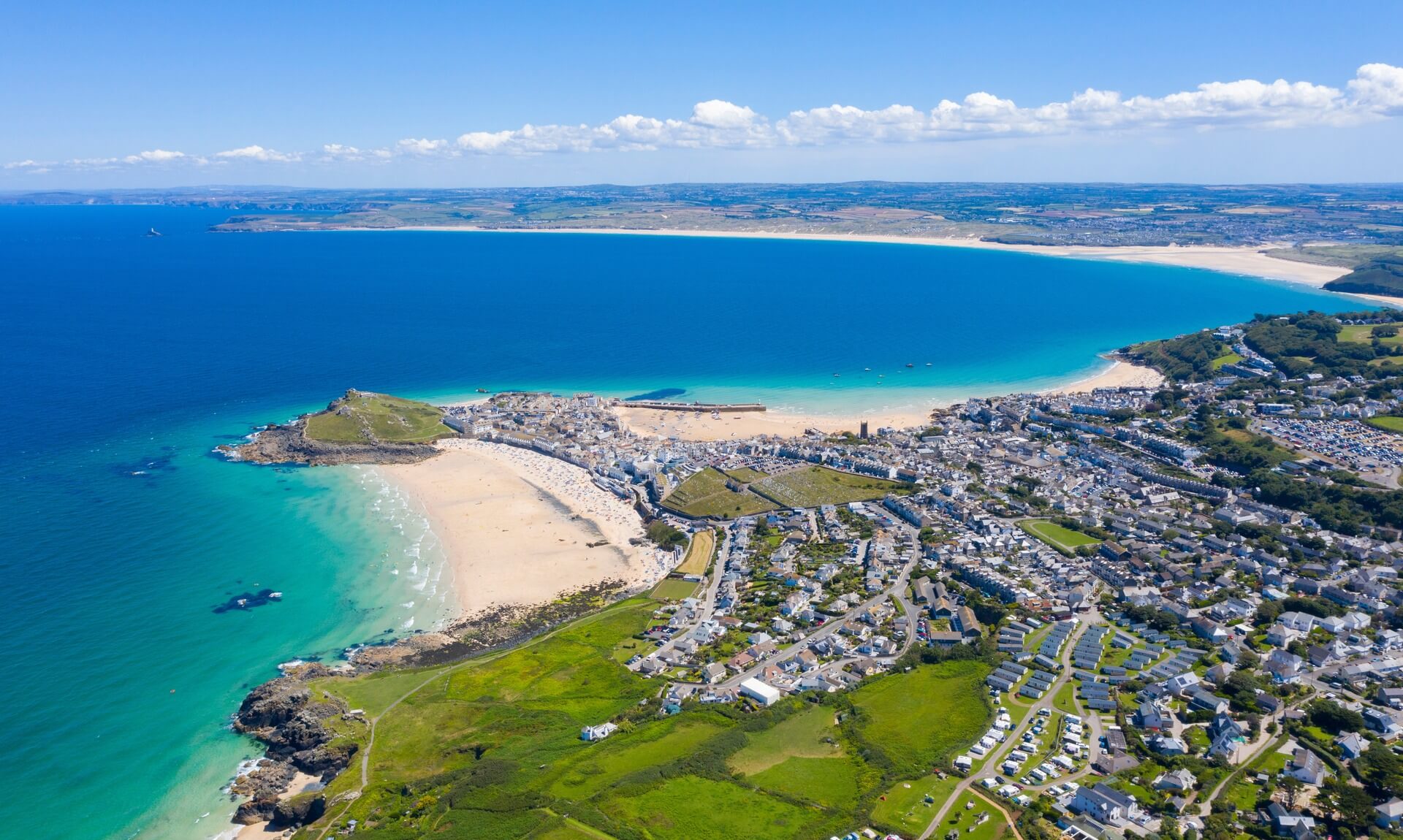
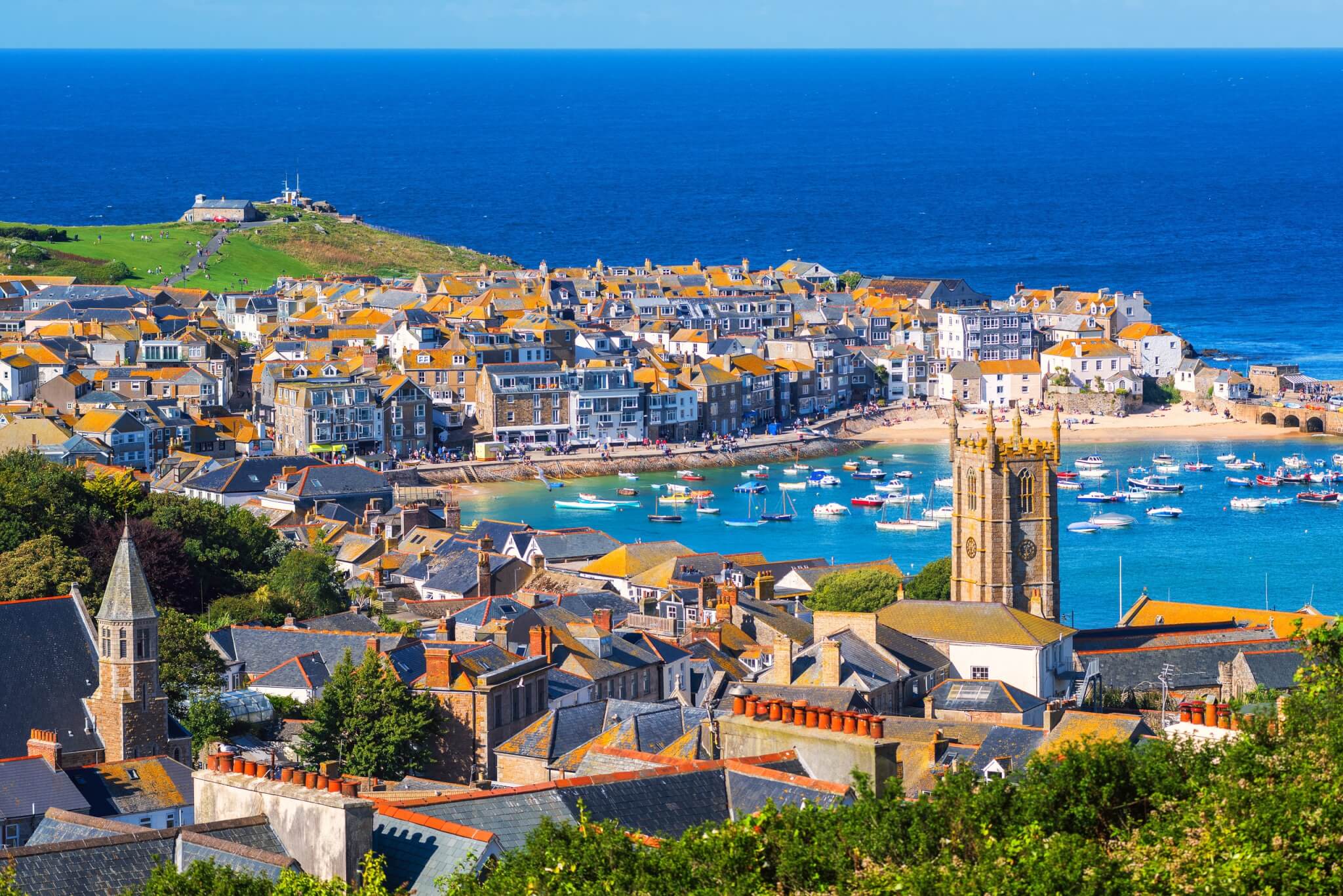
Painters worked out long ago what your camera will confirm: the light in St Ives is unusually clear and bright, which is why the town became one of Britain’s great art colonies. Tate St Ives and the Barbara Hepworth Museum and Sculpture Garden are both here, and the harbour, with its boats settled on the sand at low tide, is one of the most shot scenes in Cornwall.
Look across the bay and you will see Godrevy Lighthouse on its little island. Virginia Woolf spent childhood summers overlooking this water, and Godrevy is widely said to have inspired her novel To the Lighthouse, even though she moved the setting to Scotland when she wrote it.
Your daily dose of Cornwall
News, events and goings on across the Duchy
7. Bedruthan Steps, near Mawgan Porth
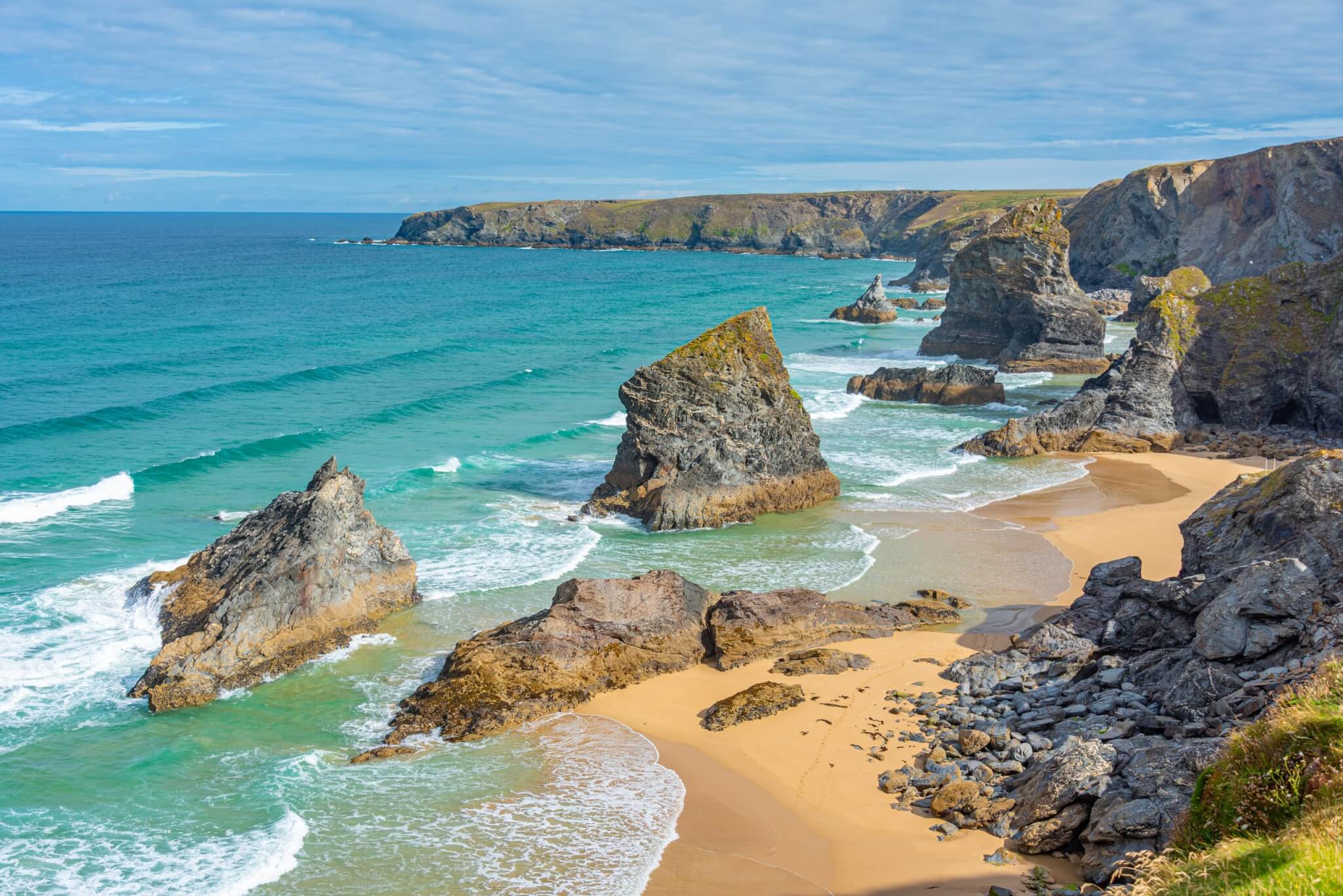
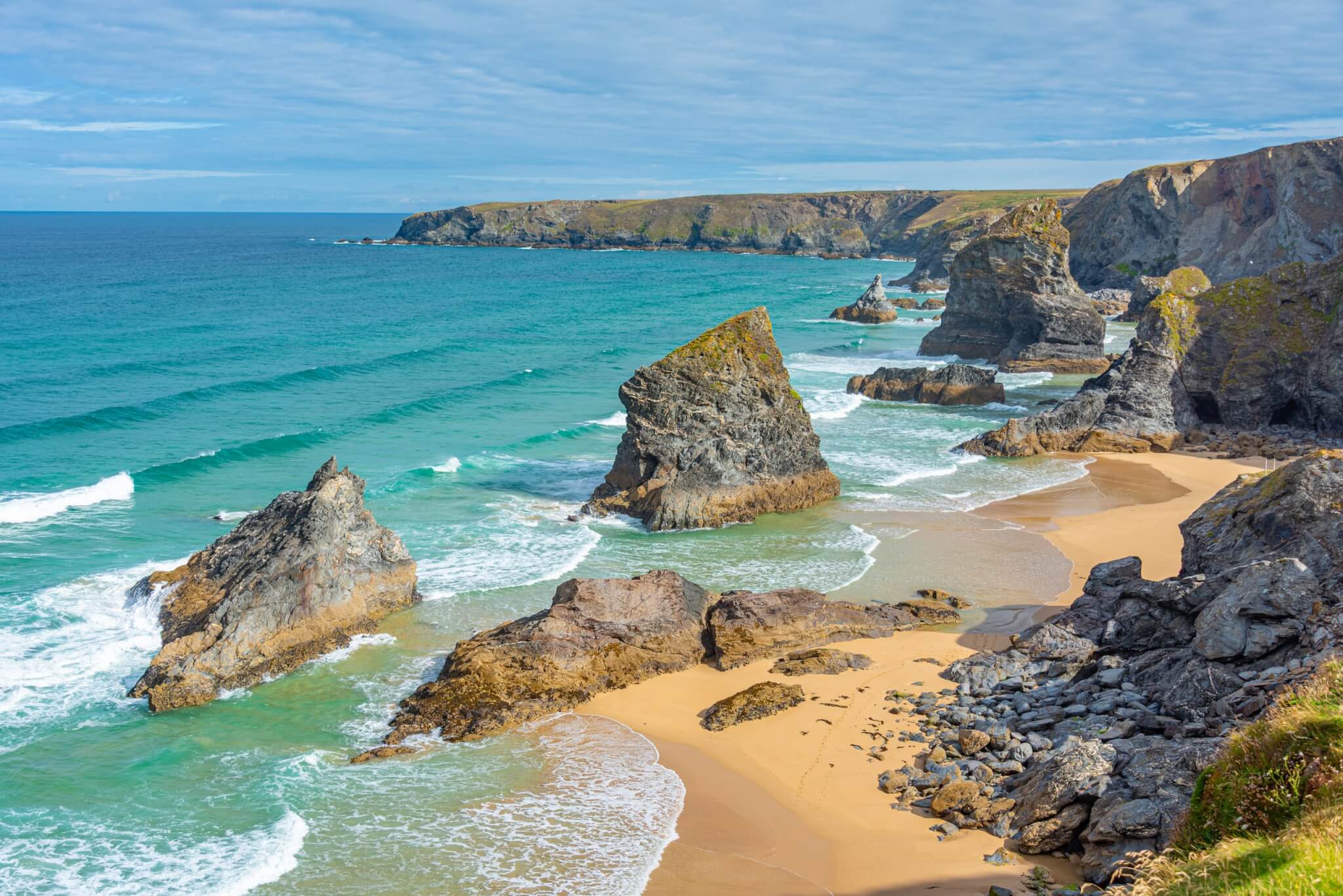
A line of giant sea stacks marching across a beach beneath high cliffs, best seen from the coast path on the north coast between Newquay and Padstow. Legend says a giant called Bedruthan used the rocks as stepping stones, though that tale seems to be a fairly modern invention, and the name in print goes back to a newspaper in 1847.
One practical note that catches people out: the cliff staircase down to the beach has been closed since a rockfall in December 2019 and remains shut, with the National Trust and RNLI both asking visitors not to hunt for alternative routes down. The view from the top, happily, is the famous one anyway.
8. Port Isaac
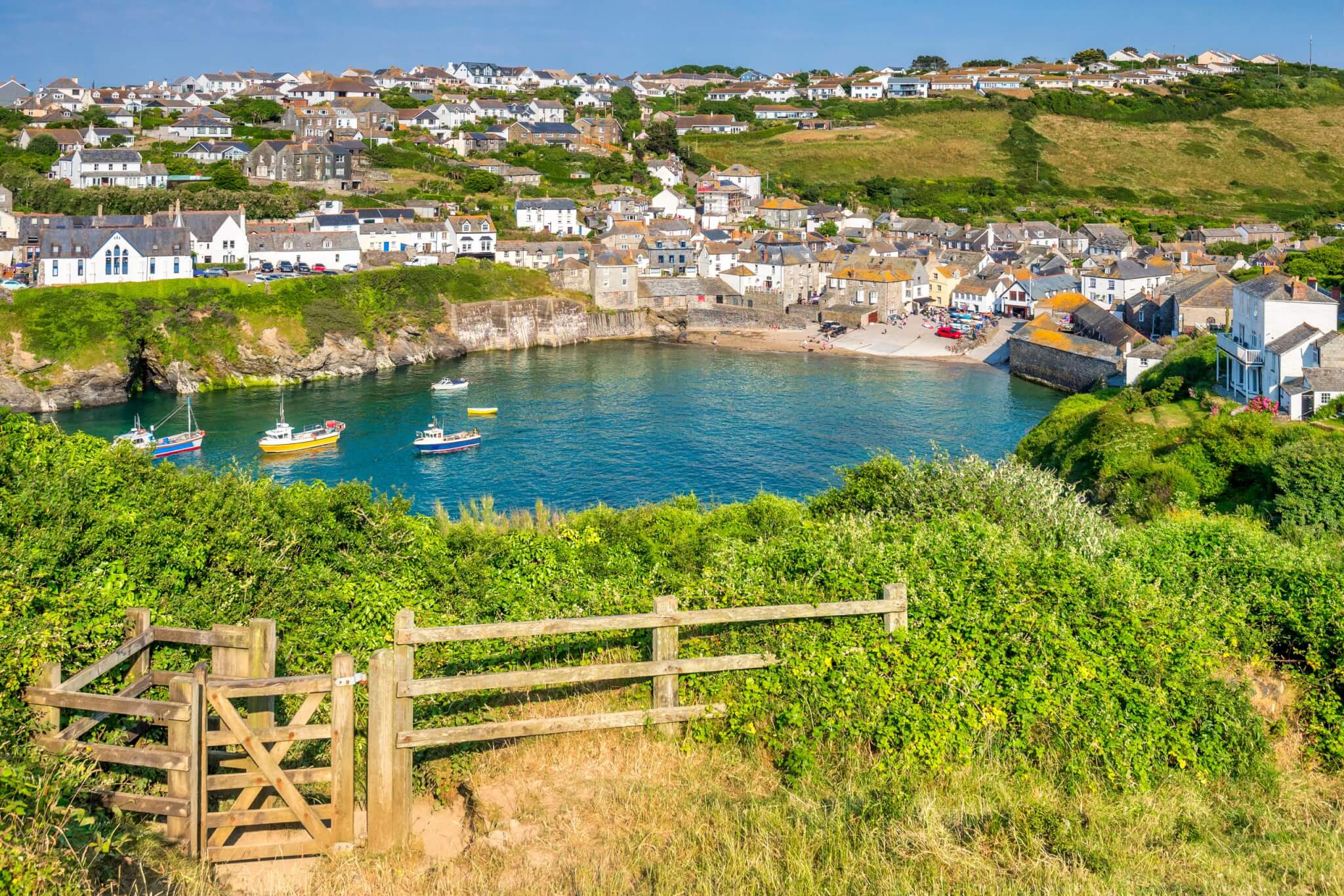
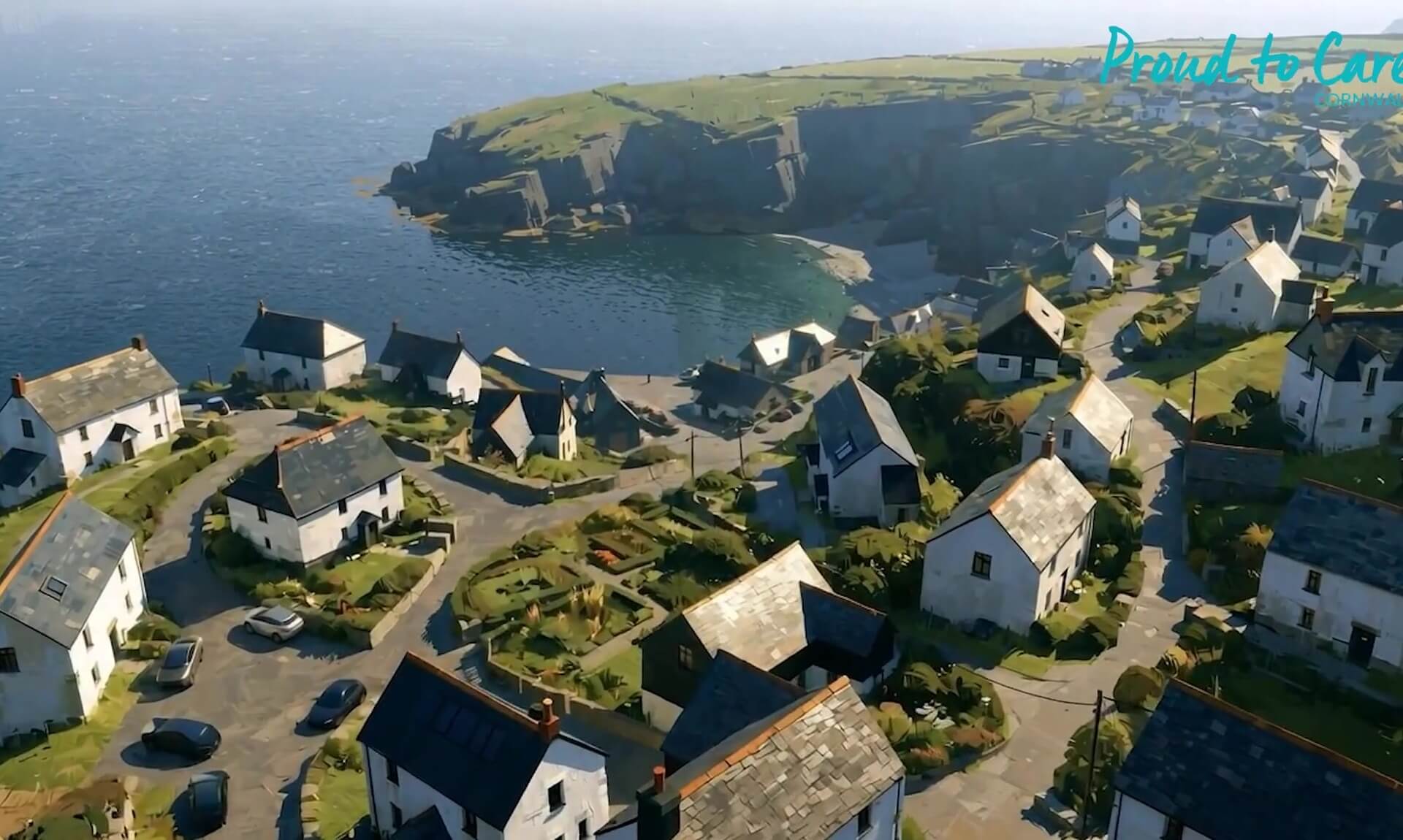
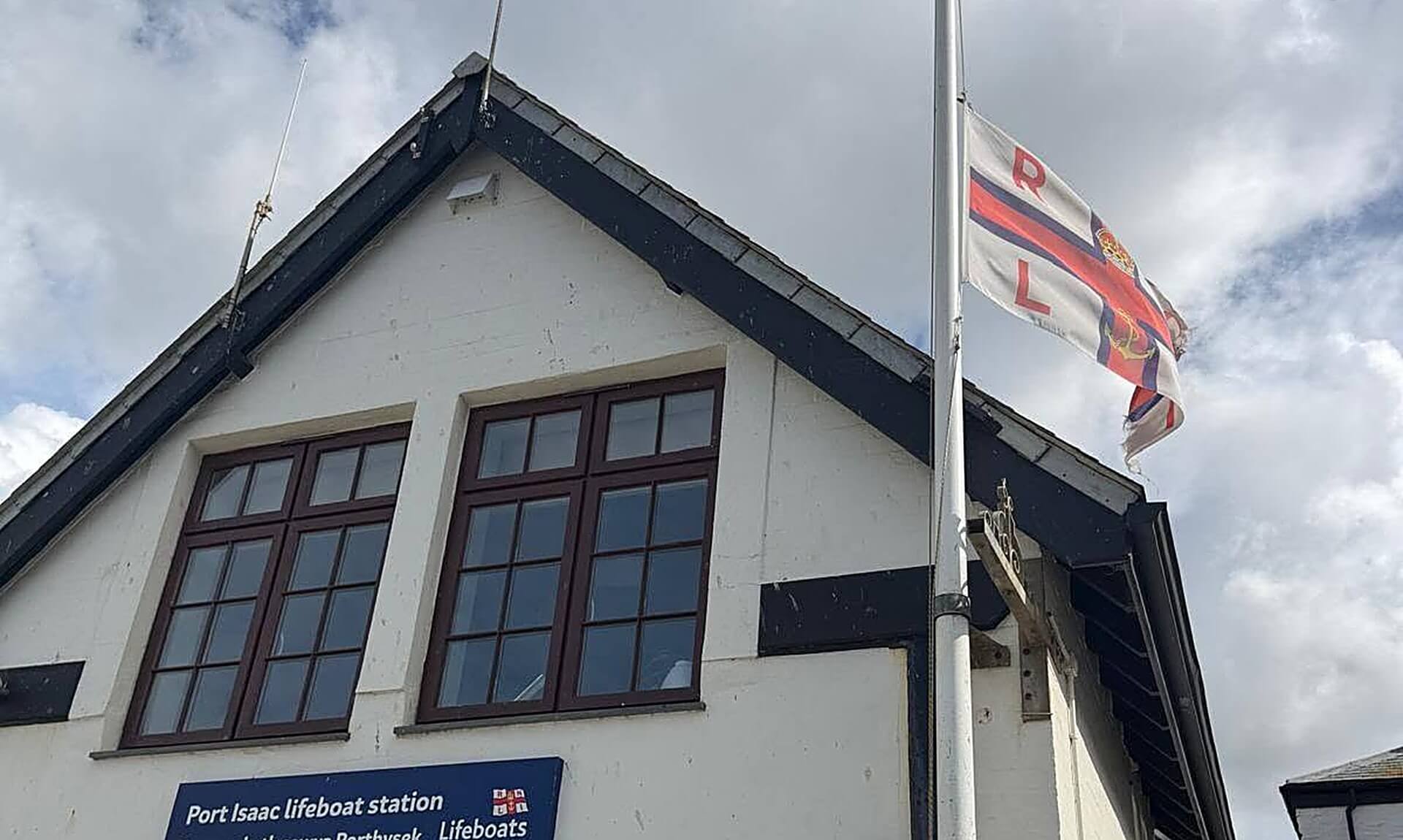
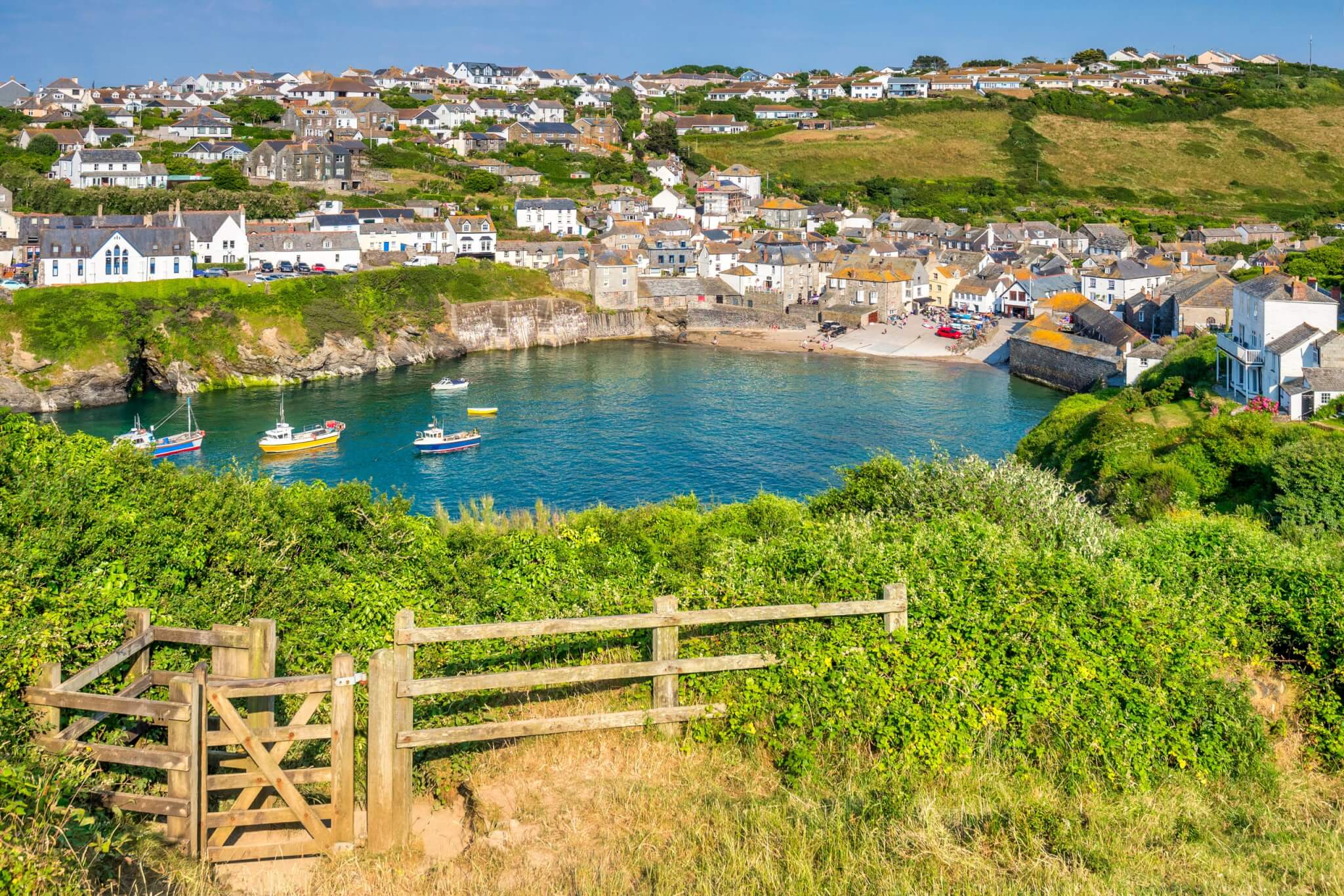
The tight huddle of whitewashed cottages around a tiny working harbour has made Port Isaac one of the most filmed villages in the country. It stands in as fictional Portwenn in the television series Doc Martin, and fans still seek out the cottage used as the doctor’s surgery. One lane is so narrow it has earned the nickname Squeeze-ee-belly Alley.
It is also the home of the Fisherman’s Friends, the sea-shanty group of local singers who landed a major record deal and later saw their story turned into a film. Come out of season if you can, because the lanes were built for fish carts, not for tour coaches.
9. Tintagel Castle
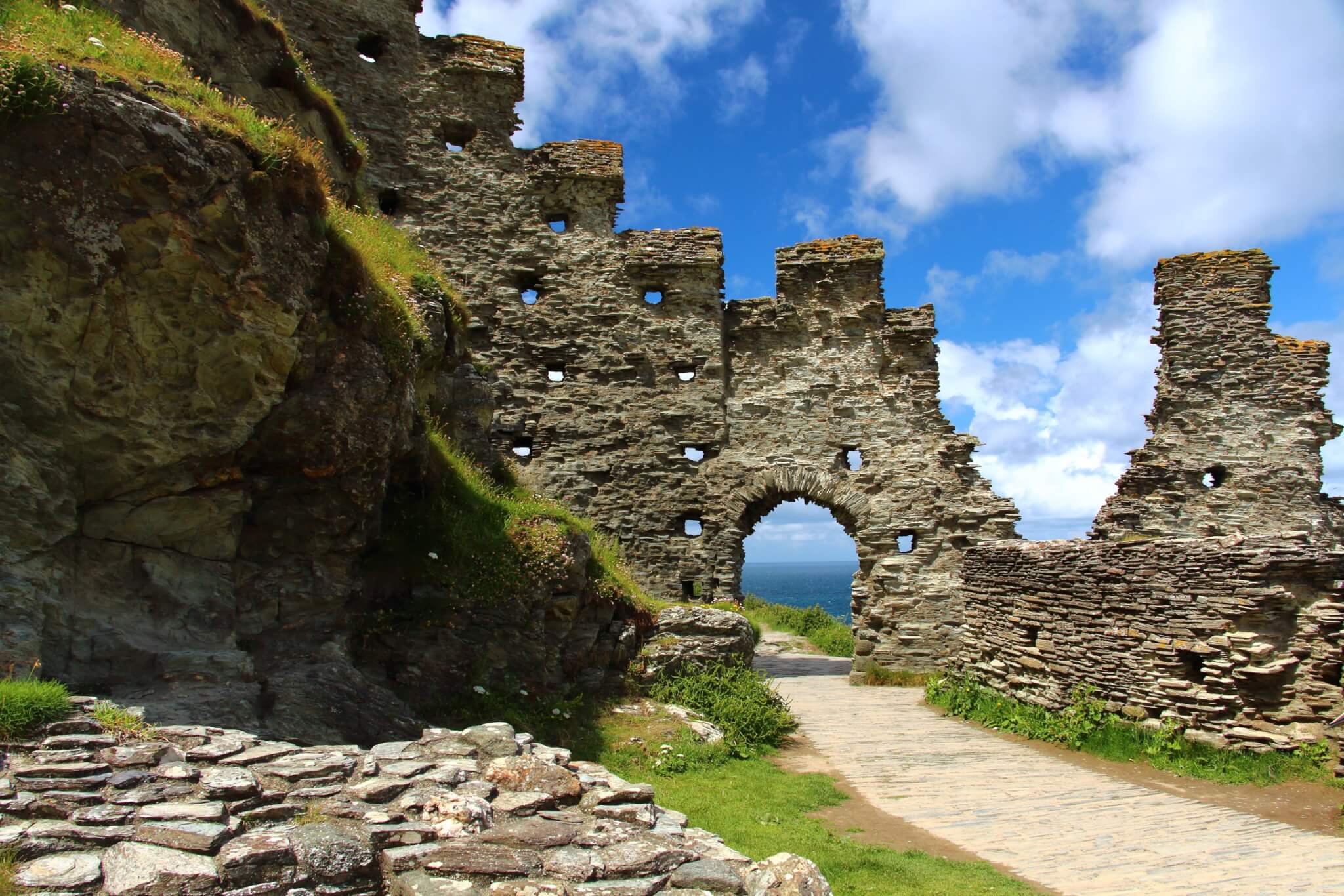
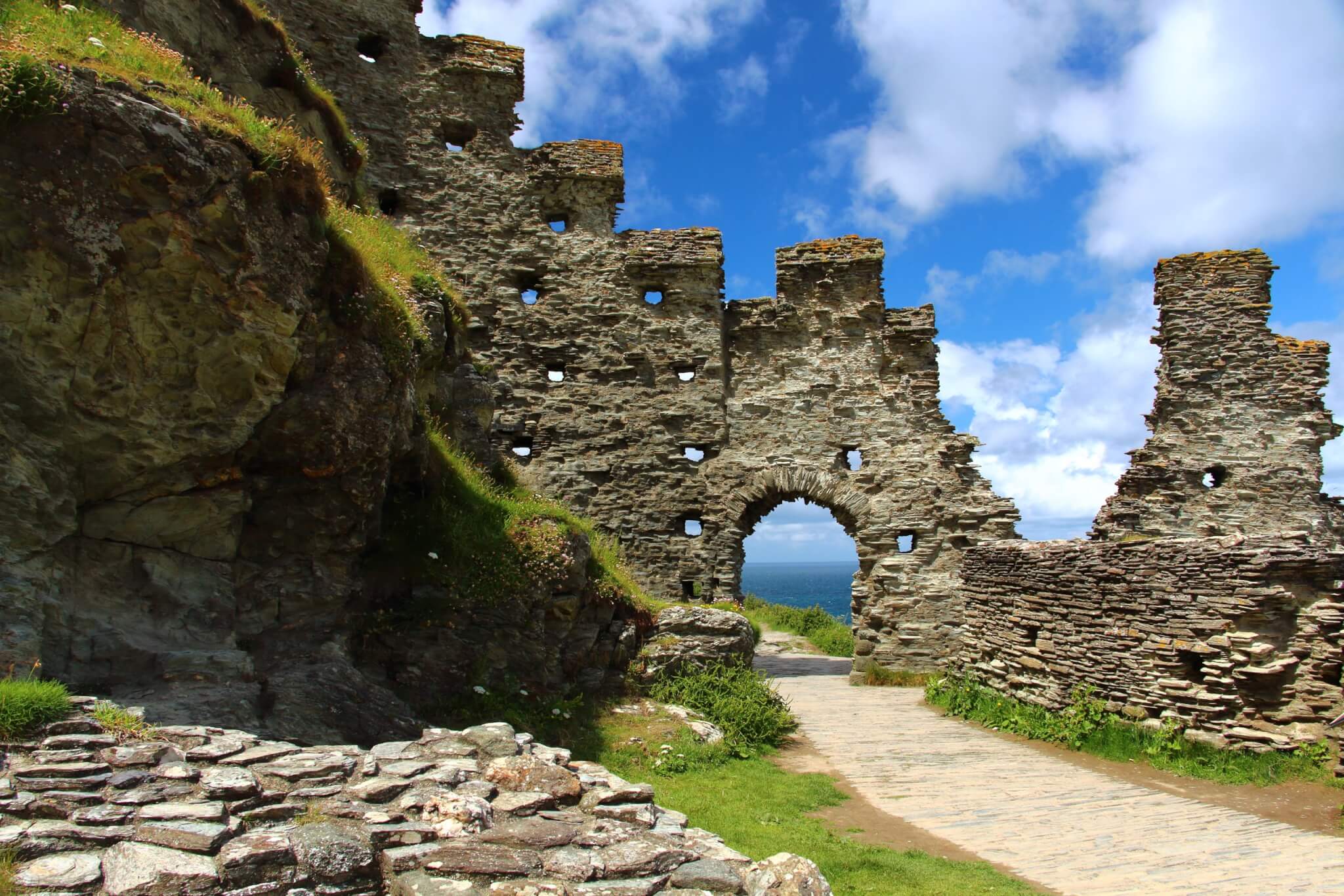
On the wild north coast, the ruins of Tintagel Castle spread across a headland and an island split by a chasm, and since 2019 a slender footbridge has spanned the gap, reconnecting the two halves for the first time in centuries. The bridge itself has become one of the most photographed structures in Cornwall.
The site trades heavily on King Arthur, thanks to Geoffrey of Monmouth, who placed Arthur’s conception here in a book written in the 1130s. The castle you see was built a century later, in the 1230s, by Richard, Earl of Cornwall, who wanted a fortress worthy of the legend. Down on the beach, reachable at low tide, is the cave named for Merlin. English Heritage looks after it all.
Your daily dose of Cornwall
News, events and goings on across the Duchy
10. Charlestown, near St Austell
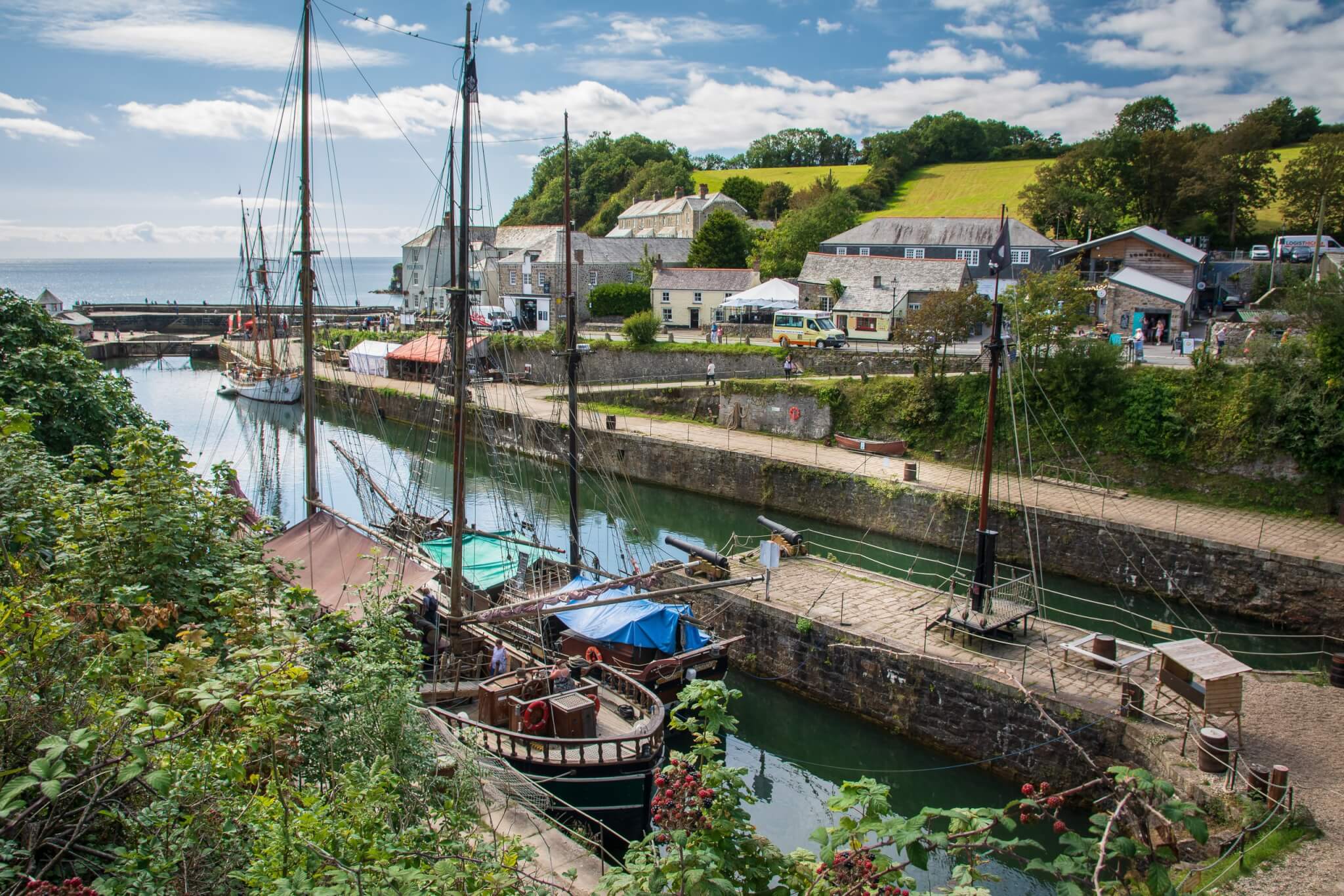
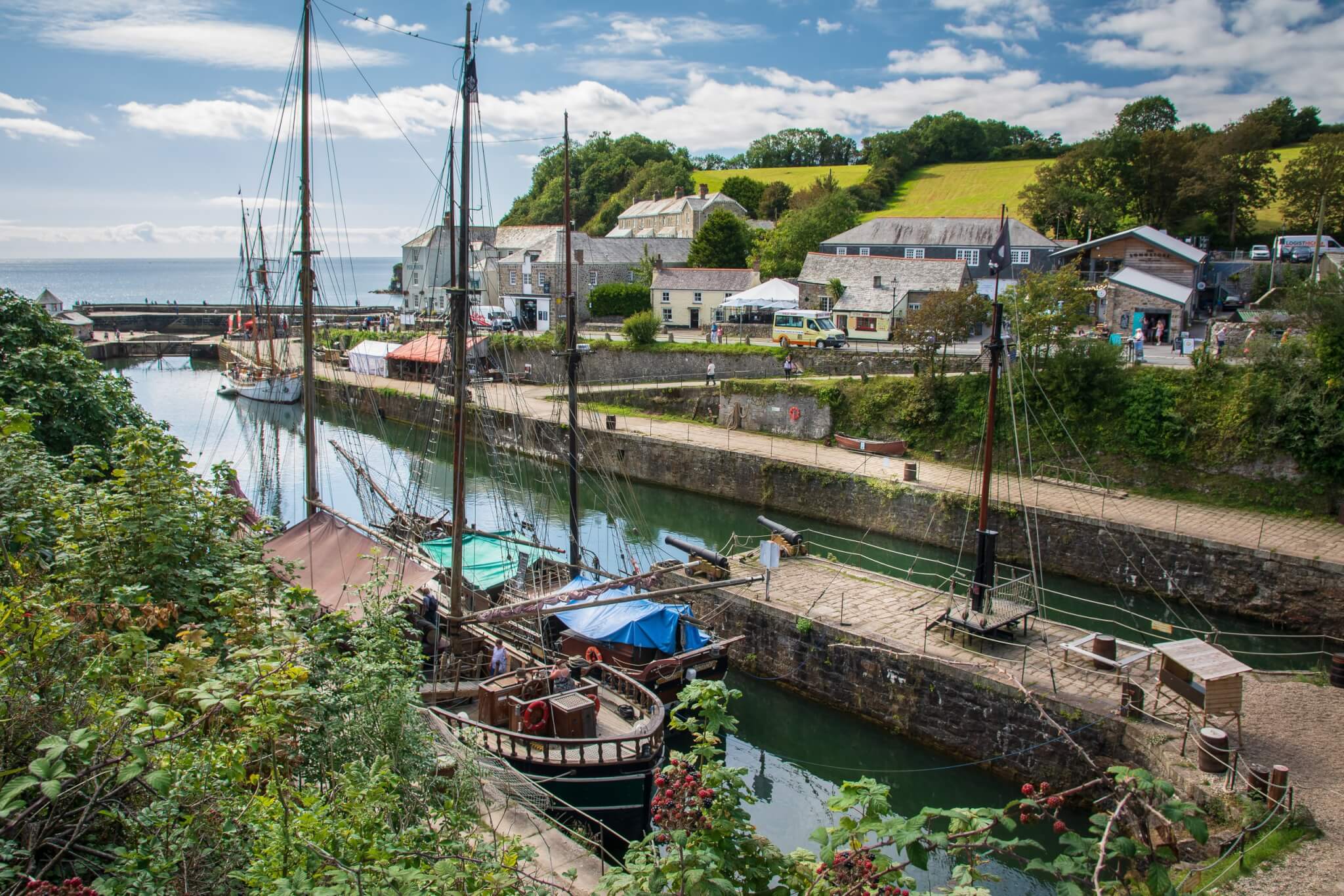
Just south of St Austell sits a harbour that appears to have skipped the last two hundred years. Charlestown was built between 1791 and 1801 by a man named Charles Rashleigh to ship out copper and, later, china clay. Because so little has changed, tall ships still moor against unaltered Georgian stone, and film crews adore it. Poldark, Hornblower and many other productions have used the quay as a ready-made period set.
The last commercial cargo of china clay left here in 2000, and the harbour has been posing for cameras more or less ever since. One tip that carries across all ten of these places: the hour after sunrise gives you the best light and the emptiest car parks, and at somewhere like Kynance Cove that head start can be the difference between a clear shot and a crowd.
Share This Story, Choose Your Platform!
To keep up with the latest cornish news follow us below
Follow CornishStuff on Facebook - Like our Facebook page to get the latest news in your feed and join in the discussions in the comments. Click here to give us a like!
Follow us on Twitter - For the latest breaking news in Cornwall and the latest stories, click here to follow CornishStuff on X.
Follow us on Instagram - We also put the latest news in our Instagram Stories. Click here to follow CornishStuff on Instagram.
- 1
- 2
- 3
- 4
- 5
- 6

You Might Also Be Interested In



Discover More In Cornwall


Daily Cornish news by email
The latest daily news in Cornwall, sent direct to your inbox.