BBC award for the Cornwall dad honouring son Noah’s legacy
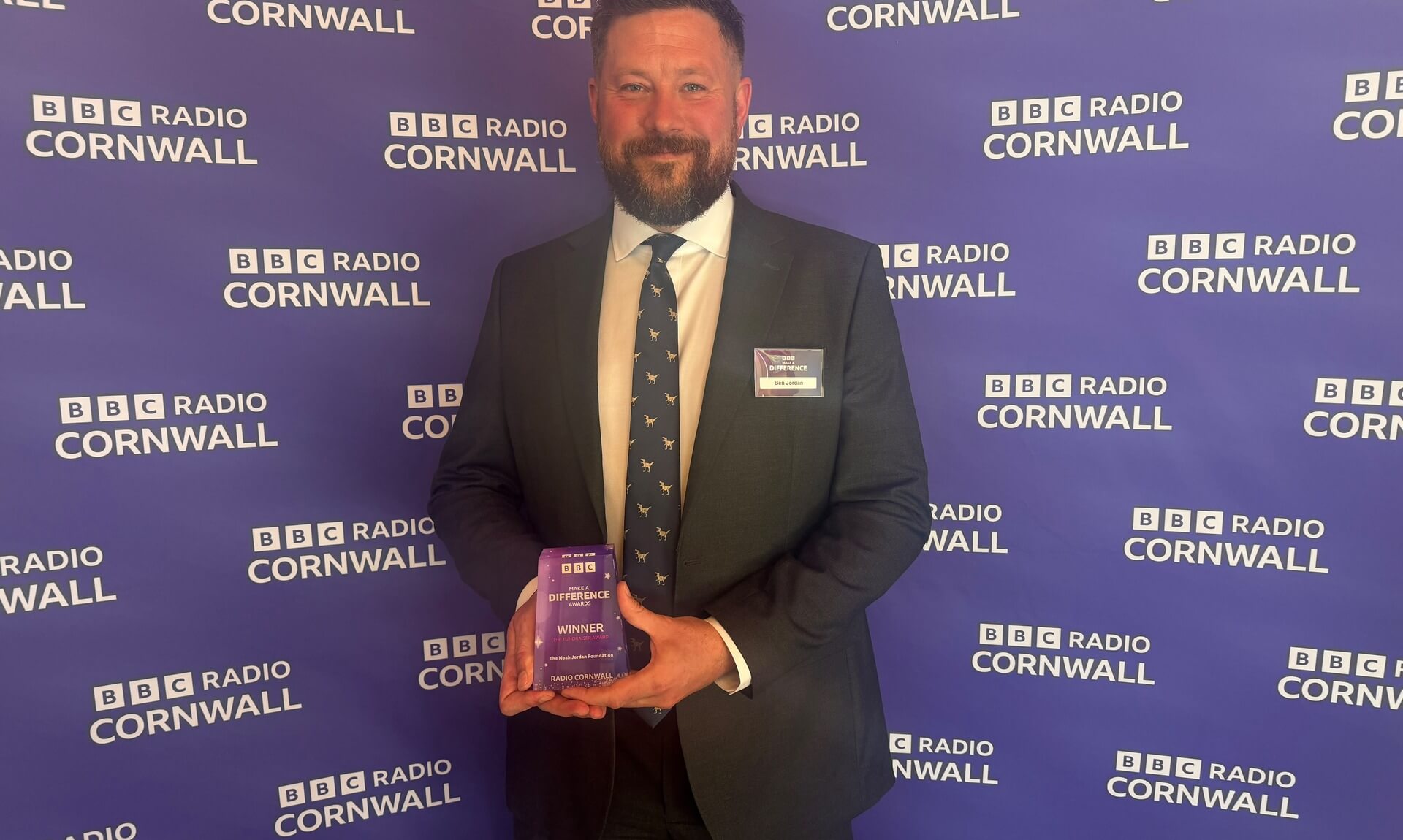
Ben Jordan made his son Noah one promise before he died at just nine months old, that the difference he could make for other children would become the boy’s legacy. That promise now has a BBC award behind it, and more than half a million pounds raised in Noah’s name to prove it.
Your daily dose of Cornwall
News, events and goings on across the Duchy
A trophy for a movement built out of grief
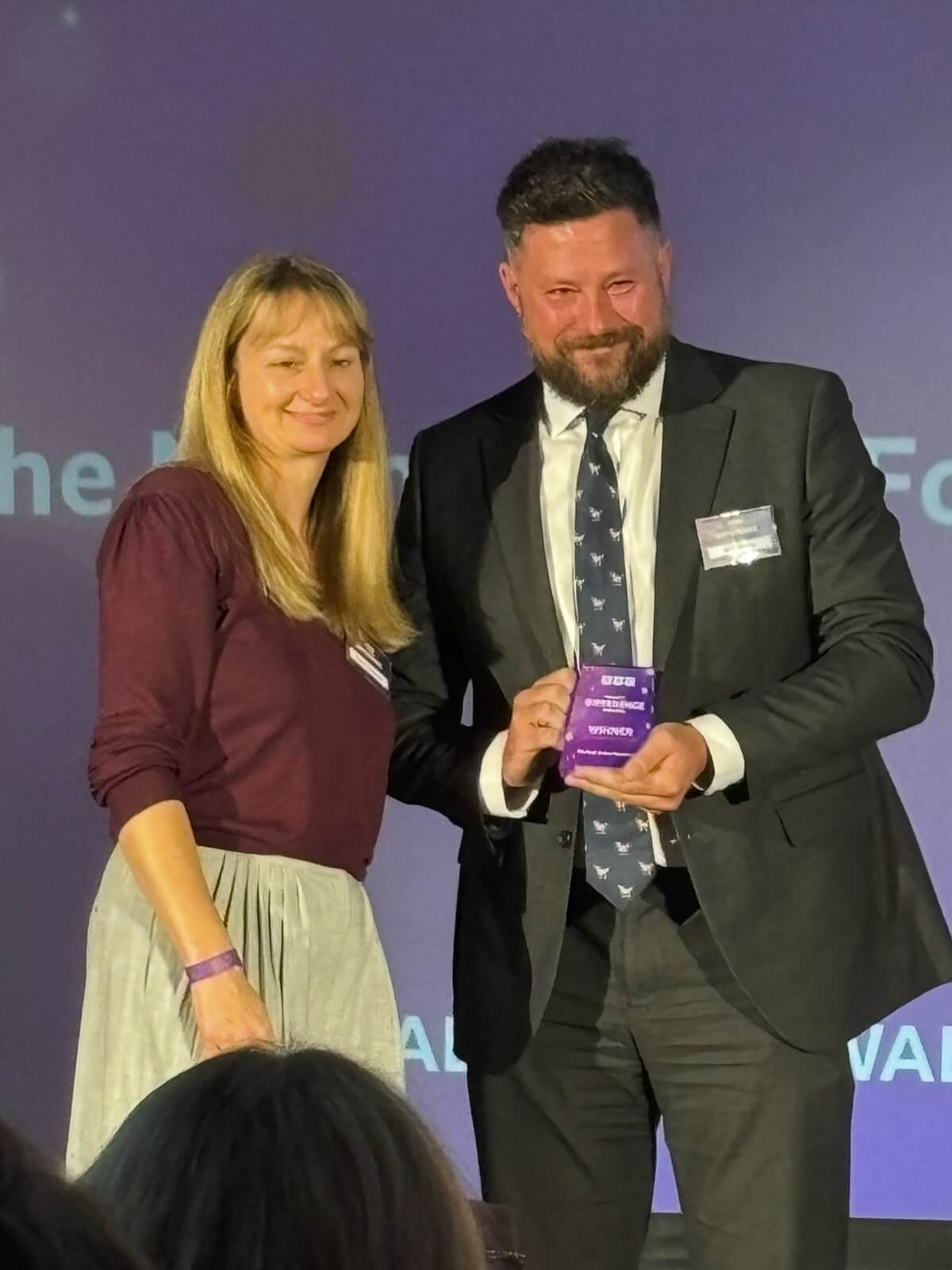
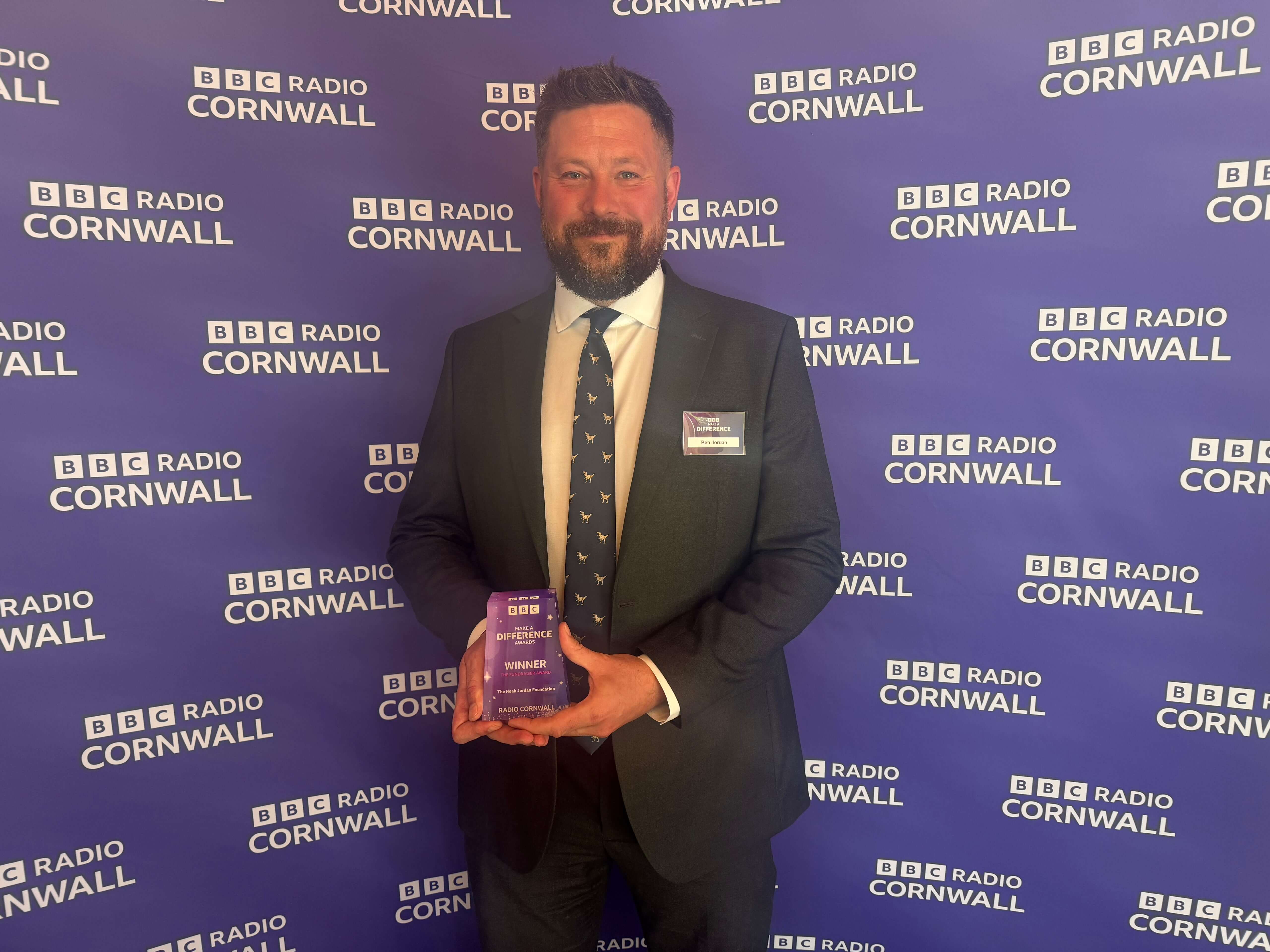
Ben received the Fundraising Award at the BBC Radio Cornwall Make a Difference Awards on behalf of The Noah Jordan Foundation, the charity he set up in Noah Jordan’s memory after his son died in March 2024 from POLG mitochondrial disease, a condition that attacks the liver and brain and for which there is currently no treatment or cure.
Since it was formed, Ben and the Foundation have worked to make sure Noah’s short life keeps making a difference, raising funds for mitochondrial disease research, supporting families and campaigning to improve understanding of a devastating and often little-known condition. In just two years, the Foundation has raised more than £500,000 and fully funded a three-year medical research PhD into POLG mitochondrial disease.
A happy little boy from Tywardreath
Noah Kenneth Ray Jordan was born on 5 June 2023 at Treliske, the Royal Cornwall Hospital in Truro, the second son of Ben and his wife, Natasha Jordan. He was, by his parents’ account, a happy and healthy little boy, always smiling, always laughing, and never happier than when he was playing with his big brother, Freddie Jordan.
The signs no one could explain
On the evening of 18 February 2024, Ben and Natasha noticed a yellowing in Noah’s eyes, a possible sign of jaundice. It was the weekend and their GP was closed, so a call to NHS 111 sent Natasha and Noah from their home in Tywardreath to the urgent care centre in St Austell, while Ben stayed at home with Freddie.
Concerned staff there sent them straight on to Treliske, where Noah was admitted as an inpatient. Doctors suspected acute liver failure and, after around twelve hours, decided he needed the nearest paediatric liver specialist centre. That meant a blue-light transfer overnight to Birmingham Children’s Hospital, with the rest of the family given a room at the nearby Ronald McDonald House while Noah was cared for on the Liver Unit.
For around ten days Noah kept deteriorating and doctors could not find a cause. He had to stop breastfeeding, relying instead on a central line into his neck for medication and an NG tube for fluids. It was only once he began having uncontrollable seizures, developed hypoglycaemia and was admitted to the paediatric intensive care unit that mitochondrial disease was first mentioned.
Your daily dose of Cornwall
News, events and goings on across the Duchy
A diagnosis no parent should hear
On the morning of 1 March 2024, a consultant took Ben and Natasha into a small room and told them Noah was going to die, and that there was nothing more medicine could do. Genetic blood tests had found Alpers-Huttenlocher Syndrome, more commonly known as POLG mitochondrial disease, a condition that attacks the liver and brain and for which there remains no treatment or cure. Noah’s care moved to palliative.
Because the condition is genetic, doctors explained there was a 25 per cent chance any sibling would also carry it. Testing found that Freddie did not.
Noah’s final days
The family wanted to spend what time was left with Noah in a children’s hospice, but the journey back to Cornwall, or to Children’s Hospice South West, was no longer possible given how ill he was. Instead Ben and Natasha found a place at the Alexander Devine Children’s Hospice in Berkshire, near Natasha’s family home.
A multi-disciplinary team from Birmingham Children’s Hospital planned Noah’s transfer carefully, and Natasha travelled with him in the ambulance for the hour-and-a-half journey to keep him safe. At the hospice, staff made sure Noah was as comfortable as possible while giving the family time to make memories together, in the swimming pool, in music therapy, and simply with family and close friends around him.
Noah died peacefully in his parents’ arms on 19 March 2024, one month and a day after he was first admitted to hospital. He was nine months old. Ben and Natasha describe him as a brave little boy whose gentle smile never faded, even through everything he endured.
Funding research at Newcastle, and support closer to home
The Foundation’s work already includes fully funding a three-year PhD at Newcastle University’s internationally recognised Mitochondrial Research Group, under the guidance of leading experts in paediatric mitochondrial medicine who also serve as the charity’s medical advisers. Discussions are under way to fund a second PhD in the coming academic year.
With the Foundation’s work continuing to grow, further donations will help fund vital research and provide practical and emotional support to families living with mitochondrial disease, support such as counselling or respite breaks. To help continue Noah’s legacy, donations can be made on the Foundation’s website.
Your daily dose of Cornwall
News, events and goings on across the Duchy
‘I will not let him down’
Ben said it was “incredibly humbling, and both an honour and a privilege” to receive the award on behalf of the Foundation. But he was quick to say it did not belong to him alone.
“It belongs to my wonderful family and friends who helped me establish the charity, our incredible volunteers, every individual supporter and business that has helped make the Foundation what it is today, and of course our extraordinary community in Cornwall and around the UK,” he said. “Without them, quite frankly, we would not have achieved what we have.”
“Most importantly, this award recognises the promise I made to my little boy when he died, that the impact I would have on these diseases in my lifetime for other children would be his legacy, and I will not let him down.”
Whilst £500,000 is an extraordinary milestone, Ben said what matters is the impact it allows the charity to keep having, funding research and supporting families with things like counselling or respite breaks “which they may otherwise not have had access to.”
“Winning this award shows the impact Noah’s life continues to have, and I couldn’t be prouder of him,” he said. “This is for him, and for every other child who has died or whose life has been affected by mitochondrial disease.”
Read Next
- NewquayIf you're driving through Newquay town centre on the morning of Sunday 8 November, you may end up waiting a few minutes while a parade goes by.
Share This Story, Choose Your Platform!
To keep up with the latest cornish news follow us below
Follow CornishStuff on Facebook - Like our Facebook page to get the latest news in your feed and join in the discussions in the comments. Click here to give us a like!
Follow us on Twitter - For the latest breaking news in Cornwall and the latest stories, click here to follow CornishStuff on X.
Follow us on Instagram - We also put the latest news in our Instagram Stories. Click here to follow CornishStuff on Instagram.
- 1
- 2
- 3
- 4
- 5
- 6