What could the Falmouth Docks dredge stir up? An expert’s view
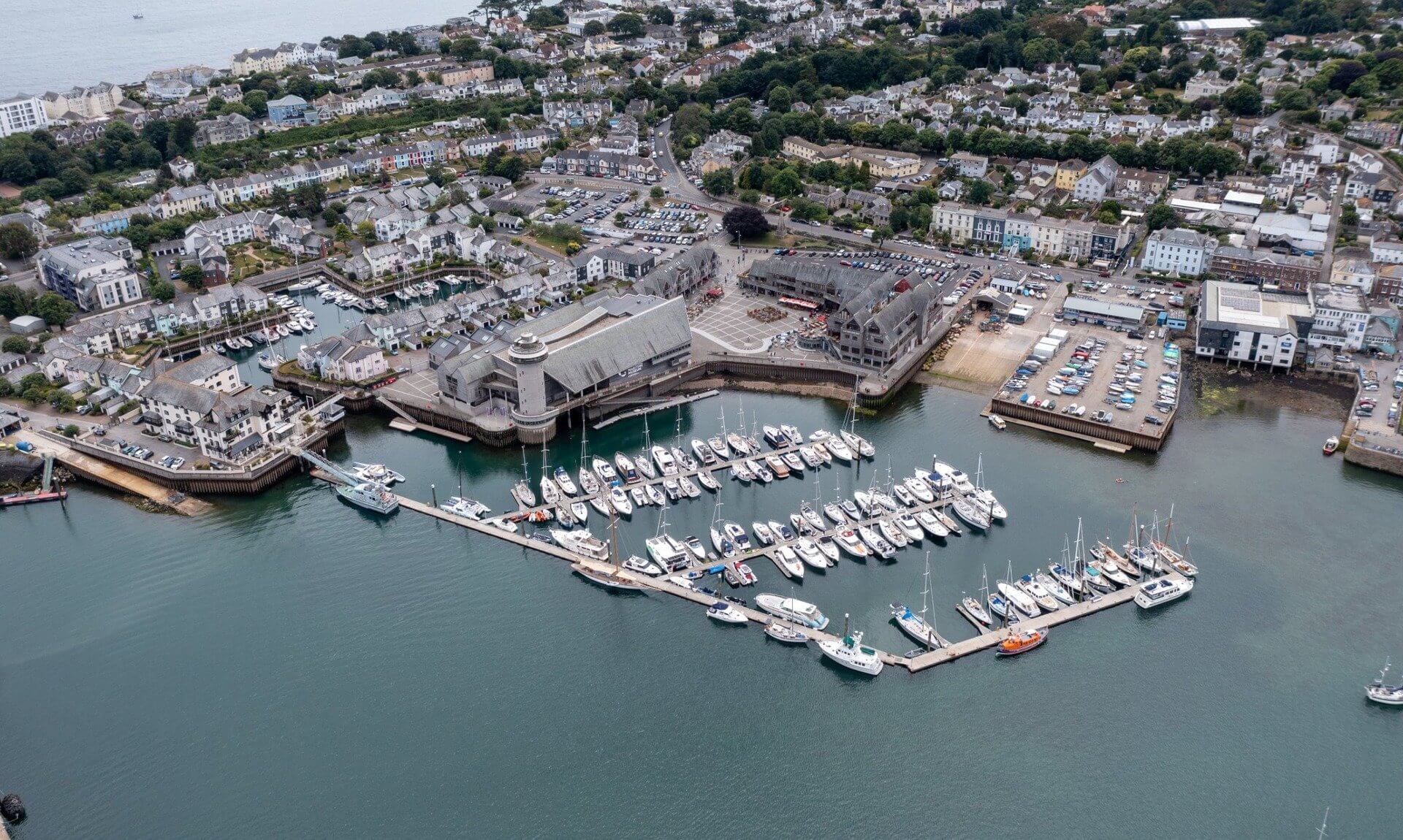
Decades of sediment sit on the bed of Falmouth Docks. What happens to it once dredging begins is the question an environmental researcher has now put, in detail, to the body that decides whether the work goes ahead.
Dr Tim Hughes has written to the Marine Management Organisation (MMO) with new analysis of the plans for Falmouth Docks. In his letter he argues that the application submitted by the developer cannot be used as a sound basis for licensing the project.
Campaign group Stop the Dredge has also written to the MMO, formally asking it to reopen public consultation on the licensing application. The group points to Dr Hughes’ findings, the scale of public concern since the MMO’s formal consultation closed, and its view that the local community was not given adequate initial notice of the plans as required by law.
The MMO, which is responsible for issuing dredging licences, has yet to approve the proposals.
Your daily dose of Cornwall
News, events and goings on across the Duchy
What’s being proposed
Port operator Balaena wants to dredge 650,000 cubic metres of sediment from the docks to make way for much larger commercial vessels and cruise ships.
A separate planning application for the redevelopment and modernisation of the docks (reference PA25/01598) is with Cornwall Council. Submitted by Falmouth Docks & Engineering Company in February 2025, it covers demolition of buildings on site, partial demolition of existing wharf structures, new wharf structures, a lay-down area for floating offshore wind (FLOW) work, a temporary construction area and ancillary works.
Concerns over contaminated sediment
Dr Hughes’ analysis adds to concerns already raised by Natural England and Cornwall Wildlife Trust about the potential spread of contaminated spoil from the dredge, and the need for safeguards to protect marine life and ecosystems.
According to the campaigners, sediment in and around the proposed dredge site is known to contain extremely high concentrations of Tributyltin (TBT), a toxic chemical that is lethal to marine wildlife. They say it could also pose a risk to people if it enters the food chain or swimming areas, citing scientific research that links TBT exposure to metabolic disruption, immune system suppression, neurotoxicity, and threats to fertility and pre-natal development.
What the analysis says
Dr Hughes looked at the environmental impact statements submitted alongside the application. His letter sets out several areas where he believes they fall short.
Your daily dose of Cornwall
News, events and goings on across the Duchy
Contamination modelling
He says legal maximum limits for TBT, mercury and lead would likely be breached over a much larger area than the application shows. Arsenic and polycyclic aromatic hydrocarbons (PAHs) don’t appear to have been modelled at all, he says, and nor does the effect of removing a large section of contaminated seabed in the east of the docks.
Weather and tides
Once tidal movements and the variation in contaminant levels across the sediment are factored in, Dr Hughes argues the chance of maximum allowable concentrations being exceeded could be much greater than the developer’s modelling suggests. He writes that there is no evidence adverse weather and tidal conditions were considered when modelling worst-case scenarios for the spread of contaminants.
Spoil dumped at sea
Under the plans, much of the dredged material would be disposed of at sea, just outside a marine Special Protection Area (SPA) and close to the Fal and Helford Special Area of Conservation (SAC). Dr Hughes says inadequate sampling means much of that material is likely to be highly contaminated.
“No evidence is apparent of any ecological surveys in the immediate vicinity of the disposal site […] There is no consideration of the impact on fishing grounds,” he writes.
Your daily dose of Cornwall
News, events and goings on across the Duchy
Monitoring
He echoes Natural England, which has recommended continuous real-time monitoring and follow-up checks on natural habitats so that dredging can be stopped before harm occurs. In his view that needs more complete and explicit licence conditions than have been suggested so far.
Ways to limit the damage
Dr Hughes says proven methods of reducing the spread of contaminated material have been unduly dismissed. These include silt screens and a watertight “cofferdam”. He argues a cofferdam, which would allow the work to happen in dry conditions, would be the most reliable protection.
‘The community deserves a chance’
Fay Locke of Stop the Dredge said: “The Marine Management Organisation has a statutory duty to make sure that any proposed development does not do significant harm to the marine environment.
“Dr Hughes’ in-depth analysis clearly shows that the environmental statements submitted by the developer are full of serious omissions and highly questionable assumptions.
“Environmental law requires such submissions to pass a so-called ‘integrity test’. In the words of the Habitats Directive, this means that there must be ‘no reasonable scientific doubt that the proposal will not have an adverse effect on the integrity of the site.’
“Dr Hughes has shown that the current application falls far short of this, and cannot be used as a sound basis for licensing the project as it is currently proposed.
“This bears out the real concerns in the community about the dredge’s impact on the marine ecosystem and historic oyster fishery. The MMO’s public consultation period closed before the public had been made properly aware of these plans and their implications, as is required by law, and Dr Hughes’ analysis gives further urgent grounds for reopening the public consultation.
“No-one is saying that the Docks should not be modernised. But Falmouth’s future depends on having a healthy marine environment. The community deserves a chance to properly scrutinise plans that have been shown to be so seriously flawed.”
Your daily dose of Cornwall
News, events and goings on across the Duchy
An oyster fisherman’s view
Local oyster fisherman Jason Pascoe said: “It’s been clear to us all along that the dredging plan doesn’t take account of real-world conditions, and of how tides and weather could cause plumes of toxic sediment to spread towards St Mawes Bank, up the Penryn River and across the shellfish beds of the Carrick Roads.
“Shellfish and other molluscs suffer very dramatically from TBT and other industrial toxins. Contamination can last up to 50 years and weakens their immune systems. Mortality is not always immediate within adult stock. These toxins can cause a delayed death. We believe this has been the case in the Teesside mass shellfish die-offs. Dumped spoil containing coal tar has been re-disturbed during the North Sea winter storms and has caused die-offs along the North East coastline.”
From 37 responses to more than 700
Only 37 public representations were recorded during the MMO’s consultation on the application. Since then, more than 700 written objections have been lodged on the Cornwall Council planning portal against the planning application, and campaigners say many of them concern activities that fall within the marine licensing decision.
Two other developments in October added to the debate. On Monday 5 October, Falmouth Town Council’s Planning Committee urged Cornwall Council and Natural England to enforce stricter environmental safeguards and take a more precautionary approach to protecting marine life, sensitive habitats such as maerl beds and seagrass meadows, and local fisheries.
The following day, a group of renewable energy engineers published an open letter questioning whether the type of floating offshore wind work Falmouth stands to get, which has been used to justify the need for deep dredging of the harbour, actually requires the proposed dredge.
How to have your say
Dr Hughes’ full report is on the Stop the Dredge research page.
Cornwall Council is currently consulting on further environmental information for planning application PA25/01598, an Appropriate Assessment Addendum for the Fal and Helford SAC. Details are on the public notice for the consultation, and comments must be received by Sunday 8 November 2026.
Representations can be emailed to [email protected] or posted to Cornwall Council Planning Dept, New County Hall, Treyew Road, Truro, TR1 3AY. They should quote PA25/01598, be dated, and include your name in block capitals with a full return email or postal address.
A petition calling on the MMO not to grant a licence unless stronger safeguards are in place, alternatives are explored and the consultation is reopened passed 5,000 signatures on 29 October.
Read Next
- HalloweenYou've got the costume sorted and a bag ready for the sweets.
Share This Story, Choose Your Platform!
To keep up with the latest cornish news follow us below
Follow CornishStuff on Facebook - Like our Facebook page to get the latest news in your feed and join in the discussions in the comments. Click here to give us a like!
Follow us on Twitter - For the latest breaking news in Cornwall and the latest stories, click here to follow CornishStuff on X.
Follow us on Instagram - We also put the latest news in our Instagram Stories. Click here to follow CornishStuff on Instagram.
- 1
- 2
- 3
- 4
- 5
- 6